They woke up the zombie genre by reminding us it was never about the zombies.
http://childpsychiatryassociates.com/treatment-team/clementine-200/ Before The Walking Dead turned shambling corpses into television wallpaper and before every horror franchise tacked on a pandemic subplot, 28 Days Later (2002) reanimated a genre that had lost its teeth.
Directed by Danny Boyle and written by Alex Garland, the film didn’t just update horror—it infected it. And what emerged wasn’t a zombie movie, not exactly. It was an existential gut punch delivered at a dead sprint.
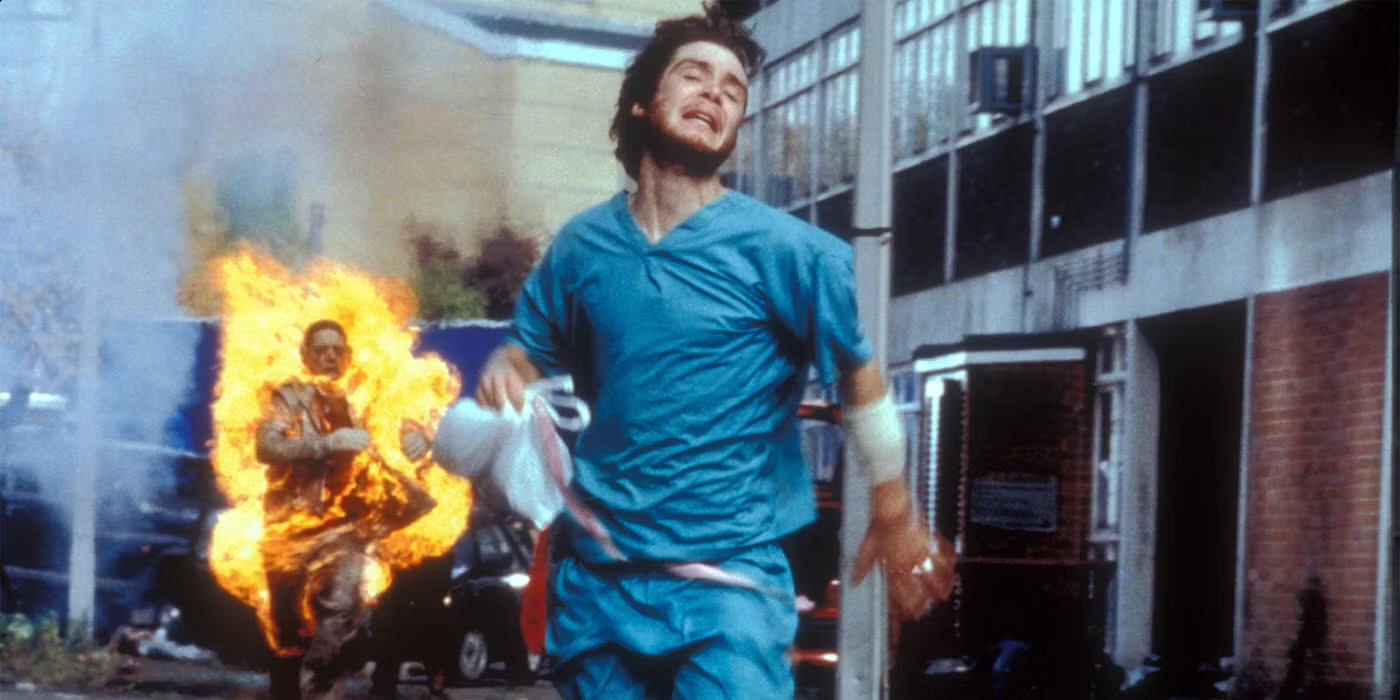
That sprint is key. The most terrifying twist in an overused genre wasn’t the virus or the collapse of society—it was the speed. The infected in 28 Days Later don’t stagger or stumble. They sprint, full-bore, screaming with blind rage. It’s not death that’s chasing you anymore. It’s fury. Fear. A tidal wave of emotion with no brakes.
Boyle’s decision to make the monsters fast rewrote the rules of engagement. You couldn’t outmaneuver them, or hide and wait them out. You had to be faster. Or you were dead.
It begins with a whisper. Jim (Cillian Murphy) wakes up alone in a London hospital, a coma survivor stepping into a dead city. The streets are emptied of people but not of tension. There’s no exposition dump, no apocalyptic voiceover. Just eerie stillness and a growing sense of something horribly wrong. It’s in that quiet—vacant bridges, overturned buses, handwritten pleas on walls—that the horror takes hold.
Then the rage comes.
When Jim meets Selena (a fierce, unflinching Naomie Harris), she delivers the film’s thesis as cold truth: “You do what you have to do.” Survival, in this world, is about subtraction—stripping away empathy, hesitation, even humanity. But 28 Days Later never revels in the nihilism. Instead, it threads hope through horror, watching Jim rediscover not just who he is, but who he’s willing to become.
The film’s second act—set in a military safe house—turns the lens from the infected to the truly dangerous: organized men with unchecked power. The soldiers who promise sanctuary are infected too—by entitlement, by control, by a vision of society that bends others to their will. Boyle makes clear that the virus didn’t change everything. It just gave people permission to become who they always were.
Shot on digital video with a guerrilla spirit, the film looks raw, immediate, and unfiltered. London becomes a ghost town at dawn, captured in haunting wide shots that still feel shocking today. There are no special effects in these scenes, just careful timing and empty streets, and they work better than CGI ever could.
And over it all looms John Murphy’s now-iconic score, especially “In the House – In a Heartbeat,” a slow build of piano and pressure that surges toward something primal and tragic. It’s less music than dread set to rhythm.
28 Days Later didn’t invent fast zombies. But it made them matter. It made them terrifying again. It stripped horror down to its bones and asked, “What are you willing to become when the world ends?”
As 28 Years Later looms on the horizon, it’s worth remembering what the first film taught us: the end isn’t walking slow.
It’s coming fast.