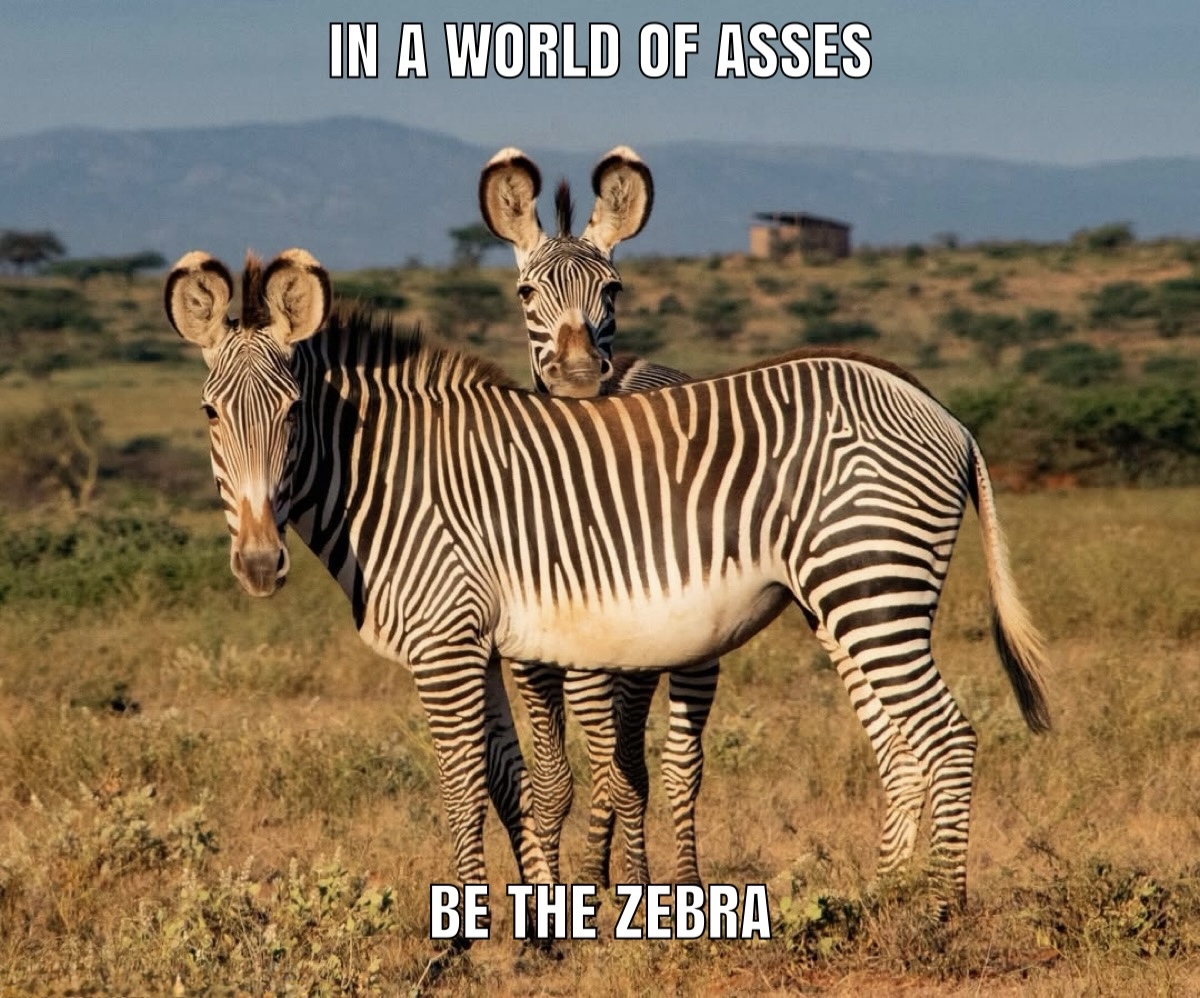
Some Factslapd about the the pinstripe zebra:
- “Pinstripe zebra” is not a separate species; it’s a nickname for zebras, usually Plains zebra, whose striping is unusually thin, dense, and sharply defined.
- No two stripe patterns are alike, not even between identical twins; the pinstripe look sits at the extreme fine-grained end of that natural variation.
- Stripes form before birth, driven by reaction–diffusion processes in the developing skin; thinner stripes reflect differences in how pigment cells migrate and switch on.
- Pinstripe patterns may improve heat regulation, as narrow alternating bands can enhance micro-air currents across the skin, aiding cooling in hot climates.
- Stripes actively deter biting flies; studies show flies have trouble landing on high-contrast, tightly spaced patterns, making pinstriping especially effective.
- The pattern confuses visual tracking, disrupting motion perception for predators; fine stripes can break up outlines at both close and medium range.
- Zebras are black with white stripes, not the other way around; the pinstripe effect comes from how white stripes interrupt the darker base.
- Artists and fashion designers borrow the look because it reads as “orderly chaos”; the brain tries to resolve the lines and never quite does.