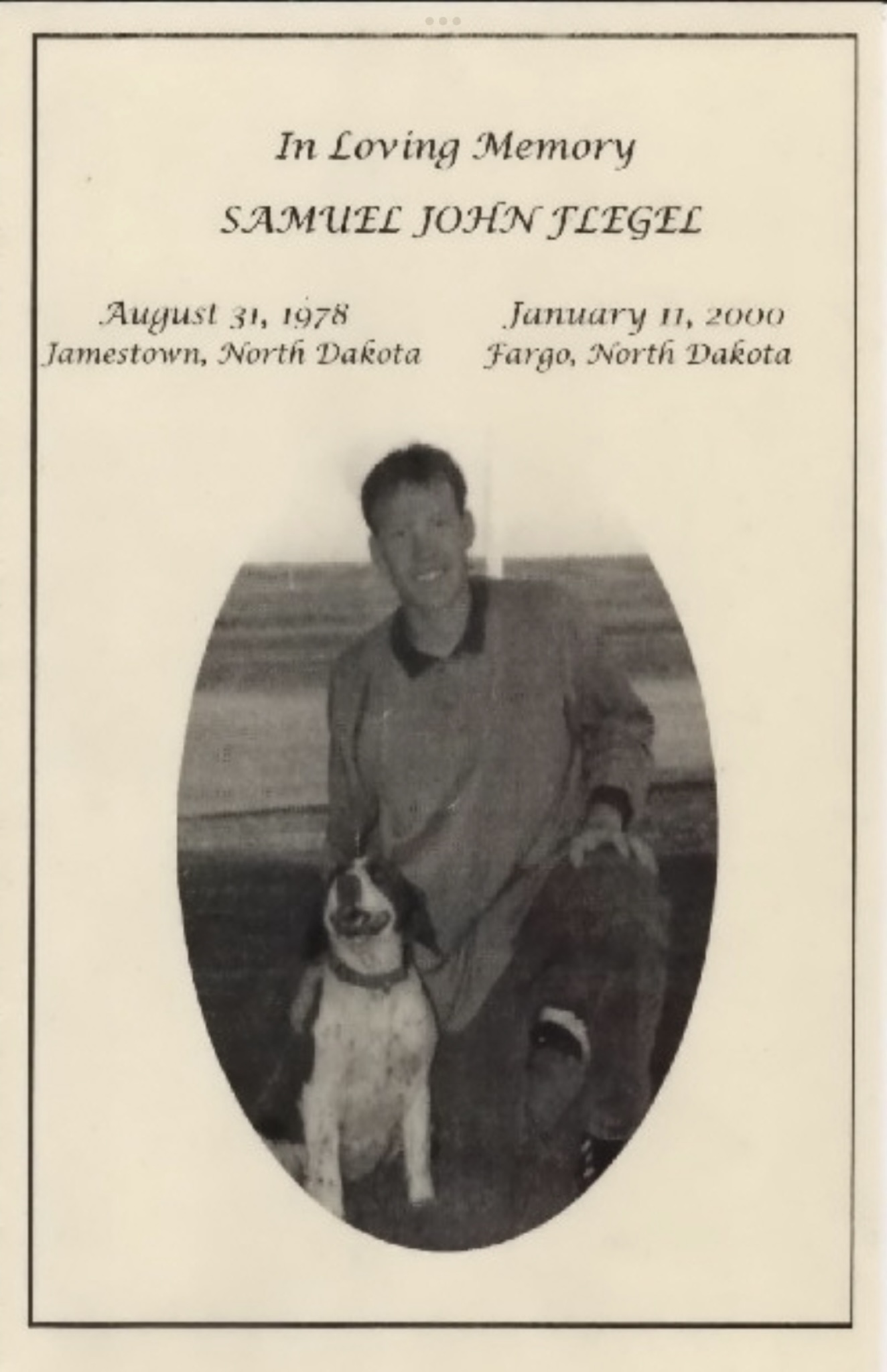
Kānker Twenty-six years, to the day. And I’ve been doing the math.
In these 9,496 days together since the transplant, we have taken 113,952 pills. Twelve a day, every single day, without exception.
And that’s conservative. Probably closer to 130,000 pills, but who’s counting?
I am. Not one missed. Not one forgotten. Not one skipped because I was tired or lazy or convinced myself it could wait.
One hundred thirteen thousand, nine hundred fifty-two pills.
Here’s why that number means something: Before you, I was a lousy diabetic. Undisciplined and reckless at 13, I ate candy. I missed shots. Skipped meaIs. I treated my body like I had infinite chances to get it right. I was careless with my own life in ways that should have disqualified me from ever receiving the gift you gave.
But on that operating table, a stranger handed me a kidney and pancreas. Two organs and one complete reset. A second chance I’d done nothing to deserve.
So I could be careless with my own life, Samuel, but I could never be careless with ours. You deserved better than my old habits. You deserved someone who understood what it means to be trusted with something sacred, something irreplaceable.
So a dozen a day became the promise. In airports and hotel rooms and hospital waiting rooms. Through bone breaks and power outages and days so busted I barely remembered my name. Every morning, every evening, without fail.
113,952 pills. Every one a pact: I know what this cost. I know what this means. I will not forget.
That’s the only thank you that’s ever mattered. Not promises, but proof.
You didn’t just give me more time, Samuel. You gave me the chance to become somebody worthy of it.
Here’s to you, to 26 years, to 113,952 pills and counting. Upward.
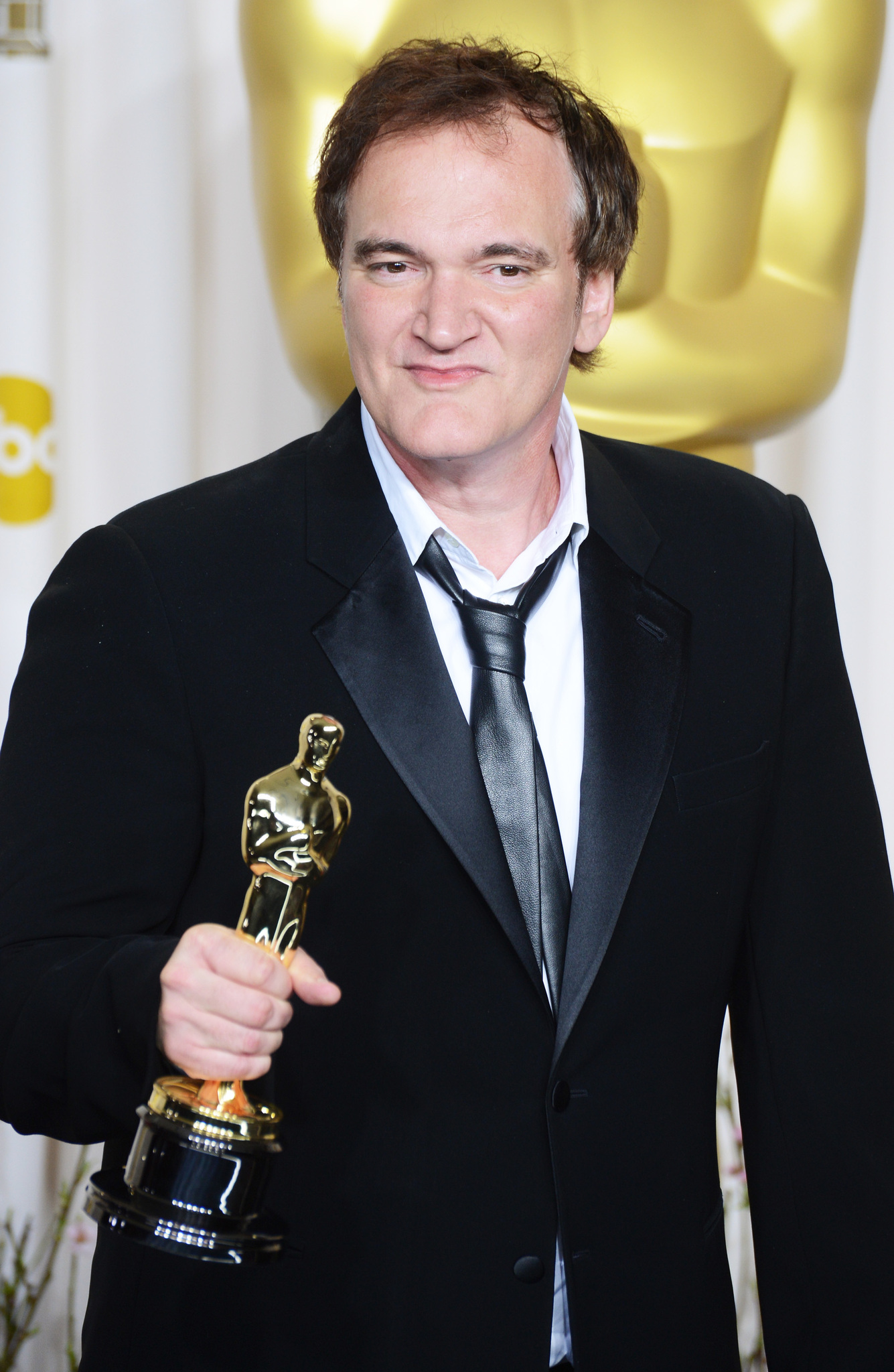
Quentin Tarantino has a problem. His ninth film already feels like his last.
Once Upon a Time in Hollywood made about $392 million, won Oscars, and became a late-career masterpiece, which is a dangerous thing when you have promised the world exactly one more movie.
That is the pickle.
Tarantino has always said he will make 10 films and then walk away, and Hollywood is number nine, which means the final chapter of one of the great American film careers is now stuck trying to top a movie that already feels like a farewell.
Django Unchained may still hold his box-office crown at $450 million, but Hollywood did something rarer by uniting critics, audiences, and awards bodies around the idea that Tarantino had finally made his most mature and emotionally complete work.
It plays like a summation of his obsessions and his love for a vanished Los Angeles, and it does so with the confidence of someone who knows he has reached the end of something.
That makes film number ten almost unfairly doomed.
What does topping Hollywood even look like. Does he go back to pulp violence and risk looking like he is retreating. Does he make a three-hour epic and get accused of self-indulgence. Does he try something radically different and get told he has lost the thread.
Every option is a trap because the tenth film does not just need to be good, it needs to justify why it exists after a movie that already doubled as a eulogy for the Hollywood Tarantino loved and the career he built inside it.
Every director dreams of making a Godfather Part II, but most careers end up being judged by their Godfather Part III, and Tarantino made that risk unavoidable by announcing a fixed number just as his work was still hitting its stride.
At the same time, he has been making headlines for all the wrong reasons.
In recent interviews he went after Paul Dano, calling him the weakest actor in SAG and taking a swipe at a performance most of Hollywood considers one of the great supporting turns of the last 20 years.
When Tarantino used to talk this way it came off as swagger. Now it reads as nerves.
The industry has changed, the audience has changed, and the culture no longer treats auteurs as untouchable. Tarantino built his career on being the smartest guy in the room about film history, but that currency has depreciated. His final film is not just competing with his own filmography, it is arriving in a moment that may not care about auteur legacies the way it used to.
That is what makes the 10th so thorny.
But the solution is hiding in plain sight.
For years Tarantino has insisted that Kill Bill Vol. 1 and Vol. 2 are one film.
He should change that.
The world already treats them as two movies with separate runtimes, release dates, reviews, and box-office totals. Calling them two films would not be a trick, it would be an acknowledgment of how they actually exist in culture. Kill Bill becomes numbers eight and nine. Once Upon a Time in Hollywood becomes number ten. The story ends exactly where it should.
Would critics call it a cop-out. Probably. Would it require Tarantino to reverse a twenty-year position. Yes. But the alternative is worse, which is spending years trying to make a film that has to beat a movie that already feels like a closing argument.
He could even frame it as principle by announcing that streaming killed the Hollywood he wanted to make films for, that the theatrical era ended before he could deliver his finale, and that Once Upon a Time in Hollywood was the last movie made in the world he cared about.
Either way, the math works.
Either way, the pressure disappears.
The only way Quentin Tarantino avoids being crushed by his own legend is by admitting that he has already made the movie that ends it.
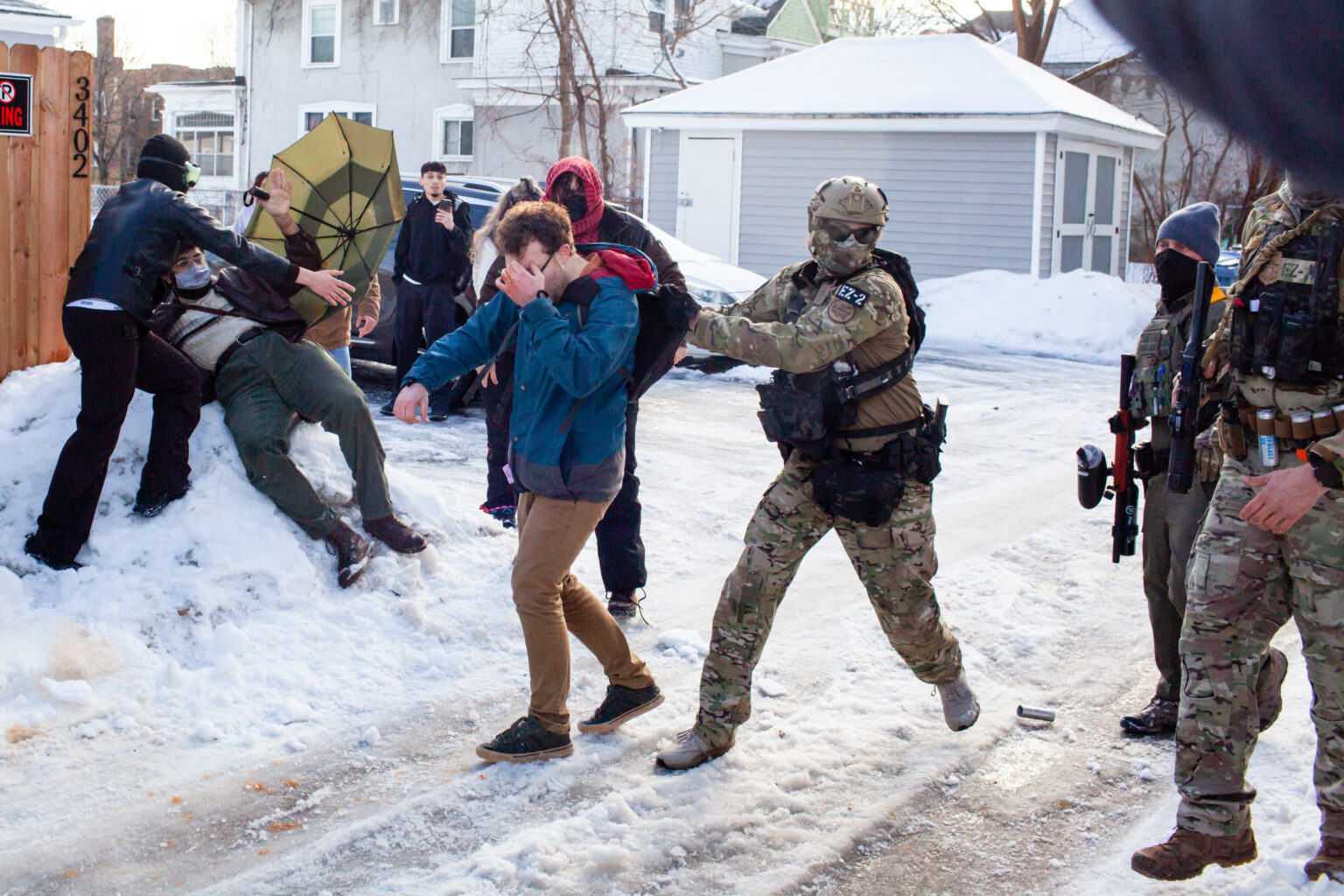
A federal agent grabs a demonstrator as they attempt to drive a truck out go the area while demonstrators gather after ICE officers shot and killed a woman through her car window Wednesday, Jan. 7, 2026 near Portland Avenue and 34th Street. (Photo by Nicole Neri/Minnesota Reformer)
In forty-eight hours, federal immigration enforcement became a shooting gallery. On January 7 in Minneapolis, an ICE agent killed 37-year-old Renee Nicole Good, a U.S. citizen, while she sat in her SUV. Federal officials claimed she “weaponized her vehicle”; local leaders and video evidence dispute that version. The next day in Portland, a U.S. Border Patrol agent opened fire during a traffic stop, wounding two people under a similar claim of threat.
These shootings fit a pattern. Since the current federal immigration enforcement surge began in 2025, immigration agents have been involved in at least 16 separate shooting incidents in which they fired their weapons at people, and held another 15 people at gunpoint without firing, according to a tracking project maintained by The Trace. Those 16 incidents have resulted in at least four deaths (including Good) and seven injuries.
The numbers tell the rest. From 2015 to 2021, ICE officers were involved in 59 shootings across 26 states and two U.S. territories, resulting in 23 people killed and at least 24 injured, according to public records obtained by journalists and nonprofit investigators.
ICE surged from roughly ten shootings a year historically to more than two per month during the current enforcement wave.
Armed federal agents descend on American neighborhoods. They leave bodies on the pavement. They vanish behind official explanations that local authorities cannot challenge. A nation that deploys force first and constructs legal justifications after.
Federal power arrives. Fires. Seizes the narrative. Immigration enforcement metastasized into militarized occupation. Due process surrendered to summary judgment on city streets. Local officials demand transparency. Federal agencies tell them to wait for self-investigations behind sealed doors.
Sixteen shootings in seven months. Four dead. Seven wounded. Fifteen held at gunpoint. Same script every time: self-defense, threat assessment, officer safety. Different cities, agents, victims. Same outcome. Federal force. Civilian casualties. Institutional silence.
Prosecutions of ICE agents for shootings: 59 shootings from 2015 to 2021, no evidence of an agent being criminally indicted for these fatal and nonfatal shootings. Zero.
Each shooting exposes design. A system that elevates brutality to civic virtue. Every citizen who bleeds out under federal authority gets the same explanation: unavoidable, defensible, required. Every agent walks away.
In a functioning republic, doubling the shooting rate triggers a constitutional crisis. In Thug Nation, background noise. We litigate particulars. The structural reality persists. Federal violence normalized at a scale that represents a fundamental break from history.
We are watching a nation erase the boundary between law enforcement and military occupation. Immigration agents transformed into armed combatants. Residential blocks into conflict zones.
Ten shootings a year to sixteen in a few months. Each time we accept this, we drift further from law and closer to a blast radius.
Seven months. More than double the historical rate. Zero accountability. Mounting casualties.
Welcome to Thug Nation. The numbers don’t shock because the system forgot what republic means.