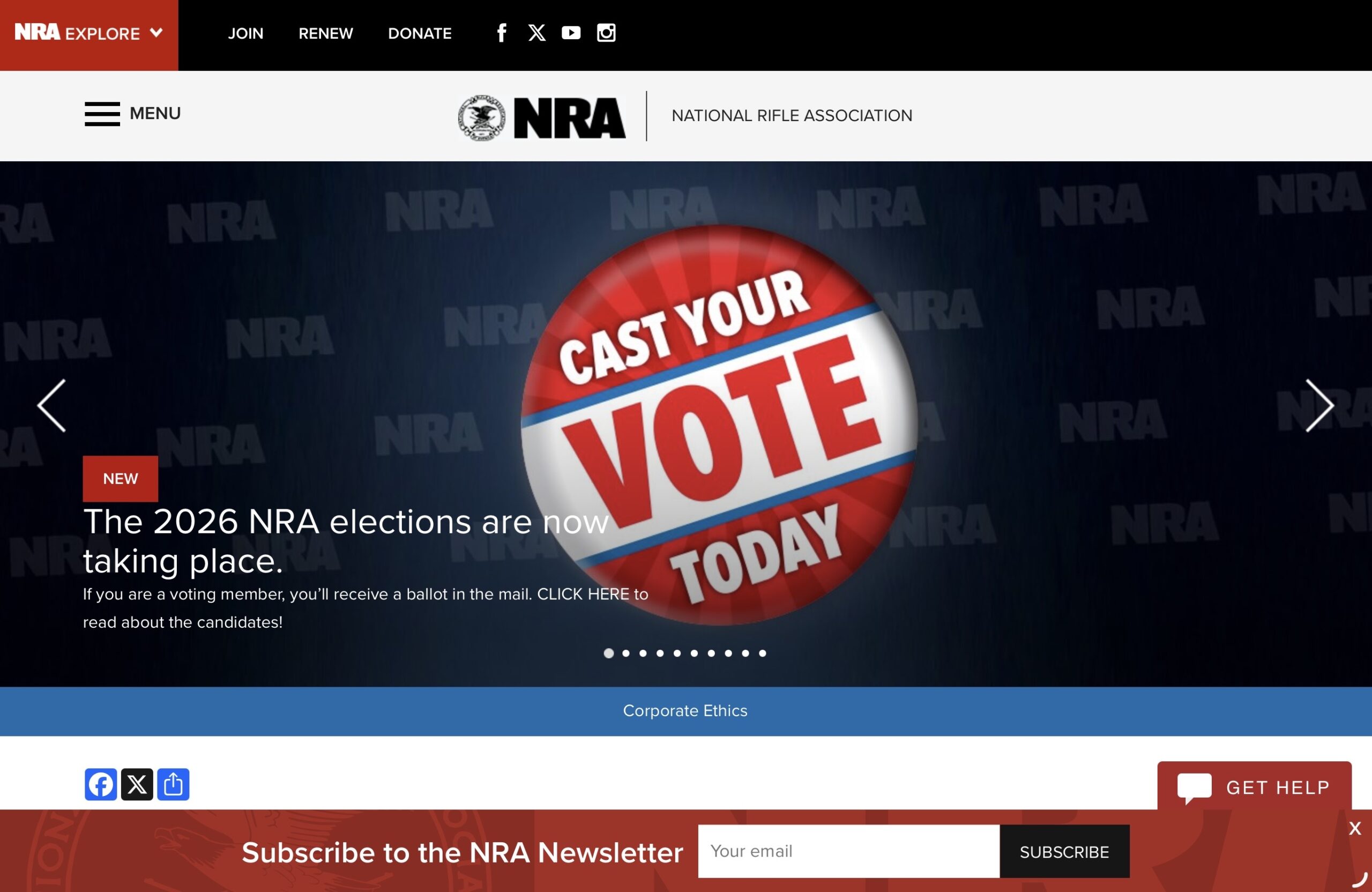
poorly Check out www.nra.org.
On the night federal agents killed an armed Minneapolis resident during a pre-dawn raid, the National Rifle Association’s website went dark on the subject.
It has stayed dark ever since.
No press release. No legal defense fund. No furious op-ed about government overreach. Just silence, the kind that gets louder the longer it lasts.
For an organization that has spent decades positioning itself as the last line of defense against state tyranny, this absence is not caution. It is choice.
The NRA has never struggled with timing when the narrative suits its needs. When a Texas homeowner shot an intruder in 2019, statements appeared within hours. When red flag laws were proposed in Virginia, the rhetoric turned apocalyptic within days, warnings of confiscation, tyranny, the end of freedom itself.
But Minneapolis requires a different script. Here, the uncomfortable variable is armed federal authority. A public killing with witnesses and video.
This is precisely the scenario the NRA’s fundraising emails have warned about for decades: government agents, pre-dawn tactics, a lawful gun owner dead. This is the moment when absolutist principle would demand immediate defense.
Instead, the NRA looks away.
In July 2016, Philando Castile was killed during a traffic stop in St. Paul.
He was licensed to carry. He disclosed his firearm as required by law. He complied with instructions. An officer shot him seven times anyway.
Castile had done everything the NRA claims to teach, and the organization said almost nothing. For over a year, it hedged and delayed.
When it finally spoke, it was through a single spokesperson offering tepid regret wrapped in qualifications about “terrible situations.”
No lawsuit. No legislative push. No membership drive built on his name. The NRA treated him like a liability, not a martyr.
Minneapolis feels like the sequel. Only now the silence is faster and harder to explain away.
The NRA will say it does not comment on ongoing investigations.
The problem is that this has never stopped them before.
Within 24 hours of Parkland, the organization was issuing statements about armed teachers. After Las Vegas, it pivoted immediately to bump stocks. When a Texas church shooting ended because an armed parishioner returned fire, the NRA turned it into an ad campaign before the victims were buried.
Restraint is not the issue. Selectivity is.
What Minneapolis exposes is a hierarchy the NRA has never wanted to articulate: Blue lives come first. Gun rights come second.
When those two things conflict, the choice is not even close. The organization’s base was told for decades that the Second Amendment exists precisely to check government power. That armed citizens are the final brake on tyranny. That the state, not the criminal, is the threat that makes gun ownership non-negotiable.
Minneapolis called that bluff.
When gun rights collide with police authority, the NRA has shown us which side it takes, and it is not the gun owner’s.
The silence is not neutral. It is editorial.
And it tells you everything you need to know.