Monthly Archives: January 2026

Silence Is the Statement

Check out www.nra.org.

On the night federal agents killed an armed Minneapolis resident during a pre-dawn raid, the National Rifle Association’s website went dark on the subject.

It has stayed dark ever since.

No press release. No legal defense fund. No furious op-ed about government overreach. Just silence, the kind that gets louder the longer it lasts.

For an organization that has spent decades positioning itself as the last line of defense against state tyranny, this absence is not caution. It is choice.

The NRA has never struggled with timing when the narrative suits its needs. When a Texas homeowner shot an intruder in 2019, statements appeared within hours. When red flag laws were proposed in Virginia, the rhetoric turned apocalyptic within days, warnings of confiscation, tyranny, the end of freedom itself.

But Minneapolis requires a different script. Here, the uncomfortable variable is armed federal authority. A public killing with witnesses and video.

This is precisely the scenario the NRA’s fundraising emails have warned about for decades: government agents, pre-dawn tactics, a lawful gun owner dead. This is the moment when absolutist principle would demand immediate defense.

Instead, the NRA looks away.

In July 2016, Philando Castile was killed during a traffic stop in St. Paul.

He was licensed to carry. He disclosed his firearm as required by law. He complied with instructions. An officer shot him seven times anyway.

Castile had done everything the NRA claims to teach, and the organization said almost nothing. For over a year, it hedged and delayed.

When it finally spoke, it was through a single spokesperson offering tepid regret wrapped in qualifications about “terrible situations.”

No lawsuit. No legislative push. No membership drive built on his name. The NRA treated him like a liability, not a martyr.

Minneapolis feels like the sequel. Only now the silence is faster and harder to explain away.

The NRA will say it does not comment on ongoing investigations.

The problem is that this has never stopped them before.

Within 24 hours of Parkland, the organization was issuing statements about armed teachers. After Las Vegas, it pivoted immediately to bump stocks. When a Texas church shooting ended because an armed parishioner returned fire, the NRA turned it into an ad campaign before the victims were buried.

Restraint is not the issue. Selectivity is.

What Minneapolis exposes is a hierarchy the NRA has never wanted to articulate: Blue lives come first. Gun rights come second.

When those two things conflict, the choice is not even close. The organization’s base was told for decades that the Second Amendment exists precisely to check government power. That armed citizens are the final brake on tyranny. That the state, not the criminal, is the threat that makes gun ownership non-negotiable.

Minneapolis called that bluff.

When gun rights collide with police authority, the NRA has shown us which side it takes, and it is not the gun owner’s.

The silence is not neutral. It is editorial.

And it tells you everything you need to know.
Pretty Typical, Actually


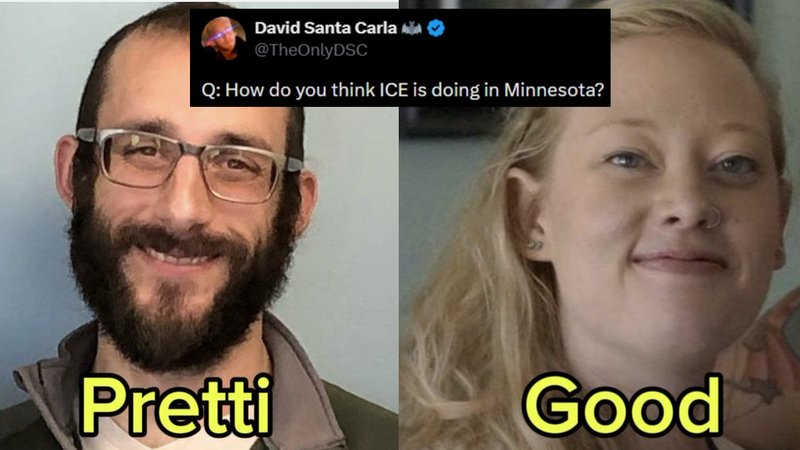
The Justice Department opened a civil rights probe into Alex Pretti’s killing Friday, three weeks after refusing to investigate Renee Good’s death under nearly identical circumstances.

Both were 37. Both were U.S. citizens. Both were shot by federal immigration agents in Minneapolis this month. Both were recording officers on their phones when killed.

The difference? Pretti was a white male Veterans Affairs nurse. Good was a woman in a same-sex relationship.

The disparity tells a story I recognized as a crime reporter: certain victims get federal investigations and presidential concern. Others get blamed, even in death. I learned early that I wasn’t getting on the front page unless a white victim was involved.

Deputy Attorney General Todd Blanche announced the Pretti probe will examine everything leading up to the shooting.

For Good, his office did worse. Justice Department officials ordered prosecutors to stop drafting a civil rights investigation and instead probe Good herself for assaulting the officer who killed her. A federal judge refused the warrant request.

At least six Civil Rights Division prosecutors resigned. So did Minnesota’s acting U.S. Attorney Joseph Thompson, who built his reputation prosecuting major fraud cases. More resignations followed as agents were ordered to investigate Good’s widow for alleged ties to activist groups.

That message was clear: Good deserved what happened.

I spent decades covering homicides. Editor interest spiked when victims were white. A missing white woman meant daily follow-ups and front-page placement. A Black teenager shot in the same neighborhood might rate three paragraphs on B6.

The pattern holds at the federal level now. Iimmigration enforcement has admitted to 16 shootings since July 2025, declaring each justified before investigations finished.

The actual toll is worse. At least 30 shootings by immigration agents since January 20, 2025 resulted in eight deaths. Five victims were U.S. citizens. The Wall Street Journal identified 13 instances of officers firing at or into civilian vehicles, a practice most police departments banned years ago.

ICE disclosed six custody deaths already in 2026. Last year saw 31, the highest since 2004. These exclude people who die fleeing agents or those released from custody hours before death to avoid official counts.

Pretti’s status as a registered gun owner seems to have purchased credibility with federal officials. They claimed he brandished his handgun and charged officers.

Video showed otherwise. The gun remained in his waistband while he recorded on his phone. Officers tackled him. One agent removed the weapon. Another shot him in the back.

Good faced the same posthumous smearing. Officials said she tried to run over an ICE agent. Video showed her wheels turned away when the agent opened fire.

The gun ownership detail troubles me. Does carrying legally make someone’s death more worthy of investigation? Does it make their life more valuable?

The implication is ugly. Pretti mattered because he had the trappings of respectable citizenship. Good apparently did not.

Federal agents reportedly invoked Good’s death as a warning. One who pepper sprayed a legal observer reportedly said protesters needed to stop or end up like “that lesbian bitch.”

Her death was a threat. His triggered an investigation.

I get the calculation. Pretti had credentials, legal gun ownership, and demographics that made him harder to dismiss.

Good had neither shield.

But that calculation is the problem.

Both were Americans killed exercising constitutional rights. Both deserve the same scrutiny, the same pursuit of truth, the same accountability.

The fact that only one is getting it tells us whose lives we value and whose deaths we’re willing to excuse.