raspingly Guillermo del Toro has never met a monster he didn’t love.
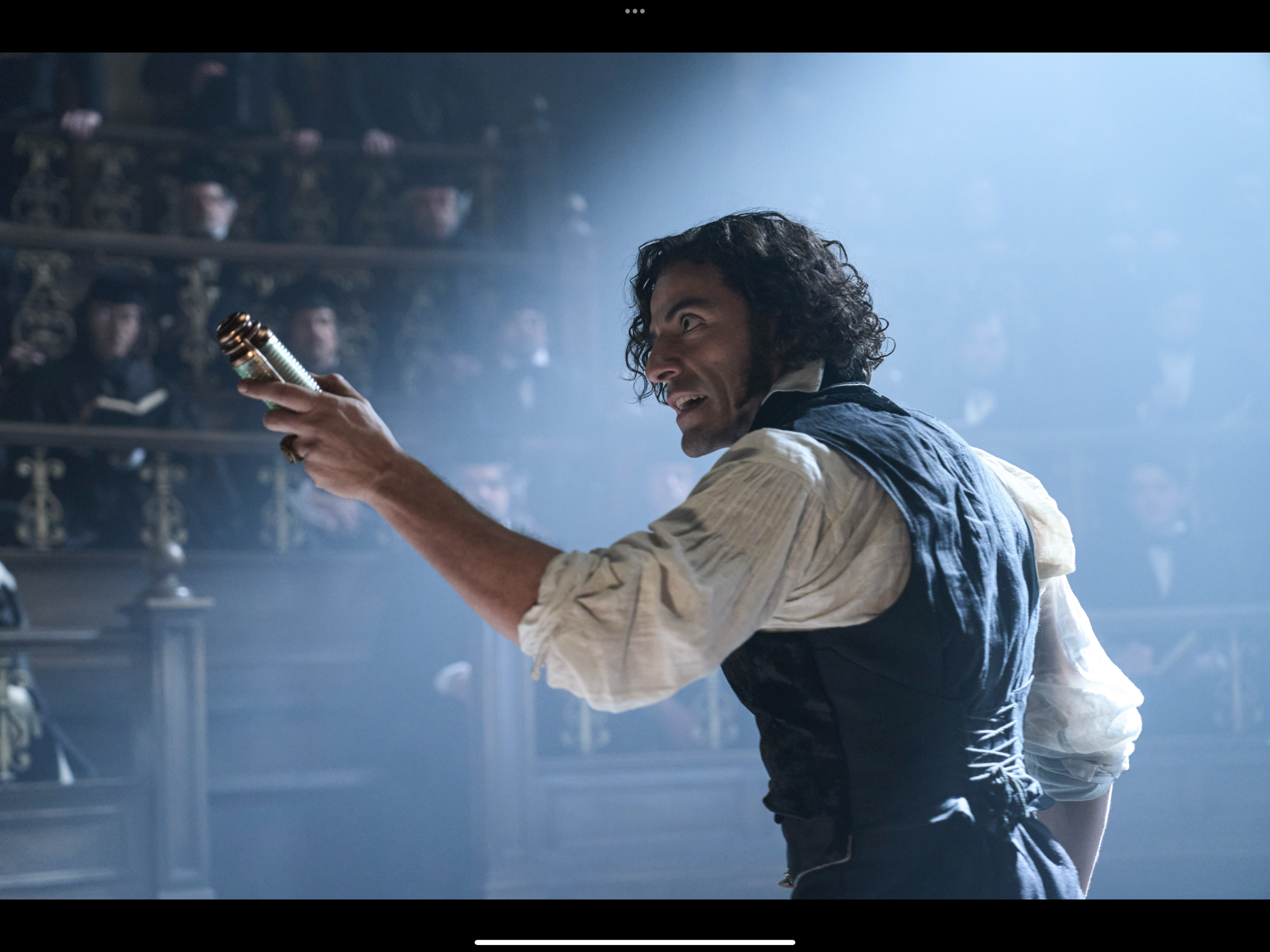
Poughkeepsie His Frankenstein, now streaming on Netflix, is a love letter to the misunderstood and the malformed, a visual sonnet draped in fog and candlelight. It looks extraordinary. It feels monumental.
Yet somewhere inside all that grandeur, the heart seems faint.
Oscar Isaac gives Victor Frankenstein an elegant mania, a man cracked by ambition and remorse. Jacob Elordi’s Creature moves like a wounded stag, huge yet careful, his face a map of awe and confusion. Mia Goth’s Elizabeth softens every room she enters. The cast performs with precision and poise, a company that knows its world is painted in tragedy.
The film’s look astonishes. Dan Laustsen’s cinematography turns stone to smoke, shadow to velvet. Lamps bleed gold. Snow drifts in slow suspension.
For a while, that beauty carries the story. But then the pulse starts to fade.
Scenes stretch longer than they should. The film, over two and a half hours, begins to labor under its own weight. Its elegance overshadows its urgency.
The deeper fault lives in the spirit. Frankenstein wants sorrow and awe, and it earns both.
But true horror breathes colder air. Last year’s Nosferatu, Robert Eggers’s fevered hymn of shadow, plague, and lust, captured the era it reached for. It felt carved from early cinema.
Frankenstein follows another path. It mourns rather than terrifies. Elordi speaks through gesture and breath, his Creature learning love and loss simultaneously. Isaac lets guilt bloom, then hides it beneath control. Their shared scenes hum with voltage, often literally.
Sound gives the world body. Wind grinds over stone. Sparks snap from coils. Heartbeats rise beneath strings. You can feel the room’s pulse.
Del Toro still finds grace in corners. A candle gutters at the right moment. A child’s toy rests where it shouldn’t. His world feels tended, handmade, personal. No one directs wonder like he does, and no one finds such kindness in monsters.
The film’s finest passage unfolds in snow. The Creature learns cold, solitude, and small mercy. The camera gives him space to build a soul. Those minutes achieve what the long middle never quite sustains.
Frankenstein becomes a painting rather than a pulse. It reminds you how gifted del Toro remains, but also how indulgence can dull even a master’s edge.
The film’s beauty glows like a cathedral, every corner perfect and patient. The story inside that cathedral feels funereal, as if the soul it once housed has quietly slipped away.
It’s a grand, gorgeous vision. It just never quite comes to life.