Monthly Archives: October 2025

The Myth of Social Media


http://childpsychiatryassociates.com/treatment-team/maggie-mcgill/maggie_mcgill-600/ For the first time ever, more Americans now get their news from social media and video apps than from television.

A report from Reuters Institute for the Study of Journalism says 54% of Americans say they get news via social media/video platforms (at least sometimes) compared to 50% via TV. 

Pew Research says the same: more than half of U.S. adults at least sometimes get news from social platforms. It’s the final proof that social media is no longer the alternative to mainstream media. It is the mainstream.

Everywhere you look, self-appointed truth-tellers are railing against “the media” while quoting it word for word. They rage on YouTube about bias and corruption, then cite CNN, The New York Times, or The Washington Post as the source for their stories.

They curse the beast while feeding off it. If you quote the media, you are the media. The sooner these self-styled outsiders admit it, the sooner we can retire this nonsense about being “independent.”

The myth of an “anti-media” social class depends on pretending that clicks, likes, and shares are not circulation numbers. They are.

Most newspapers in this country would give their firstborn for the reach of a mid-level YouTuber. Some of these podcasters and TikTok pundits draw audiences in the millions. That is not rebellion. That is scale. You can wrap it in denim and attitude, but it is still mass media.

The claim that social media keeps traditional outlets honest is another sleight of hand. These so-called watchdogs amplify the very messages they say they are policing. They repost the same headlines, clip the same news footage, and build the same outrage loops.

When an influencer “fact-checks” a network, he keeps the network alive by spreading its stories. The more they fight, the more alike they become.

At its core, media is the business of attention. Traditional journalists used to compete for inches of space on a page; influencers now fight for seconds of screen time. Different weapons, same war.

Both rely on headlines that spark emotion and speed that outruns reflection. Both profit when audiences react faster than they think. One uses a press badge, the other an iPhone, but they are in the same trade.

The biggest difference between mainstream and social media is the lack of rules.

Newsrooms have editors, standards, and corrections pages. Influencers have sponsors, likes, and delete buttons. When a post goes viral, it stays viral whether it’s right or wrong. The apology, if it ever comes, is a whisper.

The algorithm rewards volume, not accuracy, and the crowd decides who gets to be credible. The public used to demand the truth; now it demands attention.

And yet, the public still wants to believe there’s a moral difference between the two. There isn’t. The same outlets that once sold papers on corners now sell clips on phones.

The same audiences that once tuned in at six now scroll through feeds at midnight. The platform changed, not the instinct.

We like to be told stories that make us feel smarter, safer, or superior. That’s as old as the printing press.

What we call “social media” is just media stripped of furniture. It has no editor’s desk, no ombudsman, no fact-checking department, no copy desk.

But it has influence, reach, and profit, all of which make it part of the same system it mocks. The person ranting about “fake news” while monetizing their views is not fighting the media; they are franchising it.

So let’s stop pretending there are two sides, one pure and one corrupt, one traditional and one free. There is only one media machine, endlessly spinning, endlessly reshaping, endlessly selling.

The only real question is whether it’s serving truth or performance. And right now, performance is winning.

Social media didn’t kill the media. It became it.
Pennsylvania Avenue Gold Rush


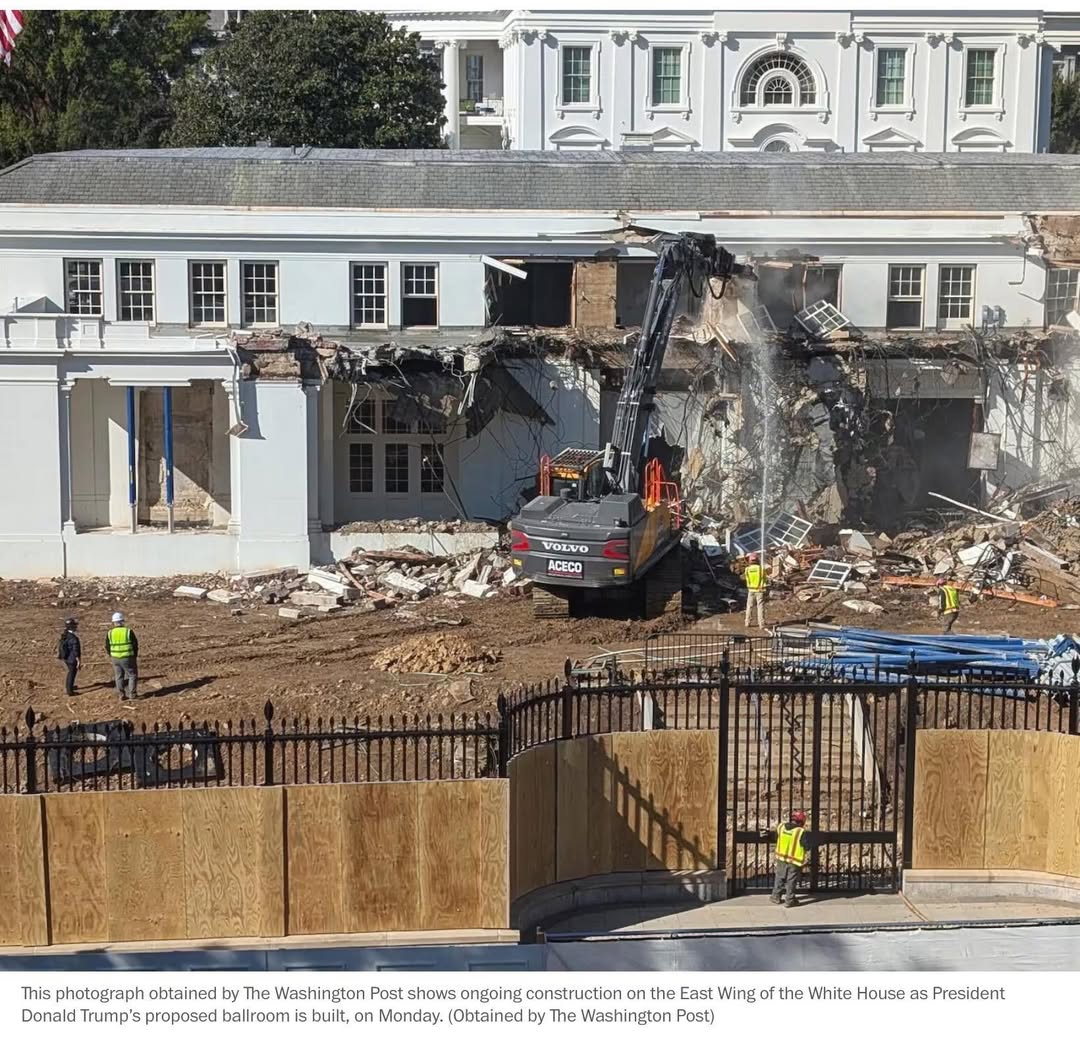
The East Wing of the White House is vanishing under bulldozers and ego.

What began as a renovation has turned into a spectacle. The East Wing, home to the First Lady’s office and generations of quiet diplomacy, is being gutted for a ballroom the size of a shopping mall.

Ninety thousand square feet. Private donors. Gold trim. Glass walls. The kind of space where democracy preens.

This isn’t Trump’s first brush with architectural self-expression.

The Rose Garden lost its roses and gained a patio paved in stone. The press room glitters with gold leaf that Liberace would find over the top. The Oval Office has turned into a Vegas suite, dripping with gold curtains and embossed carpet.

Each “improvement” shares the same theme: replace reflection with reflection of self.

Now the wrecking crews move through a wing that once hosted visiting families, scholars, and schoolchildren. Workers hauled away the limestone that presidents from Roosevelt to Reagan to Obama walked beneath.

Republicans will call it renovation. History will call it vandalism with better lighting.

Renderings of the new ballroom look like a postcard from Mar-a-Lago. Gold columns. Mirrored ceilings. Chandeliers that would make Versailles blush. The White House becomes less a symbol of service, more a theme park of ambition.

Preservationists sound exhausted. One historian compared the destruction to slicing a Rembrandt for its frame.

Officials describe the project as modernization. They promise stronger infrastructure, updated security, and a grander stage for world leaders.

Yet the grandeur serves a single host. Private donors bankroll the job, their names sealed in secrecy. Washington has always loved influence, but this project gives it a ballroom and valet parking.

The symbolism writes itself. The people’s house, once the backdrop of shared ideals, becomes a monument to personal taste. What once welcomed Americans now welcomes investors. The White House loses its humility and gains a chandelier.

The construction will finish. The plaster dust will settle. The grand opening will sparkle. Dignitaries will twirl beneath the chandeliers.

But the shine will never hide the scar. The East Wing carried the weight of a century. That century passed centuries ago, it seems.

The White House once belonged to the people. It now rents by the table.

’The Perfect Neighbor’ Chills in Its Knock


Netflix’s The Perfect Neighbor is one of the most original and uneasy true-crime documentaries in years.

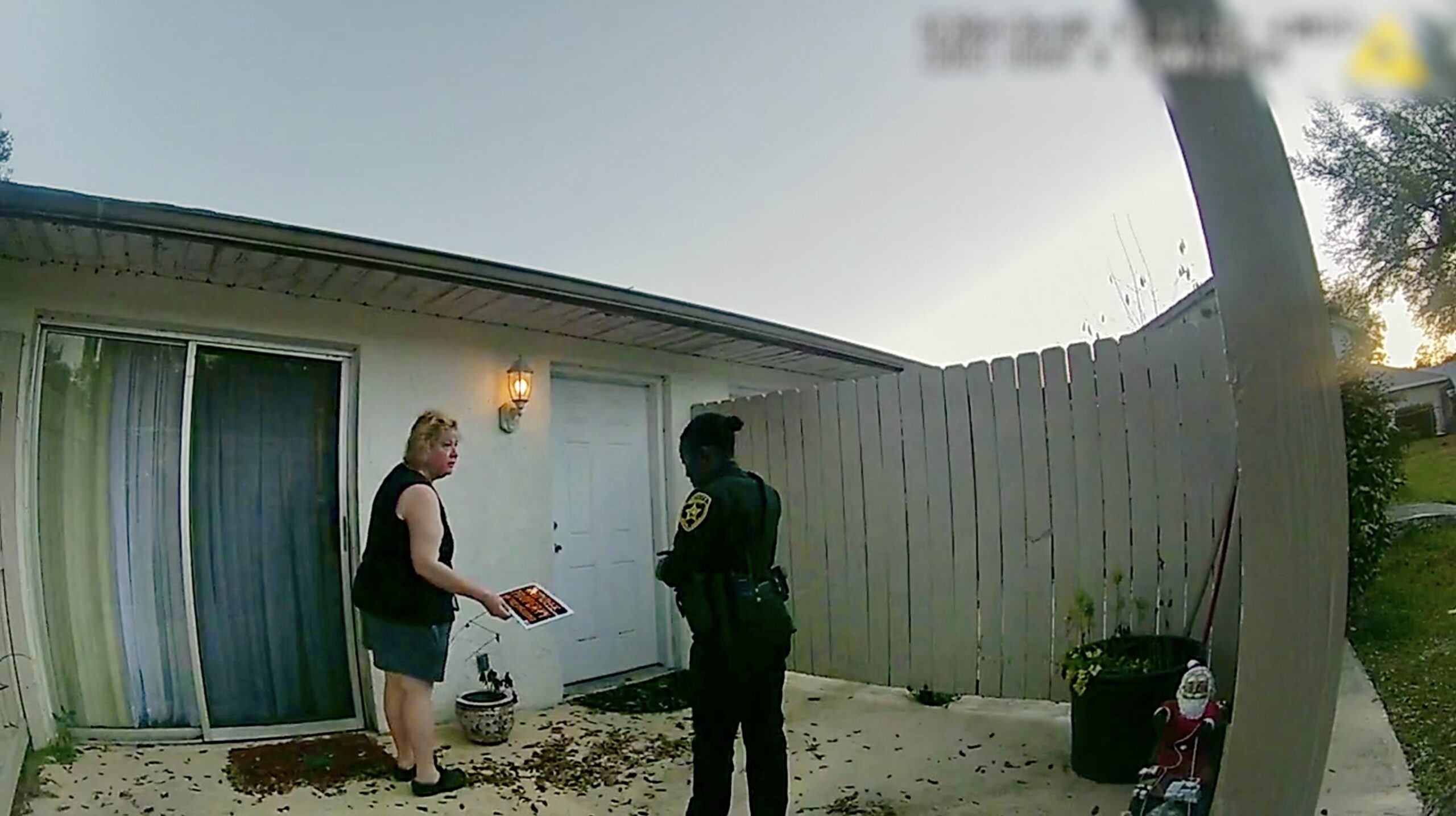
Director Geeta Gandbhir builds the film entirely from police body-cam, 911, and surveillance footage. There’s no narrator, no interviews, no voice to guide you.

Every moment is drawn from real recordings, cut with courtroom precision. The result feels less like entertainment and more like evidence.

That choice matters because both of the film’s subjects, true crime and the Karen phenomenon, have been overworked and politicized.

True crime has become formula. Karen culture has become punch line. Gandbhir merges them and finds something new. The film sits in the overlap between voyeurism and outrage, and it makes both uncomfortable.

The story centers on a neighborhood dispute that spirals into violence. You hear the calls. You see the officers arrive. You watch the aftermath unfold in real time.

There is no narrator to soften it, no expert to explain motive or guilt. Gandbhir’s restraint becomes the film’s point. She trusts the audience to watch, absorb, and decide.

The structure is bold. The film saves its final blow for the end credits, perhaps a first in filmmaking. Gandbhir never builds suspense; she lets it gather.

Every cut feels deliberate. The absence of commentary keeps the focus on the behavior, not the headlines, behind the Florida crime. The rhythm of police footage and home video becomes its own language. It’s slow, tense, and honest in a way few documentaries risk.

The politics are there, but they’re not preached. The film will draw applause from those who see it as justice and discomfort from those who see it as judgment.

That tension is the movie’s engine. It shows what happens when fear and authority meet behind a fence line and neither backs down.

The Perfect Neighbor isn’t pleasant, and it isn’t meant to be. It’s a film built from what people said and did when they thought no one was watching.

That’s what makes it powerful.