Caivano You can’t look away from a train wreck, but Netflix keeps making you wish you could.
The latest entry in Ryan Murphy’s Monster franchise, this one centered on Ed Gein, is the purest kind of TV turd: slickly produced, hopelessly sensationalistic, and about as thoughtful as a Halloween haunted house. It’s billed as a “story,” but there’s nothing here resembling storytelling. What you get is voyeurism disguised as television art.
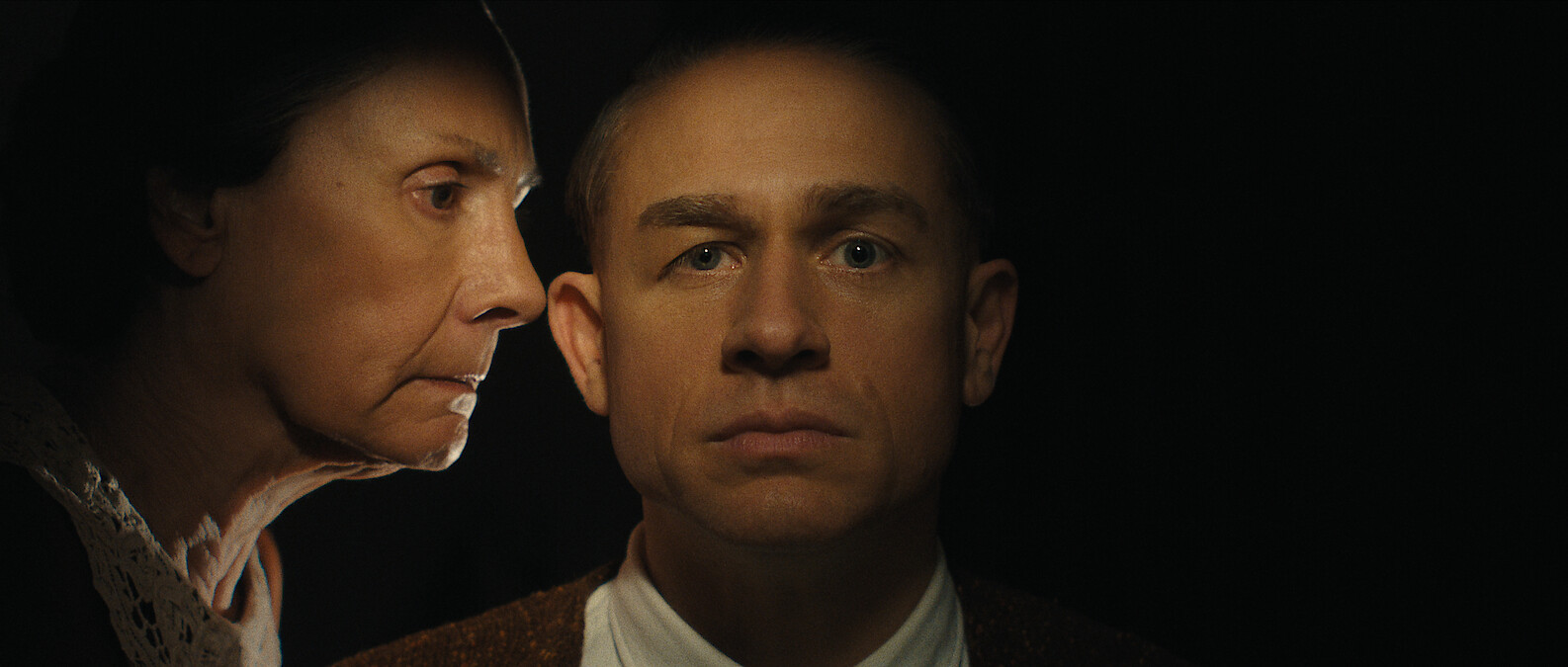
Charlie Hunnam, cast as Gein, delivers his lines in a bizarre falsetto, the kind of false softness that makes you wince rather than shiver. Gein’s real voice was quiet, even childlike at times, something unsettling because it was natural.
The performance here sounds like an actor putting on a skin mask he doesn’t quite understand. If Hunnam has a naturally soft voice, it doesn’t come through. It plays like a gimmick, one more piece of borrowed creepiness that turns campy instead of chilling.
Then there’s the mother. Laurie Metcalf plays Augusta Gein, a role that should’ve been layered with nuance. Gein’s mother was famously domineering, a towering religious fanatic whose shadow loomed over his entire life.
In this series, she arrives straight from central casting as Demon from Hell, dripping venom in every line, scowling like an exorcism in a ratty dress.
It’s unsubtle, and worse, it’s unimaginative. Real horror comes from the everyday. By making her a cartoon monster, Murphy robs the story of its only real psychological core.
This is the problem with the whole enterprise. Rather than digging into the questions Gein still raises — how does small-town isolation incubate violence, how does obsession curdle into depravity, why does true crime still grip us — the show is obsessed with surfaces.
The series paints Gein as a horror mascot, not a human being warped by circumstance. The camera lingers on corpses, on skin, on grave-robbing like a kid showing off his goriest comic book.
Murphy has made a career out of excess, and sometimes it works. American Horror Story thrived on spectacle. The Assassination of Gianni Versace found real drama in flamboyance.
But here, excess feels cheap. There’s nothing new to say about Gein, nothing undiscovered. The show doesn’t try. Instead, it doubles down on lurid images we’ve all seen before.
There’s no denying the production looks expensive. The sets are suitably grim, the lighting all shadows and menace.
The polish, however, only sharpens the cynicism. You feel like you’re being sold a wax figure in a freak show. This feels more like exploitation than exploration.
The true crime boom has given us enough to know the difference. Mindhunter wrestled with the banality of evil. Documentaries like The Jinx and Making a Murderer pulled apart the systems around crime. Even Dahmer — Murphy’s previous monster — found angles about race, policing, and media complicity. The Ed Gein Story has no such aim. It just wants you to squirm.
And squirm you will. Not from terror, but from the sheer awfulness of it all.
One day, someone will tell Ed Gein’s story with clarity and restraint, with attention to the horror of his past, his crimes and the humanity of the world he destroyed.
This isn’t that day. This is another Murphy sideshow, another exercise in television taxidermy.
Netflix calls it Monster. They got that part right.