I Didn’t Think So


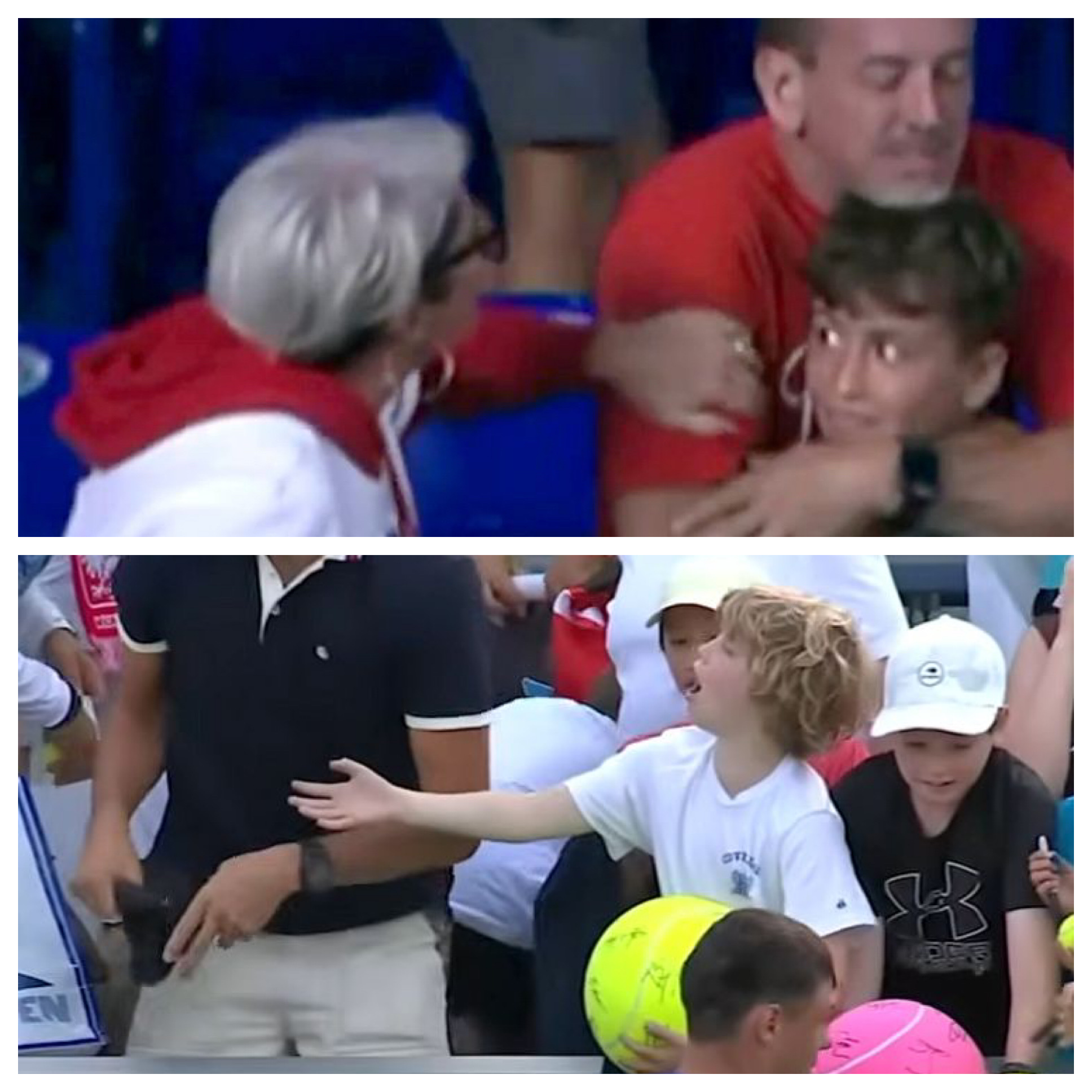
A boy leaned over the railing at the US Open. A kid stretched out his glove at a Phillies game. In both moments, an adult barged in, seized the prize, and walked away.
The children were left stunned. The internet, furious with petty thefts that became viral morality plays.
And they show how public life in America has curdled — where entitlement trumps empathy, where grown men and women snatch from children, and where only cameras and social shame restore order.
At the Open, Kamil Majchrzak signed a cap and tossed it toward a boy named Brock. A man named Piotr Szczerek, a CEO, leapt and snatched it. He shoved the cap into his wife’s bag. Brock’s face fell.
The clip exploded online. Review sites flooded with scorn. Szczerek later apologized, calling it a mistake. Too late. Majchrzak found Brock himself, gave him a new hat, and turned disgrace back into grace.
In Miami, Phillies outfielder Harrison Bader launched a home run. Drew Feltwell caught it clean and slid it into his son Lincoln’s glove. A woman stormed over, grabbed his arm, and barked that the ball was hers.
Feltwell gave it up. Lincoln lost the ball. Cameras caught every second. The woman, branded “Phillies Karen,” became a meme. The Marlins sent the boy a gift bag. Bader signed a bat. Again, the player did the right thing after a fan did the wrong one.
Both stories played out the same way: selfish act, viral outrage, public shame, institutional repair.
The arc has become familiar. Americans now rely on video, hashtags, and companies to enforce the most basic rules of decency.
These are small things: a cap, a ball. But they expose a larger rot. The instinct to take, the reflex to excuse, the scramble to save face once the world is watching. Childhood gets sacrificed to adult pride. Empathy arrives only after the mob lights the torches.
It’s a bad sign when kids at games learn not about sport, but about theft and apology tours. It’s worse when adults seem unbothered until shamed into contrition.
America may still celebrate its heroes, but lately it has a knack for making villains out of its fans.