Today, a friend and I disassembled the hefty wooden bed that’s been my nocturnal cabin for a decade and a half. The reason?
Your stumpy legs, Charlie.
Don’t get me wrong; I love your low-rider suspension — in no small part because your six-inch legs don’t impair your hops at all. You can outleap Jadie.
But you bound so eagerly from the bed’s waist-high precipice, clatter so loudly on impact, I just know you’re gonna break a bone on a cold, old morning. Then again, perhaps your old man is taking about himself again.
Regardless, what’s done is done. The guest bedroom is gonna have a killer setup once I find a mattress, box spring, and sucker to drive us. You know anyone?
In the meantime, get used to fewer nighttime acrobatics. You’ll thank me in the long run. Besides, I’M the one sleeping on the floor. That’s your normal bed.
Anyway, like I said, I hope you’re happy. Honestly, I’m kinda am.
Moby Dick was never actually named Moby Dick in the story.
In Herman Melville’s 1851 novel, the giant white sperm whale is referred to simply as “the White Whale” or “Moby Dick” by the crew, but that name really comes from Captain Ahab’s obsession with it.
The real-world inspiration was a famous 19th-century albino sperm whale called Mocha Dick, known to sailors for his ferocity. Melville changed the name slightly, but in the book itself, the whale isn’t walking around with “Moby Dick” as an official name; it’s more a label born of Ahab’s vendetta and the crew’s legend-making.
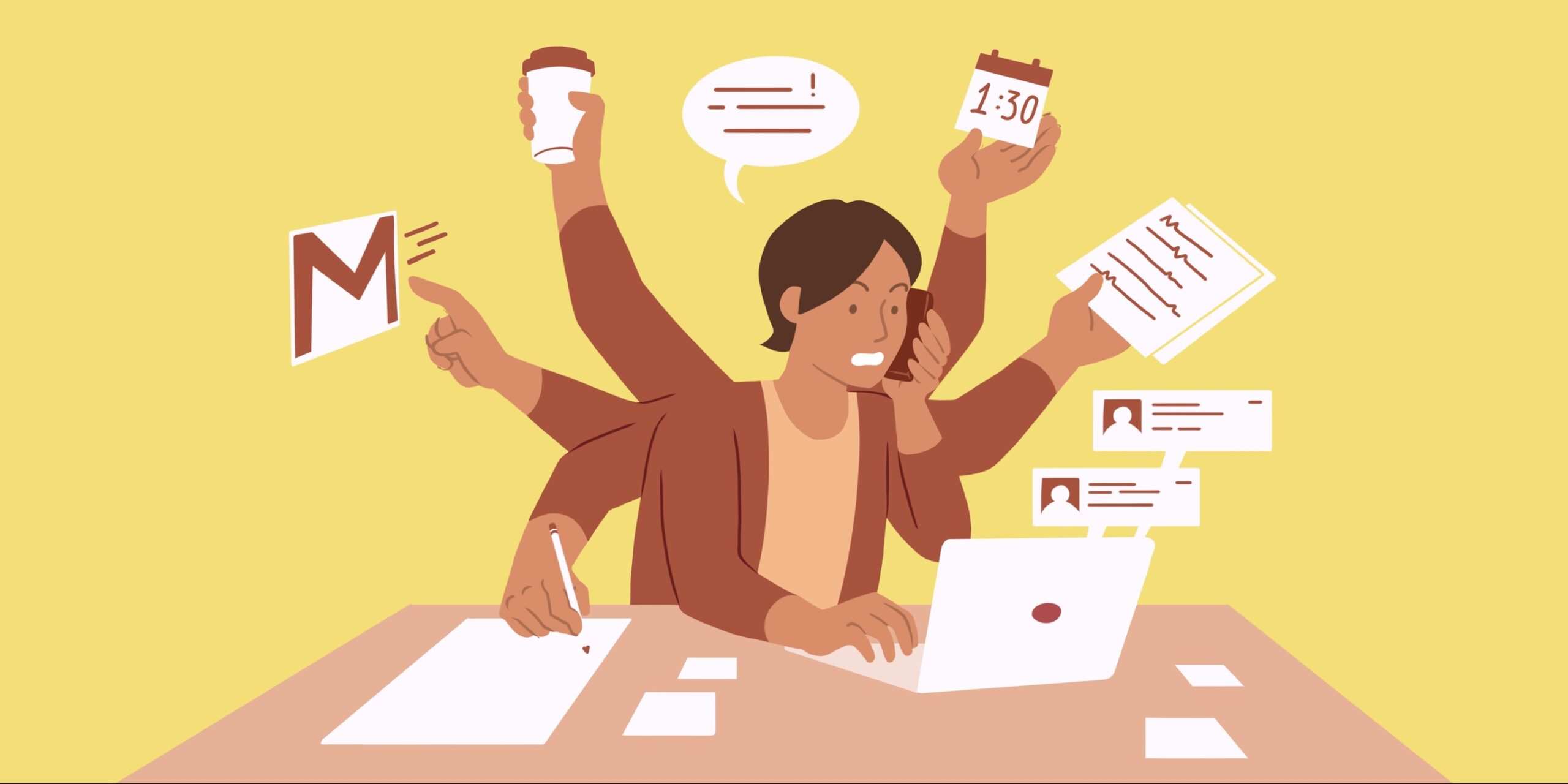
Phones ping. Emails ding. TVs flash in the background. We tell ourselves we can work, talk, listen, and scroll at the same time.
But the science is blunt. You can’t.
What we call “multitasking” is really rapid task switching. Your brain doesn’t run tasks in parallel, like a computer with many cores. It moves from one to the next, back and forth, fast enough to fool you into thinking they run at once.
Researchers call it cognitive switching. Every time you swap tasks, the brain drops one context and loads another. Like shutting one file, opening the next.
That takes time.
The time is small — a tenth of a second, maybe two — but it adds up. Studies show constant switching can cut productivity by 40 percent. Forty. Because as you flip between tasks, you lose not just speed, but accuracy.
Psychologists call this the switch cost.
Say you read email, write a report, and listen to music with lyrics. Each time you glance at the inbox or catch a line in the song, your brain hits pause on the report. Then it needs a beat to remember where it left off. Like leaving your place in a book, then hunting for it again.
Neuroscience shows the brain pays for this in blood sugar, too. Switching tasks burns glucose. The more you switch, the faster you drain the tank. That’s why you feel fried after a day of “doing everything at once.”
It isn’t just work. Driving while talking on the phone? Same effect. You can do both, but reaction times stretch. Attention falls. Risk rises.
Stanford researchers found heavy multitaskers (people who swear they’re good at it) do worse at filtering out distractions. They struggle to hold information in working memory. Their focus leaks.
Because multitasking isn’t about talent. It’s about limits. The prefrontal cortex, the brain’s CEO, handles planning, decision-making, and attention. It can juggle one demanding task, maybe two simple ones. Add a third, it drops something.
The myth comes from speed. Switch fast enough, and it feels like you do two things at once. But the brain runs a single spotlight of attention. It just whips the beam around, leaving the dark in between.
Even tiny interruptions hurt. One study found that a 2.8-second distraction — a quick text check — doubled error rates. A 4.4-second break? Tripled them.
The more complex the task, the worse the hit. Reading while music plays is one thing. Writing while the phone buzzes, the Slack pings, the TV blares? Your brain shreds attention like paper.
So you can’t multitask. Not because you lack willpower, but because biology says no.
The brain runs a single line of thought. Break it, and you pay in time, energy, and mistakes.
Better to do one thing. Then the next. Then the next. Intention, Attention.