http://childpsychiatryassociates.com/treatment-team/maggie-mcgill/maggie_mcgill-600/
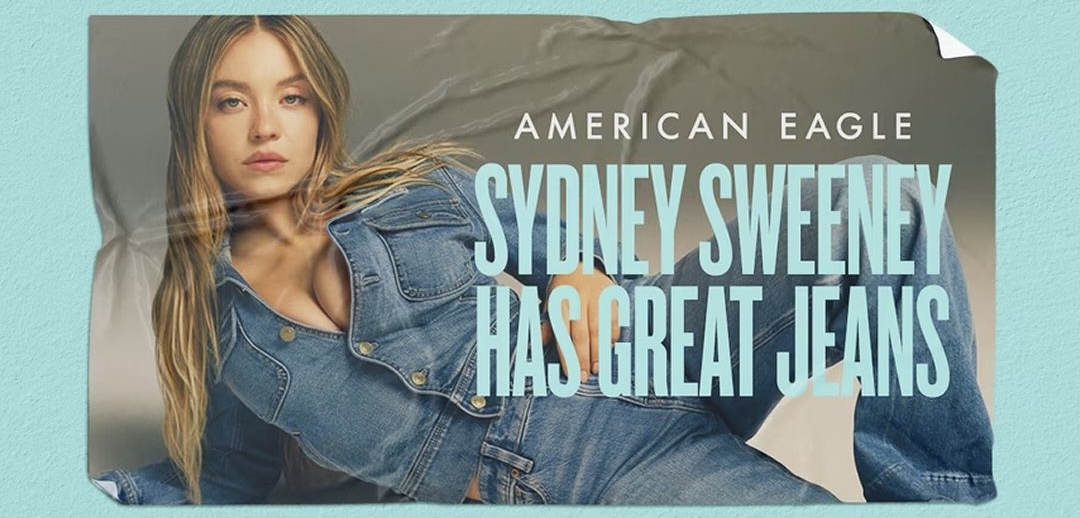
Sydney Sweeney made a dad joke and the internet lost its mind.
In a denim ad, she recites a biology line about genes determining eye color. Then, deadpan: “My jeans are blue.”
It’s dumb. It’s cheeky. It’s barely a pun. But the outrage machine saw fuel.
Suddenly, she’s the poster girl for eugenics. TikTokers labeled the ad white supremacist chic. Commenters called it “Nazi-coded.” Writers scrambled to explain how a pun about pants turned into a referendum on race, beauty standards, and blonde privilege.
And just like that, the cycle rebooted.
This is how it goes. Something small. Slightly tone-deaf. Possibly ironic. Possibly not.
The ambiguity becomes bait. Outrage hits first. Then comes the backlash to the outrage. Then the backlash to the backlash. After that, opportunists swoop in—content creators, brand consultants, pundits, bots. Within 48 hours, the original context is buried. What’s left is engagement.
What started as a dumb joke becomes cultural battlefield.
But no one’s talking to each other. They’re talking at each other. Or, more accurately, past each other—through ring lights, stitched videos, doomscrolling timelines, and reaction feeds. Nobody’s trying to understand the other side. They’re trying to rack up likes, land a dunk, or farm the moment for clicks.
The internet doesn’t do conversation anymore. It does spectacle.
This wasn’t always the case. There was a brief window—early forums, early Twitter—when online debate felt like something. People tossed ideas around, challenged assumptions, sometimes changed minds.
But the platforms figured out that conflict drives revenue. Rage is more profitable than reason. Now, every moment is filtered through the same broken machine.
There’s no proportionality. A war crime, a misspoken joke, a denim ad—they’re all flattened into the same space. The feed erases scale. All it sees is attention.
And attention, in this economy, is everything.
Even legitimate concerns get twisted. Yes, we should talk about how whiteness is marketed. Yes, propaganda has a look. Yes, culture shapes perception.
But the way we do it now—viral shaming, pixel-deep analysis, moral panic—it reduces real conversations to theater.
And theater never asks hard questions. It only asks you to pick a side.
The result is exhaustion. Even people who care are checking out. Not because they’ve stopped believing in change—but because they’re tired of yelling into the void. Tired of debates with no rules, no finish line, and no actual interest in listening.
So how do we fix it?
We stop feeding the loop.
We resist the bait. We stop pretending every ad is a thesis statement. We stop elevating every micro-offense into a cultural earthquake. We let some things be small.
We also stop performing. We talk to real people in real time—off-screen when possible. We listen longer. We ask more questions than we answer.
We treat disagreement as friction, not fire. We choose context over clout. Thought over theater. Curiosity over certainty.
Not everything has to be content. Some things can just… be.
Sydney Sweeney didn’t declare a culture war. She made a dumb joke in a pair of jeans. The war’s on us—for mistaking a pun for propaganda, and a moment for meaning.
She didn’t break the discourse—she just reminded us how brittle it’s become.