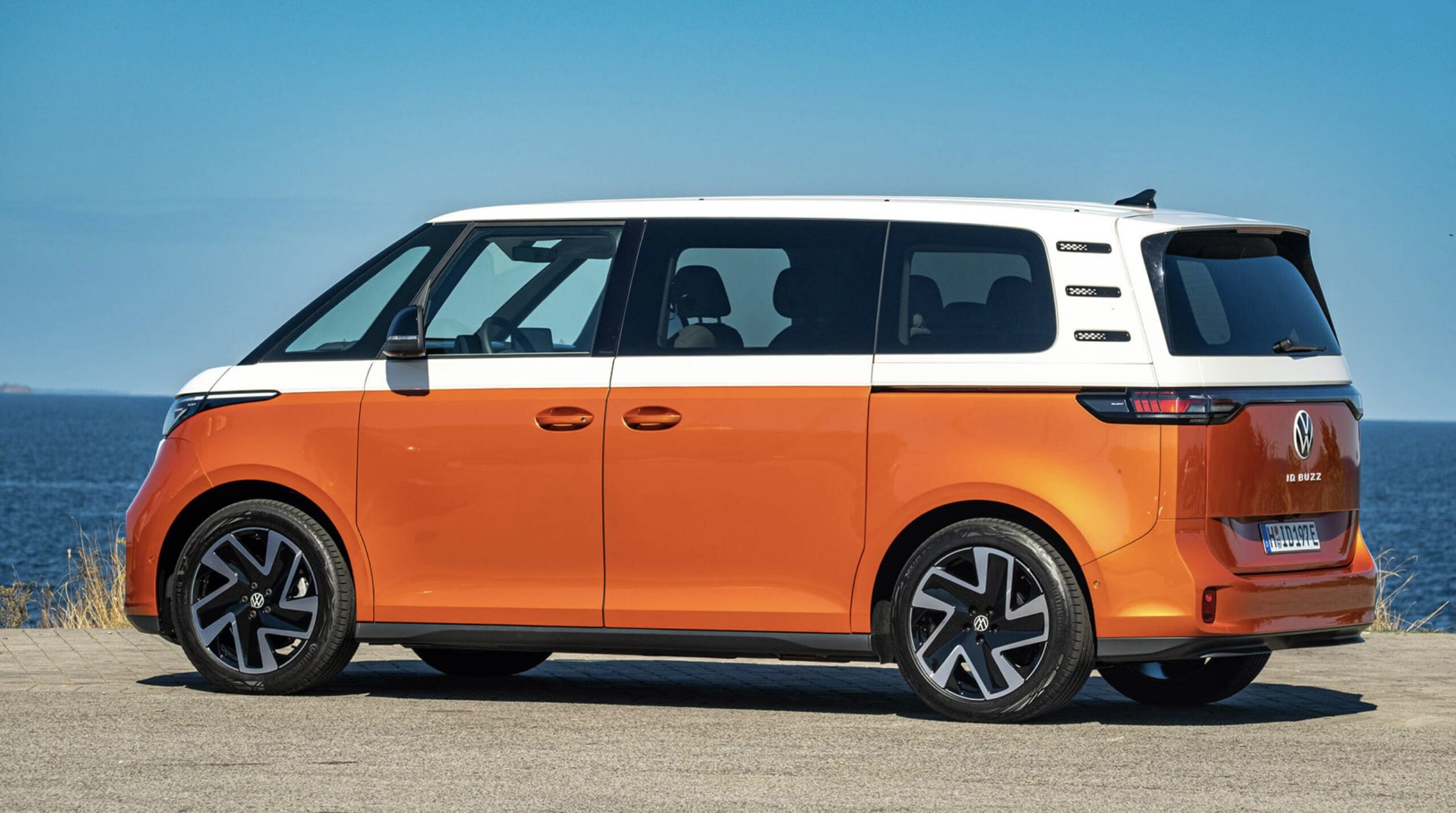
Volkswagen’s new electric van, the ID. Buzz, was supposed to be a love letter to America’s freewheeling spirit; instead, it’s a Dear John note from the future.
VW thought nostalgia would drive sales — that Americans would sprint to the showroom to reclaim a piece of the ‘60s, this time on battery power. They slapped a $60,000-plus price tag on it, slapped a few surfboards in the ads, and expected buyers to slap down deposits.
But the ID. Buzz missed its moment, misread its audience, and underestimated the hard math of the American driveway.
The Buzz promised sunny California vibes but delivered European practicality dressed up in pastel marketing. In a country that loves big trucks and seven-seat SUVs, this was a lightweight with a short reach. The range — just 230 or so miles — looked more like a commuter car’s resume than a road trip warrior’s.
And in a land where “bigger is better” is stitched into our national psyche, the ID. Buzz simply looked like a toy.
Then came the price. VW asked for Tesla money without Tesla specs or status. Americans looked at the $70K window sticker, remembered there were no tax credits (thanks to German assembly), and politely declined.
The Buzz ended up in a weird no-man’s-land: too expensive for the hippie van crowd, too small and underpowered for suburban families, too slow to make an impact in the flash-flood EV market.
Early adopters who love to brag about range, tax rebates, and resale value found better choices in Kia’s EV9, Rivian’s R1S, or even the old-guard Model Y. Meanwhile, anyone seduced by nostalgia could grab a restored gas microbus for half the money and twice the smiles.
Add to that VW’s signature rollout stumbles:
• Recalls for missing seat belts.
• Brake warning lights that didn’t meet U.S. standards.
• Delayed shipments and dealer markups north of $20,000.
• A final sticker shock after import tariffs kicked in.
When the Buzz finally arrived, the moment had already passed. Volkswagen’s electric microbus barely made a ripple in U.S. sales waters: just 564 units delivered in Q2 2025—after only around 1,900 sold in its first full quarter on sale—and fewer than 3,000 shipped to dealers by late March, despite being marketed as a “halo” product meant to draw crowds.
The U.S. EV market had moved from curiosity to cold calculation: price per mile, battery warranty, resale depreciation. VW arrived dressed for Woodstock, but the crowd was at a finance seminar.
The Buzz is not necessarily a bad car; it’s just a bad bet on who we are. Americans love to talk about flower power and road trips, but they buy F-150s and three-row SUVs. VW should have known.
Maybe there’s still a second act — a longer-range version, local production, smarter pricing. But for now, the ID. Buzz looks like the kind of experiment that ends up on the museum floor next to the New Coke can and the Segway.
The only buzz left is the fly circling around the showroom.