Monthly Archives: July 2025

Hollywood’s Half-Billion Dollar Ghost Film


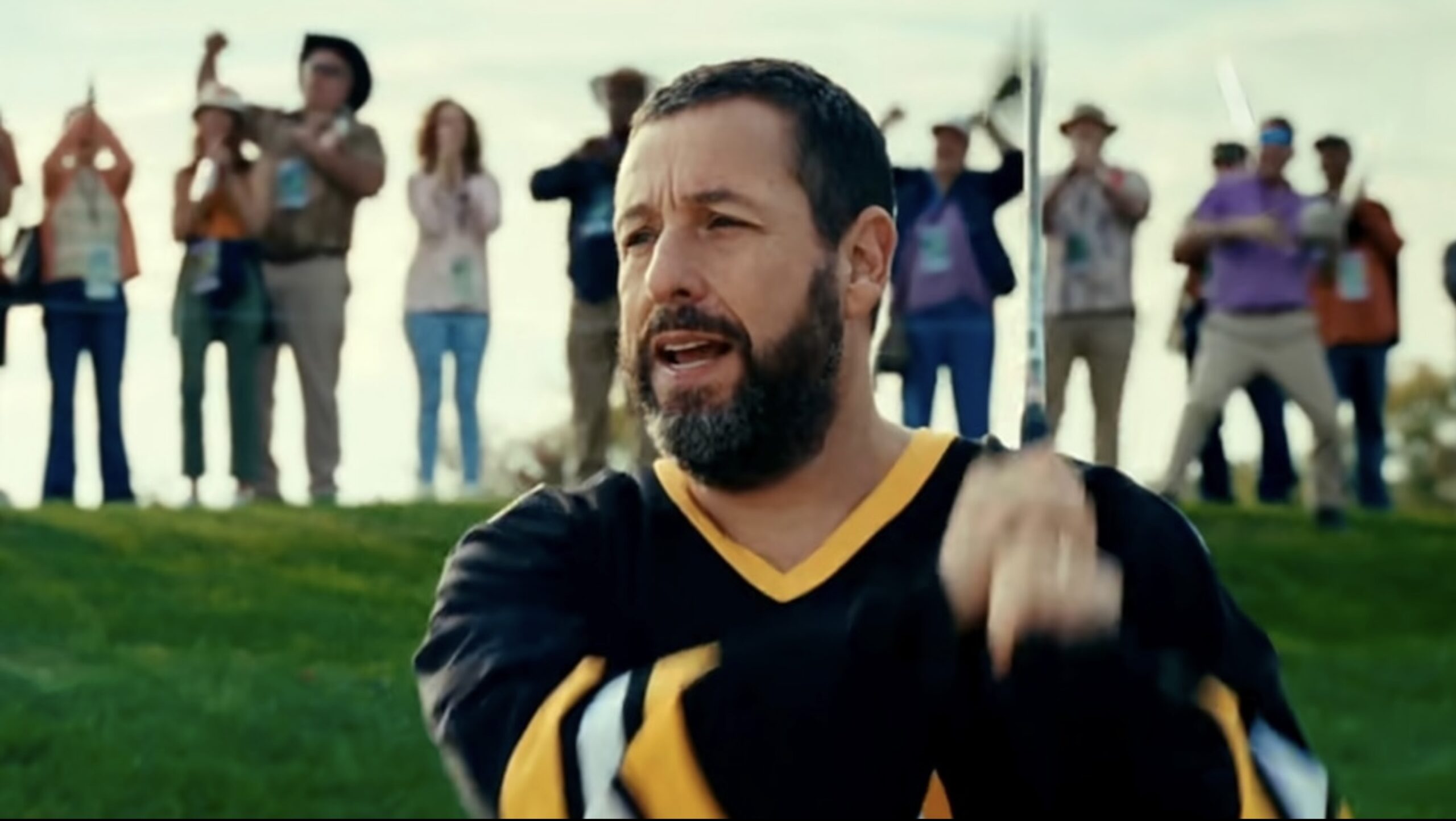
Santa Anita Happy Gilmore 2 quietly became the biggest movie America never paid to see.

discretionarily With 46.7 million views in its opening weekend, the Sandler sequel scored the kind of debut that would make Marvel salivate.

Using the industry’s own math—roughly $11.75 per movie ticket—Happy Gilmore 2 would have earned more than $548 million at the box office in just three days. That’s nearly $200 million more than the current theatrical opening record set by Avengers: Endgame.

And yet, there was no popcorn sold, no marquee lit, no long lines curling through suburban parking lots. Just clicks. Just couches. Just couches and clicks.

For a film that most thought existed as a meme until it didn’t, Happy Gilmore 2 is a stark reminder of how our understanding of movie success is changing.

Netflix doesn’t release theatrical grosses because there are none. There are no tickets. No Tuesday matinees. No tracking data from AMC or Regal.

And still, Sandler’s digital drive shotgunned its way through U.S. living rooms with the velocity of a summer blockbuster.

In traditional Hollywood terms, it would be the kind of hit that justifies spinoffs, theme park rides, and late-night Oscar campaigns.

But the numbers are vapor. Real in impact, abstract in economics:

  • 46.7 million views in 72 hours equals $548 million in box office dollars.
  • That figure surpasses the $357 million debut of Avengers: Endgame.
  • Netflix “views” are based on total hours watched ÷ runtime—not necessarily full views.
  • The movie wasn’t screened in a single theater, yet outperformed all theatrical comedies this year.

For years, Netflix has resisted giving its data the same weight as traditional box office returns, knowing that a “view” is not equivalent to a seat sold. A single stream might mean one person, or a family of five, or someone who nodded off after 20 minutes.

Still, even the most conservative estimates would place the cultural footprint of Happy Gilmore 2 in league with theatrical giants. No studio head in their right mind would shrug off a half-billion-dollar opening.

If Happy Gilmore 2 had opened in theaters with those numbers, it would have instantly redefined what’s possible for comedies, sports parodies, and legacy sequels.

Instead, it’s another brick in the wall separating theatrical prestige from streaming dominance. A funny movie watched by millions, remembered not for how it played but where it didn’t.

Hollywood still struggles to value these kinds of victories. There’s no ticket stub to frame. No midnight show to brag about.

But a generation raised on YouTube, TikTok, and Netflix doesn’t care. To them, the size of the screen matters less than what’s on it. And if Sandler’s sequel taught us anything, it’s this:

You don’t need a theater to make cinematic history.
Sydney Sweeney Didn’t Break the Internet. We Did


Sydney Sweeney made a dad joke and the internet lost its mind.

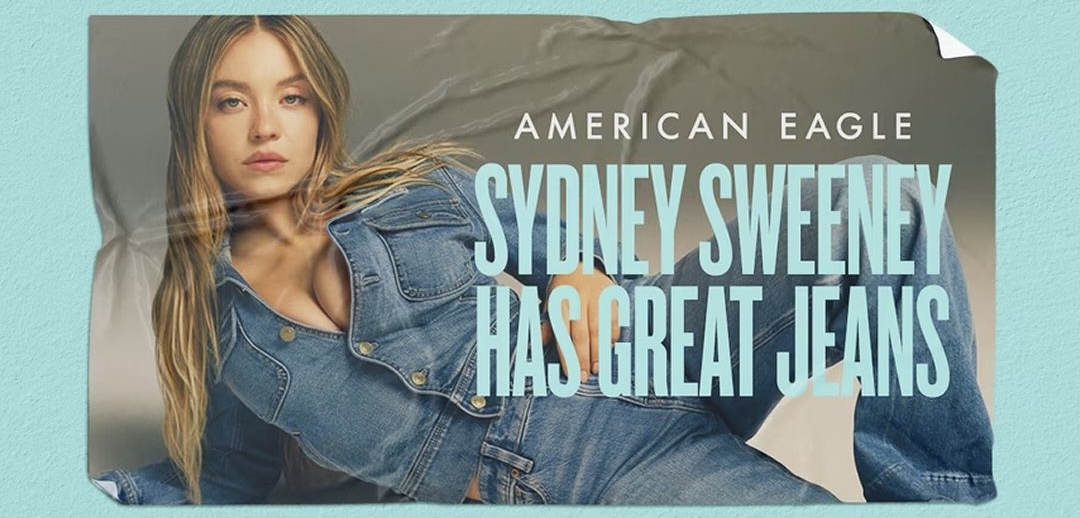
In a denim ad, she recites a biology line about genes determining eye color. Then, deadpan: “My jeans are blue.”

It’s dumb. It’s cheeky. It’s barely a pun. But the outrage machine saw fuel.

Suddenly, she’s the poster girl for eugenics. TikTokers labeled the ad white supremacist chic. Commenters called it “Nazi-coded.” Writers scrambled to explain how a pun about pants turned into a referendum on race, beauty standards, and blonde privilege.

And just like that, the cycle rebooted.

This is how it goes. Something small. Slightly tone-deaf. Possibly ironic. Possibly not.

The ambiguity becomes bait. Outrage hits first. Then comes the backlash to the outrage. Then the backlash to the backlash. After that, opportunists swoop in—content creators, brand consultants, pundits, bots. Within 48 hours, the original context is buried. What’s left is engagement.

What started as a dumb joke becomes cultural battlefield.

But no one’s talking to each other. They’re talking at each other. Or, more accurately, past each other—through ring lights, stitched videos, doomscrolling timelines, and reaction feeds. Nobody’s trying to understand the other side. They’re trying to rack up likes, land a dunk, or farm the moment for clicks.

The internet doesn’t do conversation anymore. It does spectacle.

This wasn’t always the case. There was a brief window—early forums, early Twitter—when online debate felt like something. People tossed ideas around, challenged assumptions, sometimes changed minds.

But the platforms figured out that conflict drives revenue. Rage is more profitable than reason. Now, every moment is filtered through the same broken machine.

There’s no proportionality. A war crime, a misspoken joke, a denim ad—they’re all flattened into the same space. The feed erases scale. All it sees is attention.

And attention, in this economy, is everything.

Even legitimate concerns get twisted. Yes, we should talk about how whiteness is marketed. Yes, propaganda has a look. Yes, culture shapes perception.

But the way we do it now—viral shaming, pixel-deep analysis, moral panic—it reduces real conversations to theater.

And theater never asks hard questions. It only asks you to pick a side.

The result is exhaustion. Even people who care are checking out. Not because they’ve stopped believing in change—but because they’re tired of yelling into the void. Tired of debates with no rules, no finish line, and no actual interest in listening.

So how do we fix it?

We stop feeding the loop.

We resist the bait. We stop pretending every ad is a thesis statement. We stop elevating every micro-offense into a cultural earthquake. We let some things be small.

We also stop performing. We talk to real people in real time—off-screen when possible. We listen longer. We ask more questions than we answer.

We treat disagreement as friction, not fire. We choose context over clout. Thought over theater. Curiosity over certainty.

Not everything has to be content. Some things can just… be.

Sydney Sweeney didn’t declare a culture war. She made a dumb joke in a pair of jeans. The war’s on us—for mistaking a pun for propaganda, and a moment for meaning.

She didn’t break the discourse—she just reminded us how brittle it’s become.