Monthly Archives: June 2025

‘California King’ A Sleeper


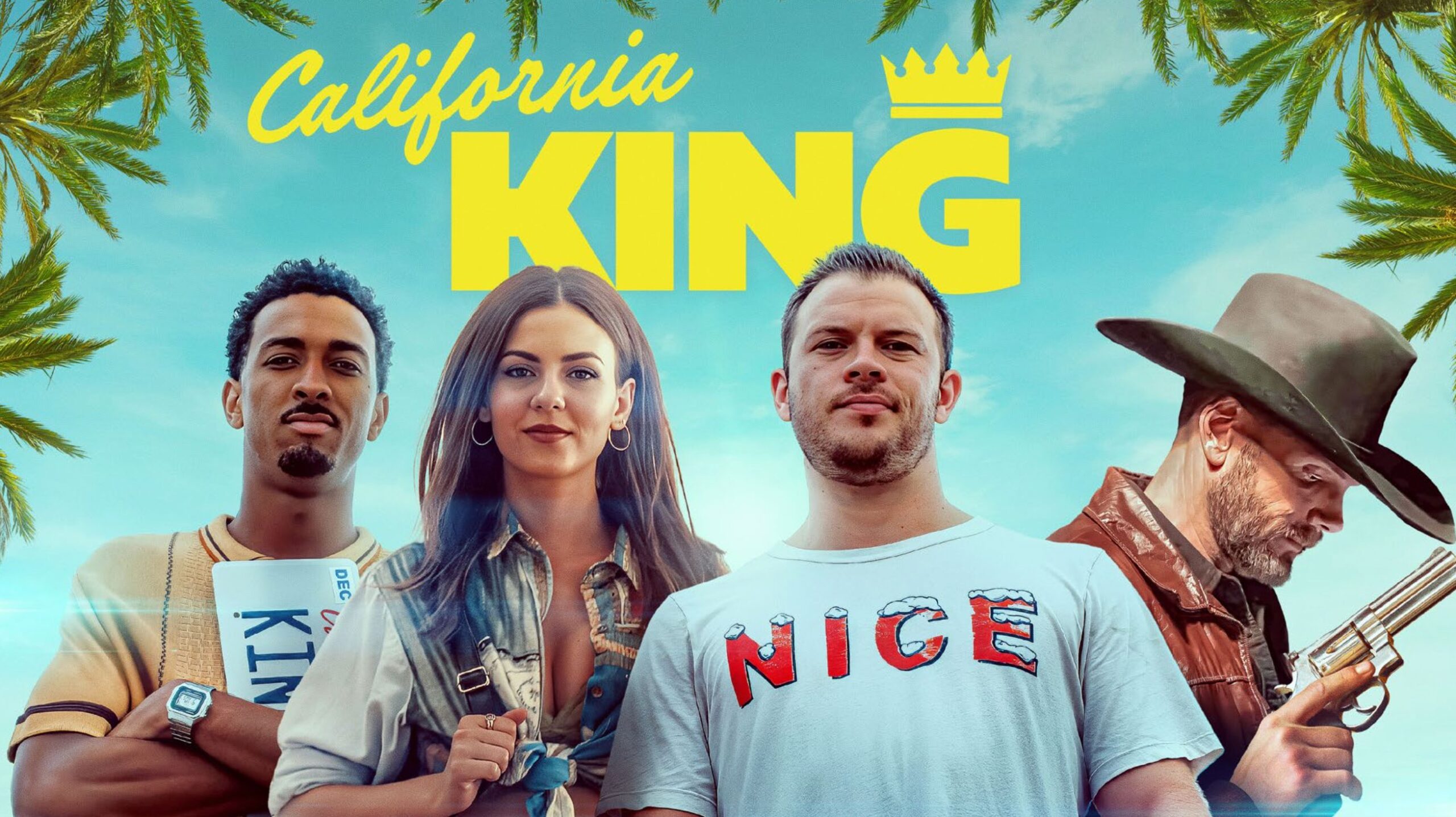
Riverside California King starts with promise, then drifts into noise.

Travis Bennett plays Perry, a mattress salesman with a dumb idea. He fakes a kidnapping to impress a girl. That’s the whole movie.

Bennett, best known from Odd Future and Dave, isn’t bad. But he’s not enough. He plays it small, maybe too small. There’s no spark behind his eyes.

Jimmy Tatro plays his partner, Wyatt. Tatro’s a YouTube guy turned comic actor. He gives the movie its only real pulse. He knows how to land a line. He knows how to move.

The script is sharp at first. The lines crackle. The tone feels fresh. The music works. It hums under scenes, gives them rhythm. The first act moves fast and weird.

Then Joel McHale shows up.

He plays Zane, a crime boss. He’s supposed to be the villain. But he isn’t. He’s a void. He looks lost. The smirk from Community is still there, but it’s useless here. He’s not funny. He’s not scary. He’s not anything.

The movie falls apart around him. There’s no tension. No stakes. No story left to care about.

Victoria Justice plays the love interest. She’s fine. The script gives her nothing. She reacts. She disappears.

The plot spirals. It forgets what it was about. Scenes stretch too long. Jokes stop landing. The fake crime becomes a fake movie.

Even the look of the film loses steam. The color, the pace, the energy—all fade by the halfway point. What felt indie-cool turns lazy.

There are moments. A few lines hit. A few scenes breathe. But they’re buried. The movie doesn’t know what it wants to be. A crime comedy? A buddy film? A sketch?

It tries to be Community with kidnapping. But without the wit. Without the structure. It tries to be weird. It ends up dull.

California King sells chaos, but never closes the deal.

Tenant

Desenzano del Garda Tenant

It must be summer—
the first cricket’s made herself known.
Not seen,
just that razor-thin chirp,
slicing the hush
like she owns the dark.

For a second,
I reached for the spray—
the human solution.
But she sings anyway,
like a landlord
with no lease to show.

She wants to be here
as much as I do.
Maybe more.
Maybe she knows
this house was never really mine.

She chirps from the corner
like a priestess behind a veil,
offering nothing
but the reminder
that silence is a choice.

I remember the frog—
found him one dusk
soaking in the jacuzzi
like he owned the joint.
When I came back with the camera,
he was gone.

And I think—
as sharp as razor wire
her chirp might feel to me,
it must sound like heaven to frogs.

Not every song
is sung for us.
Not every beauty
waits for a lens.

Sports’ Injury Problem


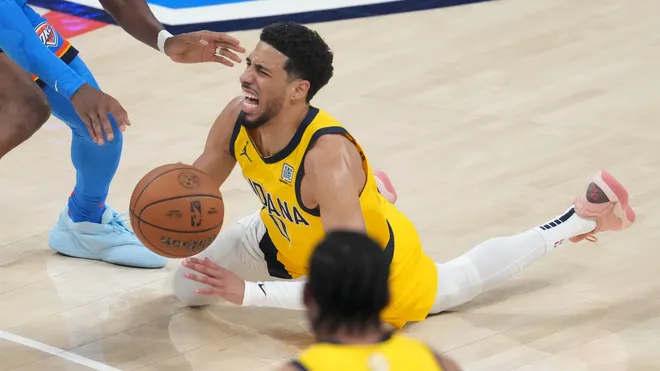
The bodies are breaking in every major sport, and no one seems willing to slow the machine. It happened last night, to Tyrese Haliburton, who was injured in the seventh game of the NBA championship, ending the game in the first quarter.

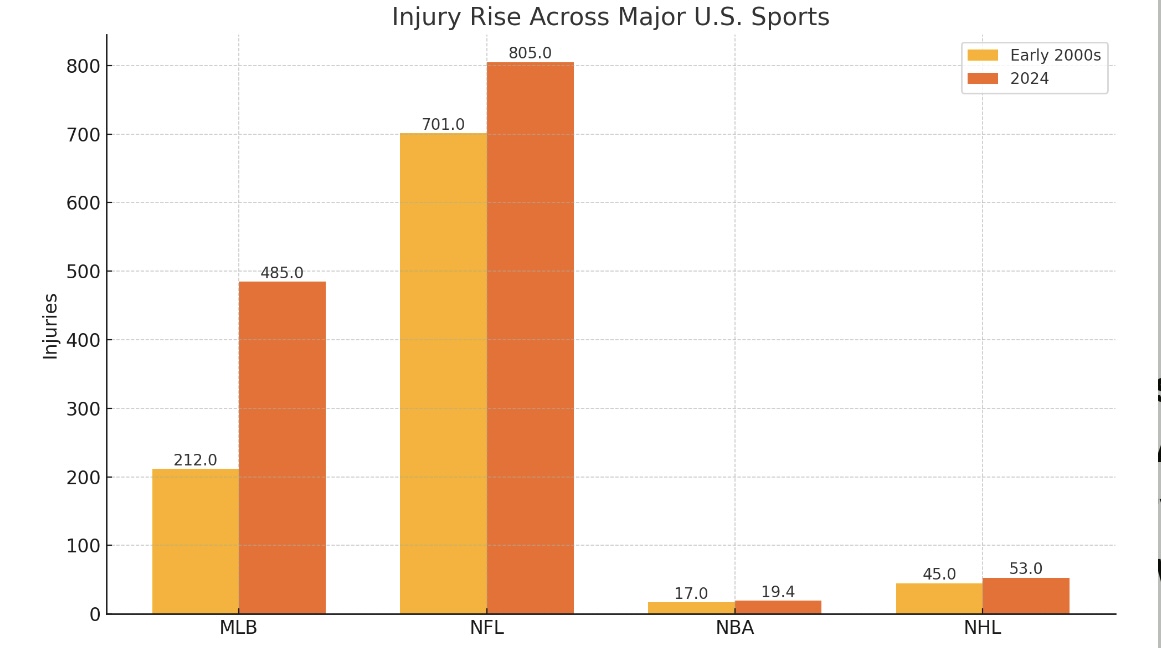
It’s not one league. It’s all of them. The NFL, NBA, MLB, NHL—four industries built on speed, impact, and year-round training—and now built on injury reports.

In baseball, the number of players placed on the injured list more than doubled since 2005, jumping from 212 to 485. Pitchers are tearing elbows at record pace, chasing 100 mph like it’s salvation. They’re breaking young, and they’re breaking often.

The NFL? It leads the pack in pain. Game-loss injuries jumped 15% from 2007 to 2016. Concussions spiked 18% in just one season. And nearly half of all players miss games each year with leg injuries. Even after billions in protocols, the hits keep coming.

Basketball isn’t dodging the trend. NBA injuries climbed 12% in the last decade. Ankles and knees go first. Then hamstrings, then backs. The schedule’s relentless, the pace has no off switch, and now even 20-year-olds can’t stay healthy through a season.

Hockey hides nothing. They post injuries like body counts. Groins, hips, shoulders, knees. One year up, next year down. But the arc still trends skyward. And every hit takes a little more than it gives.

So what’s going on?

Start here: specialization. Kids pick a sport before they pick a high school. They train year-round. Same joints, same strain, no break. A multi-sport kid has half the risk of overuse injuries. But there aren’t many of those left.

Then there’s size. Every athlete in every sport is bigger, stronger, faster. But ligaments haven’t evolved. Neither have recovery times. The hits are harder, the games longer, and rest is a rumor.

Schedules don’t help. MLB stretches 162 games over seven months. The NBA and NHL play 82 with cross-country flights and back-to-backs. The NFL now gives you 17 games to destroy your knees and maybe your brain. Rest is a luxury. Fatigue is policy.

And then there’s the grind. Baseball trains for velocity. Basketball trains for torque. Football trains for impact. Hockey trains for attrition. Training’s no longer about survival—it’s about dominance. You get hurt trying to keep up. You get cut if you fall behind.

It’s not all doom. Some of the spike comes from better reporting. Especially with concussions. We’re seeing injuries now that used to get taped up and ignored. But no one believes that explains it all.

Coaches whisper about load management like it’s a dirty word. Fans hate it. Players roll eyes. Owners count dollars. But when rest is the only thing that works, the whisper becomes a warning.

This is what a machine looks like when the gears strip.

If this is the cost of entertainment, we’re watching careers bleed out one game at a time.