Joy Is

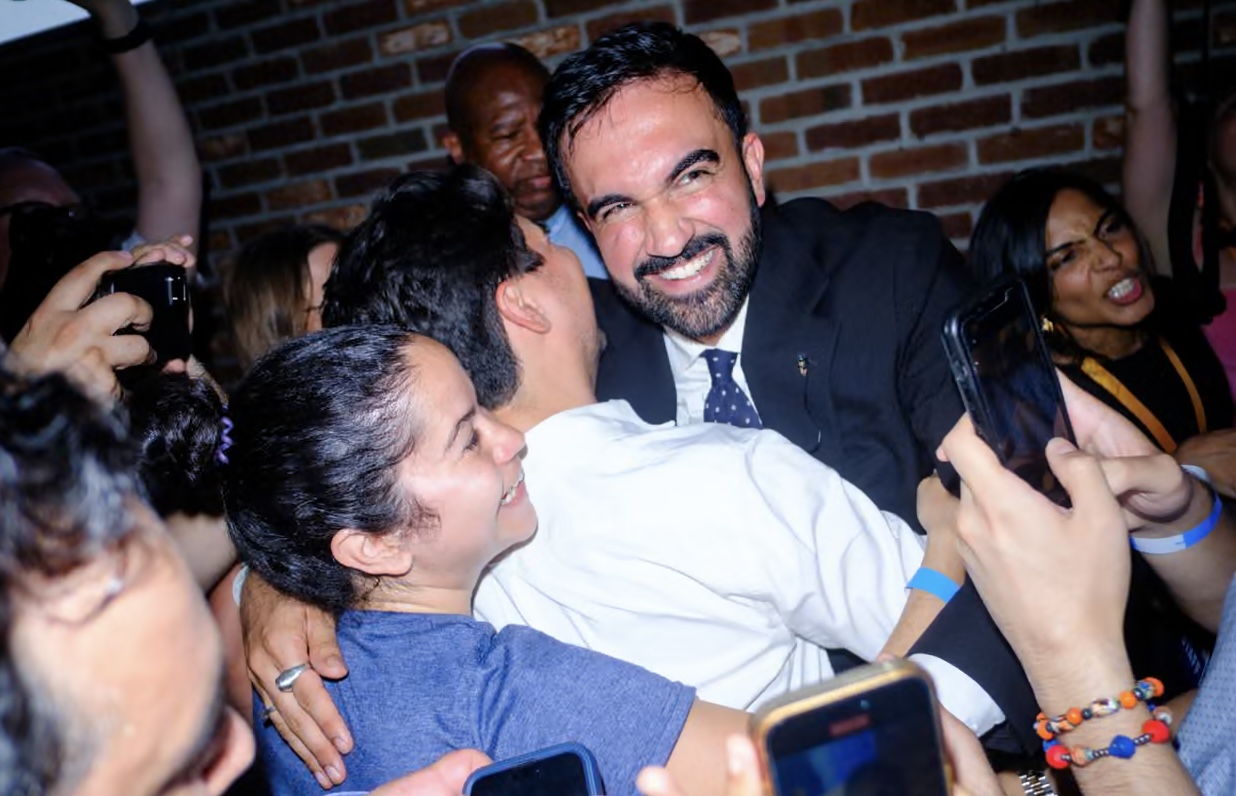
Zohran Mamdani’s victory in the Democratic primary for New York City mayor wasn’t just a win—it was a political earthquake, sending shockwaves across the national Democratic Party.
Jishu From Nobody to Nominee
In February, Mamdani hovered in the low single digits in polls. By June, he was leading the field with 43.5% of first-choice votes—outpacing former Governor Andrew Cuomo, who secured 36.4% . This surge, fueled by fierce grassroots organizing and savvy use of social media, demonstrates that democratic socialism can thrive in America’s largest city.
Mamdani built a diverse, multigenerational coalition. He resonated with young voters priced out of the city, while also gaining traction in traditionally moderate or conservative neighborhoods across Queens, Brooklyn, and Manhattan . He tapped into the energy of progressive groups like the Working Families Party and AOC-aligned activists, presenting a vision rooted in affordability and equity over establishment politics.
A Blueprint for Progressive Resurgence
This was a playbook for progressive victories nationwide. Journalists noted how Mamdani’s model could be replicated in New Jersey, Virginia, and beyond, as challenger campaigns adopt his focus on bold, imaginative policies and ground-up mobilization . His victory sends a clear message: establishment support and deep pockets no longer guarantee success.
A Defining Ideological Shift
Mamdani’s win marks the ascendancy of the party’s left wing. Time magazine called it a “seismic moment for the left,” positioning him as a potential emblem of democratic socialism in mainstream politics . For the first time, both Bernie Sanders and Alexandria Ocasio-Cortez actively backed a mayoral champion—and won.
Policy Ambitions: Bold or Unbounded?
His platform—rent freezes, fare-free buses, universal childcare—speaks to what voters care about most. Critics, especially from the Post and Magazine voices, argue his ideas could destabilize the city’s finances . But in their view, Mamdani’s sweep proves those concerns are secondary to voters desperate for real solutions to everyday struggles.
Identity & Representation
Mamdani, a 33-year-old first-generation American of Ugandan-Indian descent, brought more than ideas—he brought representation. If elected, he’d be the city’s first Muslim mayor, its youngest in decades, and a visible face for progressive change . His win speaks to the power of an inclusive, diverse political vision.
Challenges Ahead
But the journey isn’t over. The general election looms in November, with incumbent Eric Adams and Republican Curtis Sliwa running outside the Democratic line. Moreover, Mamdani must now pivot from campaigning to governance, translating soaring rhetoric into fiscal reality—while navigating intense scrutiny over his stances on foreign policy, particularly Israel–Palestine .
What It All Means
Zohran Mamdani’s primary win isn’t just about a new mayor—it’s a symbol of generational change, a repudiation of old guard politics, and a bold statement about what’s possible. It’s a challenge issued to moderates and centrists: evolve—or be overtaken. And for the national Democratic Party, it’s a clear signal that progressive energy, when mobilized thoughtfully and inclusively, can reshape power in America’s biggest cities.
Mamdani isn’t just a candidate—he’s the prototype. And whether he prevails in November or not, the blueprint he’s laid out will define political strategy for years to come.
They woke up the zombie genre by reminding us it was never about the zombies.
Before The Walking Dead turned shambling corpses into television wallpaper and before every horror franchise tacked on a pandemic subplot, 28 Days Later (2002) reanimated a genre that had lost its teeth.
Directed by Danny Boyle and written by Alex Garland, the film didn’t just update horror—it infected it. And what emerged wasn’t a zombie movie, not exactly. It was an existential gut punch delivered at a dead sprint.
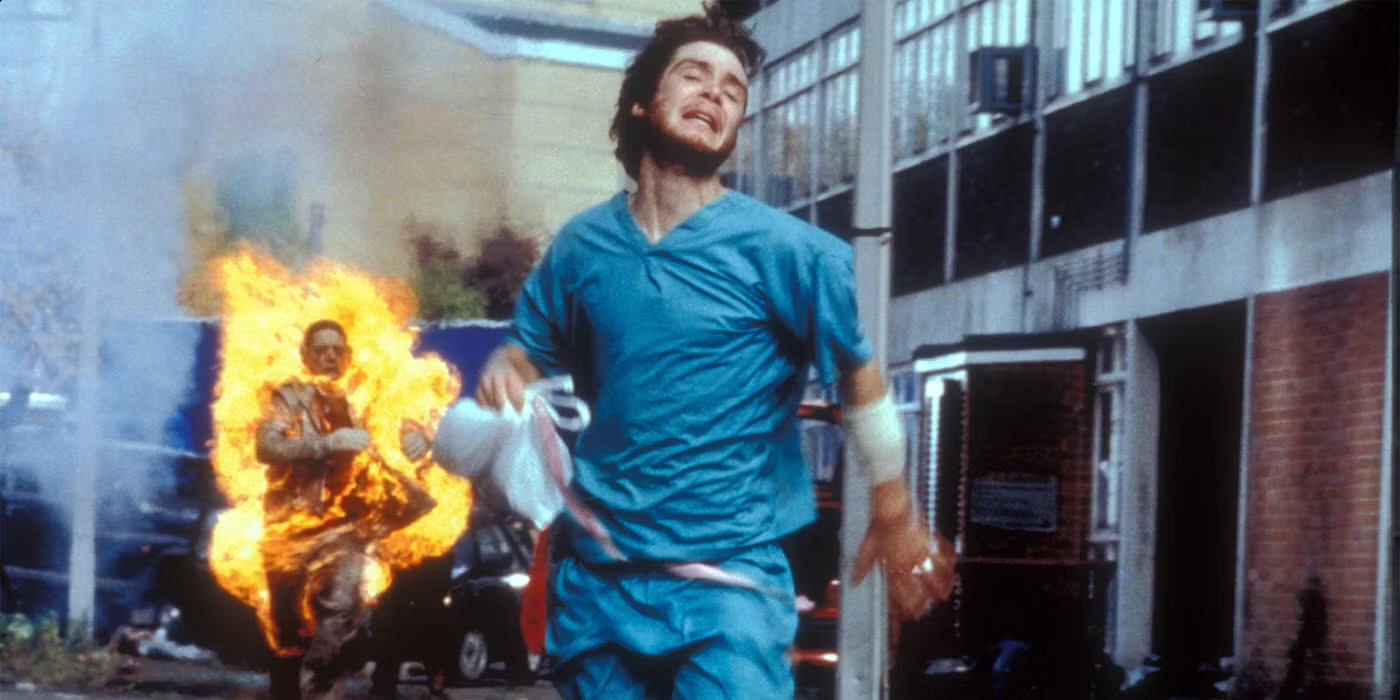
That sprint is key. The most terrifying twist in an overused genre wasn’t the virus or the collapse of society—it was the speed. The infected in 28 Days Later don’t stagger or stumble. They sprint, full-bore, screaming with blind rage. It’s not death that’s chasing you anymore. It’s fury. Fear. A tidal wave of emotion with no brakes.
Boyle’s decision to make the monsters fast rewrote the rules of engagement. You couldn’t outmaneuver them, or hide and wait them out. You had to be faster. Or you were dead.
It begins with a whisper. Jim (Cillian Murphy) wakes up alone in a London hospital, a coma survivor stepping into a dead city. The streets are emptied of people but not of tension. There’s no exposition dump, no apocalyptic voiceover. Just eerie stillness and a growing sense of something horribly wrong. It’s in that quiet—vacant bridges, overturned buses, handwritten pleas on walls—that the horror takes hold.
Then the rage comes.
When Jim meets Selena (a fierce, unflinching Naomie Harris), she delivers the film’s thesis as cold truth: “You do what you have to do.” Survival, in this world, is about subtraction—stripping away empathy, hesitation, even humanity. But 28 Days Later never revels in the nihilism. Instead, it threads hope through horror, watching Jim rediscover not just who he is, but who he’s willing to become.
The film’s second act—set in a military safe house—turns the lens from the infected to the truly dangerous: organized men with unchecked power. The soldiers who promise sanctuary are infected too—by entitlement, by control, by a vision of society that bends others to their will. Boyle makes clear that the virus didn’t change everything. It just gave people permission to become who they always were.
Shot on digital video with a guerrilla spirit, the film looks raw, immediate, and unfiltered. London becomes a ghost town at dawn, captured in haunting wide shots that still feel shocking today. There are no special effects in these scenes, just careful timing and empty streets, and they work better than CGI ever could.
And over it all looms John Murphy’s now-iconic score, especially “In the House – In a Heartbeat,” a slow build of piano and pressure that surges toward something primal and tragic. It’s less music than dread set to rhythm.
28 Days Later didn’t invent fast zombies. But it made them matter. It made them terrifying again. It stripped horror down to its bones and asked, “What are you willing to become when the world ends?”
As 28 Years Later looms on the horizon, it’s worth remembering what the first film taught us: the end isn’t walking slow.
It’s coming fast.