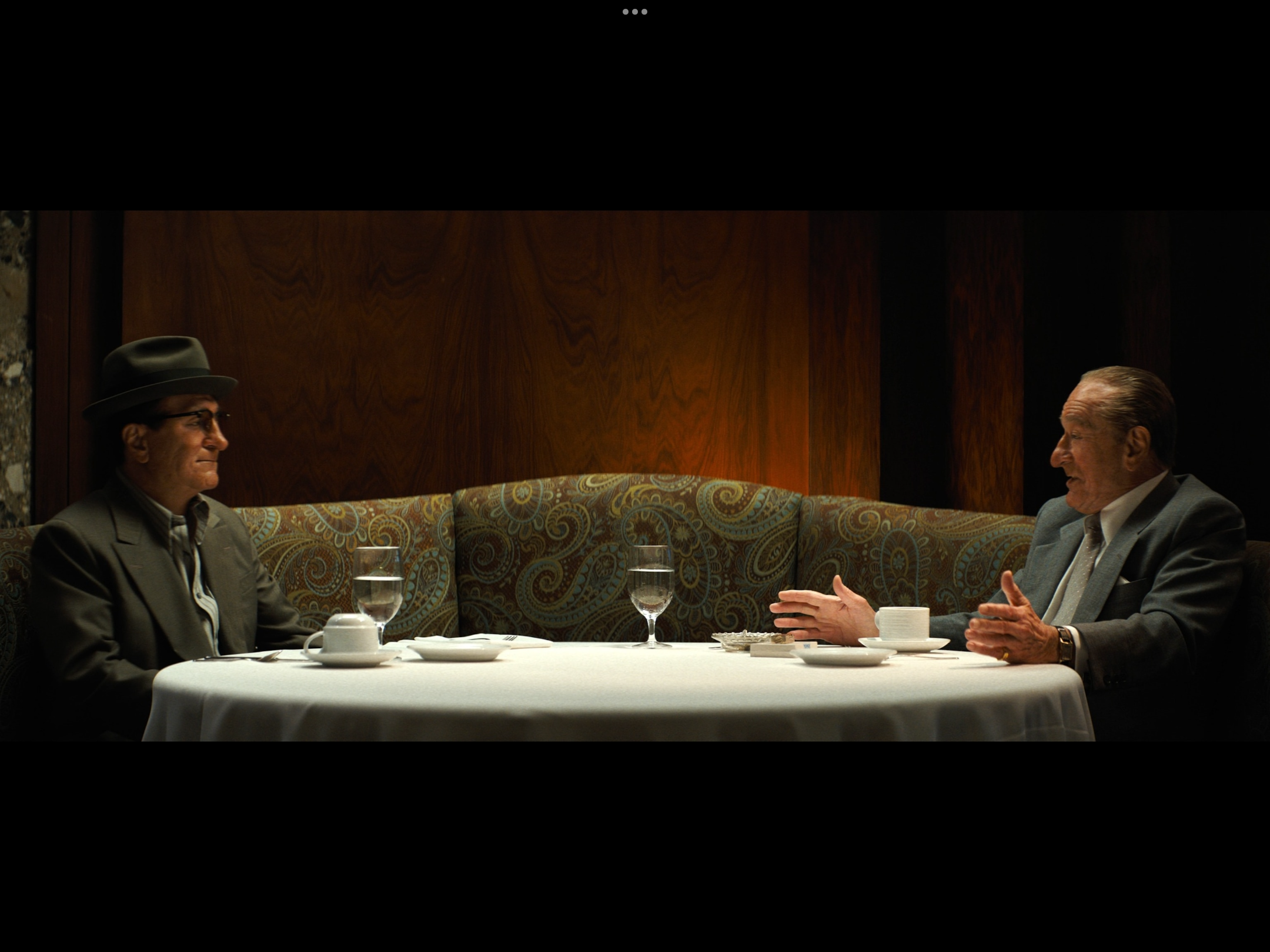
The Alto Knights stacks the deck with two Robert De Niros but forgets to deal the audience anything worth playing.
Barry Levinson directs this tired mob drama with all the zest of a rerun, stuffing De Niro into dual roles as real-life mobsters Vito Genovese and Frank Costello. The hook — two De Niros, facing off — should sizzle, but it barely simmers.
Instead, we watch the same old mob clichés: smoky backrooms, smirking consigliere, gunshots in the dark, blood on silk suits. The script by Nicholas Pileggi, adapting his own book Wise Guys, reads like it was dusted off from a 1990s drawer and never updated.
De Niro, an icon of the genre, appears tired here, as if even he knows this double billing is a gimmick. His Genovese stalks around with a stony glare, while his Costello delivers lines with a lazy drawl. There’s no true contrast between the two; both feel like faded echoes of better De Niro performances from Goodfellas and Casino.
The supporting cast fares little better. Debra Messing, Kathrine Narducci, and Cosmo Jarvis drift in and out of scenes without making a dent. Even the period detail, often Levinson’s strength, feels flat — a wax museum of fedoras and speakeasies.
Worst of all, the film drags. Clocking in at two hours, The Alto Knights sags under ponderous voiceover and redundant scenes of mob meetings that fail to escalate tension. Levinson, once a sharp chronicler of American life in Diner and Rain Man, seems lost in this joyless exercise.
Pileggi’s script offers scant insight into the psychology of these men or the shifting dynamics of postwar organized crime. What we get instead is a sepia-toned greatest-hits reel: a hit in the street, a courtroom scene, a wiretap, a betrayal. You can almost hear Scorsese’s editor Thelma Schoonmaker shaking her head at the pacing.
One might argue that The Irishman already served as a swan song for this genre and for De Niro’s mob roles. The Alto Knights feels like an encore no one asked for.
Worse, it misunderstands what made those classics tick: not just violence, but humanity, betrayal, consequence. Here, characters move like chess pieces, with none of the messy life that powered Goodfellas or Donnie Brasco.
The double De Niro conceit is pure marketing, and it shows. Scene after scene leans on split screens and editing tricks, hoping viewers will marvel at the digital wizardry rather than notice the lifeless dialogue.
Audiences deserve more from Levinson, Pileggi, and especially De Niro. They once elevated this genre; here, they cheapen it.
The movie ends, the lights rise, and you wonder — with two De Niros, how did they make a film with no pulse?
One De Niro would have been plenty, if only they’d given him a story worth telling.
Elon Musk is about to discover the difference between followers with a small f and followers with a big F.
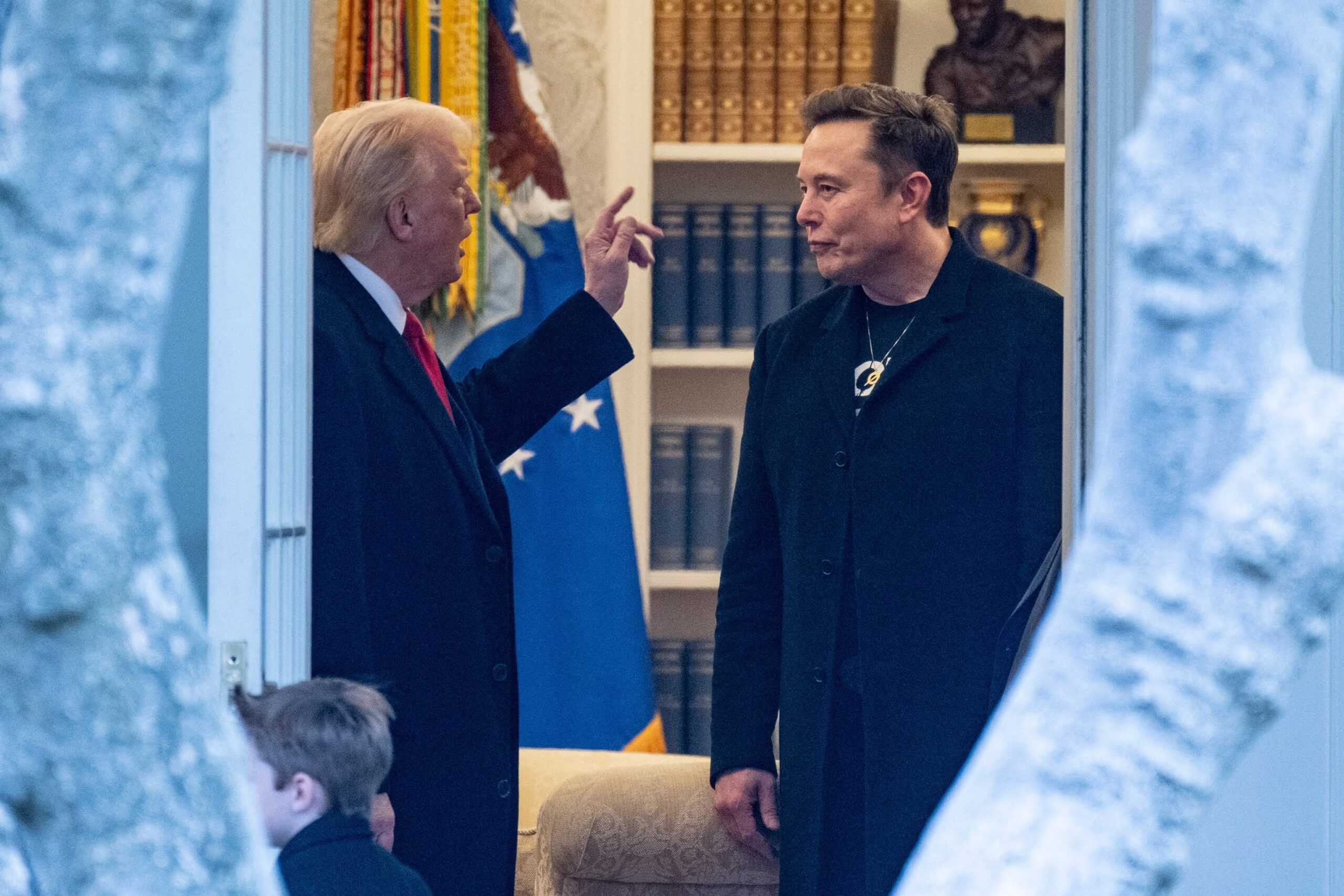
A theater of egos unfolded this week as two of America’s most powerful men collided—not over money or missiles, but over real allegiance. The feud between Trump and Musk isn’t about who’s richer or mightier. It’s about who really commands devotion.
Once allies—Musk funneled staggering sums into Trump’s campaign, led an efficiency czar project in the White House, helped fuel the “America PAC” that backed Trump in 2024—now they’ve blown up in spectacular fashion over policy and performance . Musk slammed Trump’s One Big Beautiful Bill as a “disgusting abomination,” warning it’d drive the deficit into the ground . Trump fired back—threatening to yank subsidies, government contracts, even SpaceX work .
The online aftermath? An algorithmic frenzy: hashtags, memes, Truth Social surging, X usage up 54 percent, Tesla shares dipping 14 percent, Musk’s net worth tumbling $34 billion . But underneath the spectacle lies a deeper test: ideological loyalty vs. technological fandom.
Musk’s audience—those tech bros, convenience usagers, and culture-savvy centrist hopefuls—are “followers” in the digital sense: clicking “follow,” liking a post, watching a rocket launch live. They have foot traffic, attention span, brand loyalty, but not unwavering devotion. When Musk flicks a switch, they log off or scroll past.
Trump’s “followers,” on the other hand, live in a true cult of devotion—they don’t just click “follow,” they rewind speeches, wear MAGA hats, travel to rallies, and echo his word as Gospel. That’s a big F follower. Their loyalty survived impeachment, January 6, policy failures, scandals—because for them, Trump isn’t just a leader. He is their leader .
If this feud is genuine—and not just staged for engagement—it puts Musk against perhaps the only modern American with more zealots than he has nerds. It’s Elon’s first “unbullyable” foe—someone whose base refuses to be swayed by rockets or electric cars. Nancy Pelosi can’t do this. The corporate media can’t do this. But Trump can. And they won’t switch.
That said, it’s good theater. Public feuds between billionaires and politicians feed trending suppressions and public chatter. Musk’s move to float a new “America Party” based on an X poll showing 80 percent middle‑of‑the‑road support fits the drama script . Trump trash‑talking Musk’s mental stability fits his act. Musk threatening to decommission spacecraft fits his volatility . Everyone’s playing to the gallery.
But if real? Then Musk is about to learn that owning X and Tesla won’t render someone immune to cult power. Followers — even algorithmic — won’t relieve him. They watch. They like. But they don’t multiply in the streets.
Trump’s big‑F followers show up. In cabins. In red states. On stage at rallies. With faith. When MAGA called for impeachment, they didn’t flinch. When Musk floated the Epstein files rumor and quickly deleted it, his fans shrugged and moved on . But MAGA loyalists retweeted, reposted, dog‑piled—true believers in every sense .
Generationally, it’s a divide too. Musk appeals to millennials and Gen Z who worship at alt-tech shrines and hashtags. These are followers in the Instagram/X sense: like, reshare, meme.
But Trump mobilizes boomers and older Gen Xers who see him as salvation, a savior of the country. They show up physically and vote in blocs, not just log in.
In essence: Musk has followers; Trump has Followers. Both powerful—but qualitatively different:
Follower (small f): Passive. Digital reach. Brand loyalty. Can switch allegiances.
Trump’s base survived scandals that sank others. His zealots aren’t easily budged by tweets, market drops, or public shaming. They subscribe to his narrative, not just the platform. And that’s why, in this test, Elon may be facing a foe unlike any he’s known.
Which brings us back: Is this feud real? Or calculated theater? Probably both. Both men realize that nothing drives engagement faster than on-screen conflict. Musk’s aim at Trump could moonlight as brand diversification for X. Trump’s attack on Musk could shore up MAGA unity before the next campaign.
But if Musk believes he can out-flip cult devotion with tech savvy, he’s about to get schooled. This isn’t a market he can colonize with better graphics or electric cars. This is religion.
In the clash of clicks vs. creed, tech’s darling may be about to learn that real followers don’t just click—they spit their venom.