Monthly Archives: April 2025

Mr. Maher Goes to Washington and Forgets His Balls


http://childpsychiatryassociates.com/treatment-team/ronald-hilliard/ron_hilliard-600

Once, Bill Maher was the guy with the cigarette and the sneer — the one who made fun of power because it needed to be made fun of. That’s the gig. That’s the press. That’s comedy. That’s what we’re supposed to do in a free country with an ego problem.

Now he’s licking Trump’s ring and giggling about it like it’s prom night.

Maher didn’t just dine with Trump. He dined out on him. Called him “charming.” “Measured.” “Self-aware.”

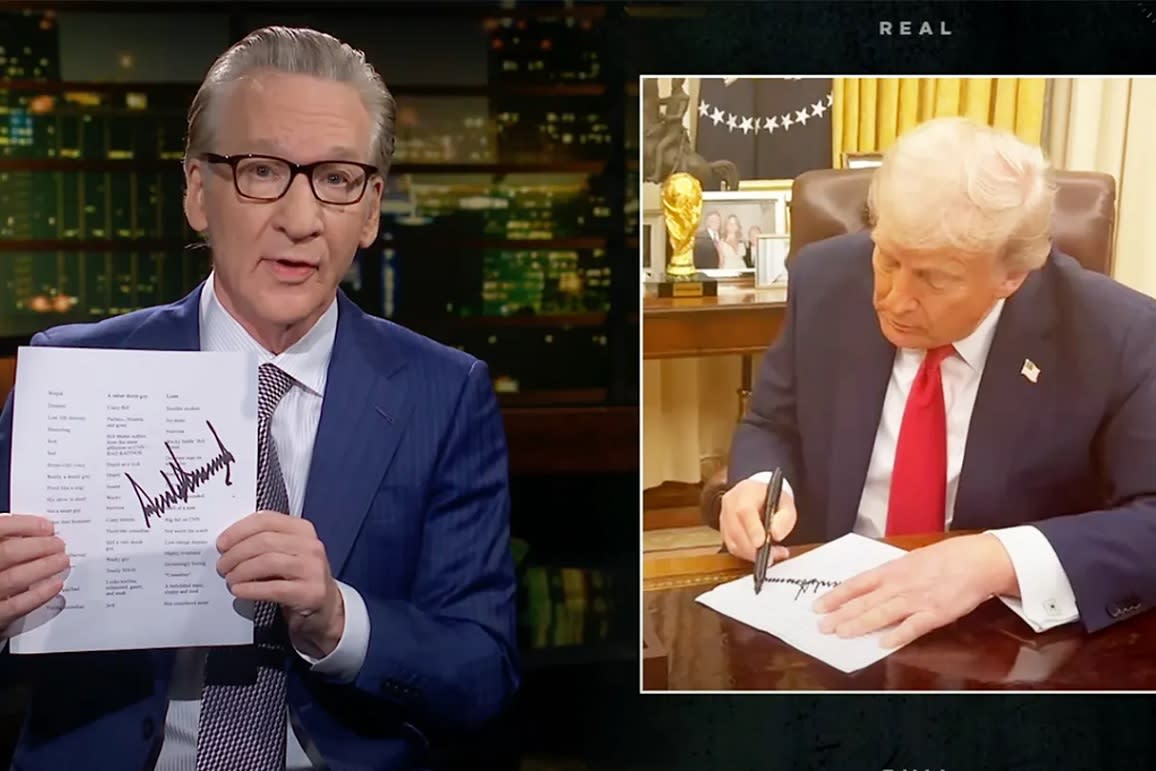
He even brought a printout of Trump’s old insults — and let Trump autograph them. You couldn’t write a better metaphor if you tried: the comedian handing over his bite, begging for a signature.

Jesus Christ, Bill.

This isn’t about comedy. This isn’t about healing. It’s about access. It’s about the same media complex that watched Trump spit in the face of the First Amendment and still came back for selfies and soup.

The press — yes, even the satirical press — isn’t meant to cuddle up to authority. It’s meant to scrape against it. To demand facts, challenge claims, and expose the soft tissue under the bluster.

There is no evidence — none — that Maher asked a single hard question over that meal. No inquiries about election lies, immunity fantasies, or fascist flirtations. Just Kid Rock, Dana White, and a guy who once compared himself to George Carlin, all toasting the man who tried to burn the Constitution with a Sharpie.

Maher didn’t just fail to push back. He became what he once mocked. He became Ari Fleischer in a black tee. He became a late-night succubus — drained of principle, hungry for relevance, feeding off a dying host.

And he’s not alone.

The tech bros are doing it. The Democrats are doing it. Schumer’s backing GOP shutdown budgets. Zuckerberg’s praising Trump for “decency” in crisis. Everyone’s pretending it’s normal again. That the man who said he’d be a dictator on Day One doesn’t really mean it.

But this isn’t politics as usual. This is cowardice dressed as bipartisanship. This is complicity by applause.

What the hell happened to our balls?

We’ve let the loudest man in the room rebrand himself as a misunderstood grandpa, and the people who should know better — comics, columnists, so-called guardians of the truth — are helping him do it. Not with propaganda. With silence. With jokes. With dinner.

And if this keeps up, the next autocrat won’t need to take the press down. He’ll just invite it over.

And they’ll bring the wine.

’Lake George’ Worth The Dip


There’s a scene early in Lake George when Don (Shea Whigham), a weary ex-con assigned to off a mobster’s girlfriend, squints through the grime of a windshield that hasn’t been cleaned in years.

The camera holds long enough for you to wonder whether he’s even trying to see, or if he just prefers his world this way—filtered, fractured, and deliberately dirty. It’s one of the many small, deliberate touches in Jeffrey Reiner’s Lake George that sets the film apart from your typical crime thriller.

The setup is familiar: Don, fresh out of prison and riddled with a deep moral ambivalence, is sent to kill Phyllis (Carrie Coon), the whip-smart, world-weary moll of his boss.

What unfolds, though, is something grittier, slower, and more textured than a simple hit-gone-wrong. There’s violence, sure. There’s betrayal and paranoia.

But Reiner seems more interested in what happens between those beats: the way a character lights a cigarette with his off-hand because the dominant one is in a sling; the way Don half-limps down motel stairs, suggesting an injury we’ll never quite get explained; or the way no one ever bothers to clean a damn window in this world.

Those dirty windshields serve as more than atmosphere. They’re metaphor, mood, even mirror. Reiner shoots many scenes from inside cars, looking out through smudges and streaks, as if to suggest that clarity—of thought, of purpose, of truth—is perpetually just out of reach.

It’s a subtle choice, and one most films wouldn’t linger on, but here, it becomes almost a character in itself: the haze through which these people view each other and themselves.

Whigham is outstanding as Don, delivering a performance that’s all restraint and regret. He plays the role like a man who’s seen the worst parts of himself and is still figuring out if he deserves to be alive.

Coon matches him beat for beat, giving Phyllis a cunning softness that keeps you guessing which side she’s really on. The chemistry between them doesn’t sizzle so much as smolder—two people too damaged for flirtation, but drawn to each other’s wounds.

The pacing is deliberate—some might say slow—but Reiner earns it by layering his film with tension and atmosphere rather than plot twists. You don’t watch Lake George to find out what happens next; you watch to sit in its murky moral ambiguity, to appreciate the stillness between its bursts of violence.

This isn’t a movie for everyone. It resists easy resolution and offers little catharsis, particularly the finale.

But for those willing to watch through the dirt, Lake George offers a beautifully grimy view of redemption—uncertain, fogged over, and worth squinting at.