The River Card, Part II
A buddy of mine has a daughter, now about five. The first newborn I’d ever held, Audrey was.
Now, she is razor sharp, like her moms n’ pops. I visited them recently, impromptu pizza. Usually, we do magic together, a vanishing act where she materializes from the ether.

“Do you want to do the magic trick?” Audrey whispers in my ear.
“You know, never show a trick twice,” I tell her. “They’ll figure it out.”
“Do you have more magic?” she asks.
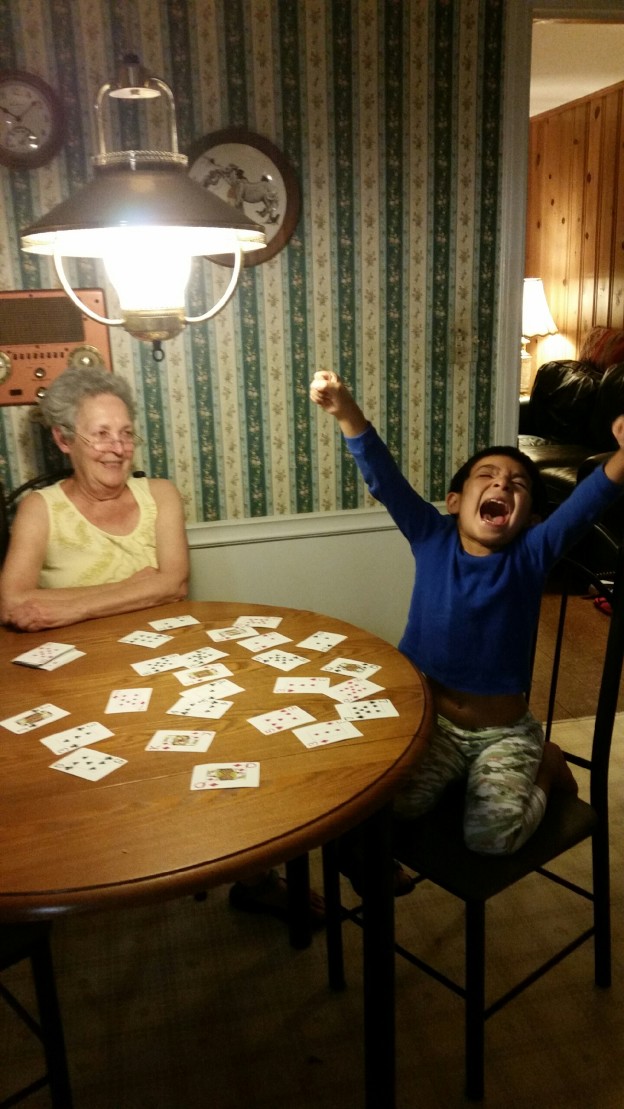
“I don’t know,” I respond. “Do you have cards?” A week ago, I never would have asked this of a five-year-old. But mom just told me that my nephew, Raphael, had learned cards. And, apparently, a victory pose when he holds the inside straight.
Audrey says she does, but they’re Disney cards, with princesses and ogres and elves and fairies. Even better, I say. I examine them, ask if she knows what the “K” card means.
“King,” she says. And I see mom was right; that is the age kids get the card concept. Audrey knows all the face cards, that a Queen trumps a Jack, any day. I show her a trick, which falls flat like weekend soda. There’s no hiding it in a kid’s face, that ‘uh-huh’ shrug.
“Know any others?” she asks. No way I win this room, I deduce.
“Why don’t I show you a card game?” I ask. “Do you know how to play War?” She comes up to table, for the basic instructions: one card each, bigger card wins both.
Then she asks something that makes me understand how kids magic is probably way too simple-minded, like its practitioners.
“What are the Aces worth?” she says. I suggest 11, the biggest card.
“Isn’t it sometimes a 1?” she presses, already skeptical after my failed illusion.
“It is,” I answer, surprised at the question. “We can make it either. Why don’t we say 11?”
“What about the Joker?”
I’m dumbfounded at the grasp being flexed in front of me. “Well, why don’t we make the Joker worth 1, since the Ace is worth 11?”
She agrees, and we begin the game. By the end of the first deck, she has the concept down. By the second, she takes over dealing. By the third, she is sneaking glances under the cards before deciding who gets which. I nearly spit soda through my nose in laughter as she strains, literally from the corner of her pond-sized eyes, to get an edge — particularly when she draws the useless goddamned Jokers, which always seem to land her side.
“Want another?” I ask, though I can sense her mounting boredom.
“No, you can take them,” she says. “But next time, let’s make the Jokers bigger than the Aces.”
Now that, I realized, is magic.
Homer’s Odyssey (feat. Michael)
Michael should be 50 today. I should be giving him shit about AARP.
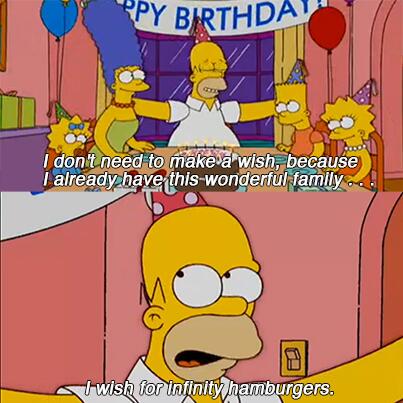
He didn’t quite make it, 47. Brain tumor, angry and aggressive and an appetite to die for. But at least twice a week, I want to call him, to chat documentaries or The Simpsons or The Braves or how much worse the third Mad Max was than the previous (man, he hated that flick; I thought would have an aneurysm as he fumed walking out).
Fragments of these things are still here, dude. But None holds meaning without You. Damn I miss you. I shouldn’t be here instead of you (though you would have insisted it so).
There was this talk we had once, about a year before he died. We were talking theaters (we met at one, went to hundreds), and how they had advanced since our days working box office, with newfangled seats that reclined and with the date-friendly armrests that lift. “You know what I want?” Michael, who never had a real girlfriend, once confessed. “To go to a movie and put the armrest up.”

I recently found the last note I wrote to him. He couldn’t read it, so I don’t know if he ever heard the words. But here’s another missive in the ether for you, just in case the afterworld has wifi:
From: sb <sbowles@gmail.com>
Vyborg Subject: Michael Tyrone Bowles and Guy Scott Ingram
Date: November 12, 2012 9:03:42 PM EST
My man,
Do you remember when we first met, at Lenox Mall, working the theater? Remember how you’d knock on the counter when a cute girl was in line to buy a ticket, and how you’d pretend to drop money to make me wait on the Orca so you’d get to wait on the hottie?
Or how, when you moved to DC, the vagrants clung to you like orphans? That hobo who sat next to you on the bus and ate that clove of garlic like it was an apple? That homeless woman who’d bring you bags of canned beets?
I think about those things all the time. I think about you all the time.
You will always be my brother, the one I never had until we met. I hear your laugh when I watch The Simpsons, hear our zombie debates after watching The Walking Dead, or hear our humorous disbelief about those Southern Republicans who made the news again. I miss every word. I miss you.
But you will never leave me, Michael. You are as much a part of me as my heart is a part of me. Perhaps because you’re the better half of it.
You were always right. We are peas in a pod. And that will let that change.
Good night, my only brother.
scott
Recently, I was channel flipping and saw another clip for the new Mad Max movie. I may go check it out.
If I do, I’ll remember to put the arm up.
(our favorite clips, when Homer was going broke on the swear jar):
https://www.youtube.com/watch?v=hffuTx-t_AA