HB Commercial of the Month


This month’s HBCOM goes to something of a jaw-dropper. Normally, the winning entry does so with a touch of wit, dash of sarcasm, at least a hint of self-deprecation.

But this one literally stopped me mid-step. And not because of its genius use of music (as can be seen here, one of the greatest TV ads ever).

https://www.youtube.com/watch?v=GhzTIKLu_Fc

No, this was stunning simply in the audacity of its message.

Advertising has always rested on a single campaign promise: Whatever you’re doing, it’s all right.

Binge overeater? There’s a pill for that. Depressed? Ditto. Can’t afford a new car? What if we spread it out over five years? No money for a couch? Why, you can rent some furniture from us at a reasonable vig.

Dad used to tease me about falling for the latest sneaker commercial. (“Do you really believe you’ll jump higher in those clown shoes?”) Compared to this, however, Air Jordan commercials were Picasso at a yard sale.

airjordans

Not since Phillip Morris paraded smoking “doctors” for the TV has a corporation suggested such a potentially dark path for kids.

In the ad, Jeff Goldblum stumbles upon a poor fellow in stockades. The imprisoned man admits his wrongdoing: He entered into a 30-year mortgage.

Goldblum, always a great on-screen asshole (see The Big Chill) taunts the inmate that he could be living free and easy — just like those youngsters dancing stage right with nary a care. Why you see, Jeff explains, those go-getters aren’t weighted down by a mortgage. They’re free to rent! Flush away at apartments.com!

No one will ever accuse corporate America of excessive humanity. Given the chance, U.S. automakers would have used piano wire for seat belts if consumer advocates hadn’t pressed the government for safer cars.

But the idea that nothing counts but our immediate needs — and to commit and own is a path for suckers — has got to give at some point, from an economic standpoint if not a moral one. Hopefully that comes before a generation discovers that the one before theirs had no inheritance to leave except long-term payments at fixed rates.

Onward!

https://www.youtube.com/watch?v=yUudubg6rMY
 

Electric Word, Life


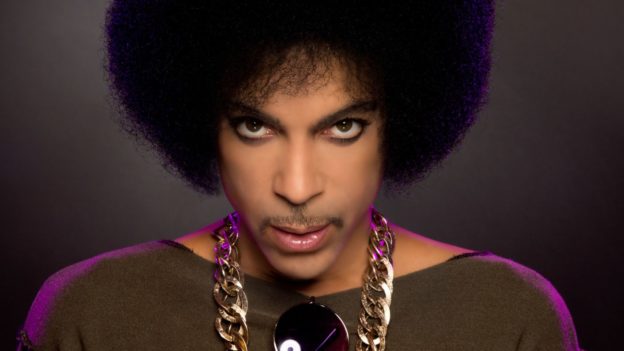
RIP, Prince Rogers Nelson (6/7/58-4/21/16)

From Spencer and Anneta’s wedding.

May 24, 2015

Welcome, friends, family, friends of family. Dearly Beloved:

We are gathered here today to get through this thing called life.

That line comes courtesy of Prince and Annetta. When I asked the couple what they’d like in their vows, Annetta quipped that the first thing that came to mind was the opening line to Prince’s song, Let’s Go Crazy (which just also happens to be one of Spencer’s life mottos).

But when you think about it, Annetta and Prince have a point. The next line in that song begins “Electric word, life…”

And life is electric. For what are we, but bundles of energy and stardust, as brilliant and abundant as the heavens above?

And in those heavens — scientists say once every 500 years — two stars hurtling through the cosmos will brush by one another. And their gravitational force will commence a circular dance, as each draws nearer the other. And at that moment of contact, the supernova will emit as much energy as every star in the universe, combined.

Seasoned love is like that.

Certainly, new love is a miracle. It’s bold, adventurous, fearless in the leap.

It is also distracted by shiny things, startled by sudden sounds, frozen in rough waters. That’s why it’s called puppy love.

Seasoned love is a more profound and rare phenomenon.

Like those hurtling stars, seasoned love joins two established worlds, already anchoring a solar system of friends and family, work and home.

But true seasoned love makes a choice. A choice to blend planets, share moons and swap shooting stars. If a supernova is one every 500, seasoned love — true seasoned love — has got to be one in a million.

We saw this dawn approach. We heard them say, ‘I’m going on a date.’

Then it was, ‘I liked that. I think we’ll see each other again.’

Then, ‘This could be something.’

We saw their worlds change. Soon, they spoke in the collective. ‘We are taking a trip. We are going on vacation. We are moving in. We are getting married.”

And here we are, to witness their new daybreak.

May we please have the rings?

Much has been made of the symbology of rings. And who are we to question the poets?

But, if you catch them in the right light, you can’t help but notice how much they look like little stars we wear, within reach of our hearts.

Annetta:

Do you choose Spencer?

To be the sun to his shine?

To be the good to his night?

To be the heart to his beat?

Do you choose Spencer to get through this thing called life?

Spencer:

Do you choose Annetta?

To be the sun to her shine?

To be the good to her night?

To be the heart to her beat?

Do you choose Annetta to get through this thing called life?

By the power vested in me by the state of Arkansas — and by the power vested in you by the gravitational force of love — I now pronounce you husband and wife.

(plant a smooch)

Ladies and gentleman:

Spencer and Annetta Tirey

rings

https://www.youtube.com/watch?v=MJDuGjMwsow

Better Call Saul: The Olive Branch — or Mirror — to Breaking Bad and Mad Men


Warning: Spoilers don’t about; they lurk)

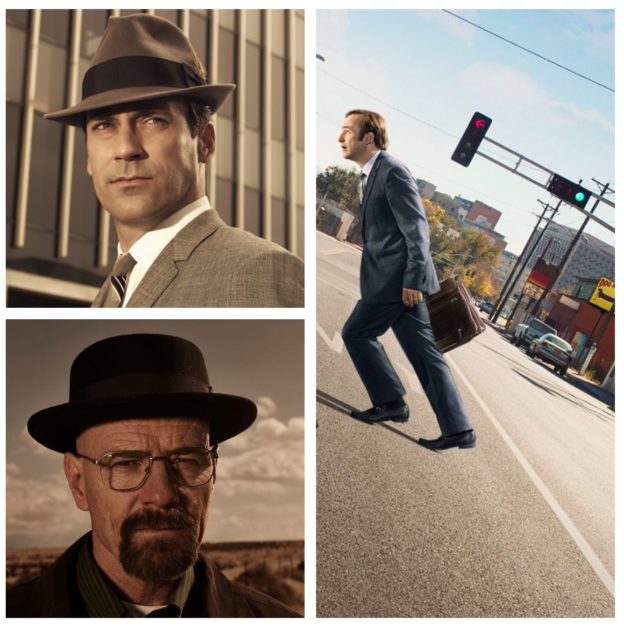
As the unofficial Assistant to the Manager of the Vince Gilligan Fan Club, I have been watching Better Call Saul religiously — and by extension, reruns of my two favorite shows, Breaking Bad and Mad Men.

And it has reawakened an inner-torment, one that perhaps other rabid fans of BB/MM suffer: Which of the dark odysseys is the better drama? Matthew Wiener’s tale of Wall Street executives in the 1960’s, or Gilligan’s tale of a high school meth teacher gone horribly astray?

weinergilligan

And in confession, I wax and wane. Some days, the nod to goes to Don Draper, the suave, womanizing alcoholic of Man Men. On others, Walter White reigns as ultimate anti-hero, the cancer-stricken anchor of Breaking Bad. One thing remains clear: For all the brilliance of Saul (and there is much), BCS is a shadow of both.

That’s not a criticism of Saul; even a shadow of Gilligan’s breakthrough show eclipses all other TV. But its shadow remains looming, given the intellect of both predecessors.

But recently, I came to a realization: Saul is actually an homage of both shows, which are fraternal twins.

Consider the core of Mad Men and Breaking Bad:

  • Both shows are about middle-aged men, both hesitant to reveal their real ages and inner fears.
  • Both center on addiction: Draper to alcohol, White to power.
  • Both characters use the trust of women and youth to enable their respective demises.
  • Both aired on AMC, once a source of original TV.
  • Most importantly, both shows are paeans to the art forms that preceded their own.

It’s that final point in which the shows chose particularly different (yet equally eloquent) paths to reach their finales.

Let’s start with Mad Men, which launched on AMC from 2007-20015 and tells the story of high-powered Wall Street executives through the 1960’s. Breaking Bad, meanwhile, aired from 2008-13 and tells of a high school teacher who employed a former student to cook and sell meth.

Purists will argue that Mad Men deserves more credit because it arrived first. But, in truth, abstract art must always follow representational art, lest it lack source material.

And that is the defining difference — and link — between the shows: Mad Men is representational art, Breaking Bad abstract art.

Consider: Mad Men is time-specific. It revels in an exact era, and is a veritable Hollywood version of history. From the moon landing to the hippie generation to the assassinations of MLK and the Kennedys,  Mad Men is intrinsically tied to America’s emergence into the 70’s. And it relies on specific Hollywood influences, from Billy Wilder’s The Apartment to The Planet of the Apes to Stanley Kubrick’s 2001: a space odyssey (there’s even an episode entitled The Monolith).

2001

Breaking Bad, meanwhile, is more abstract, centering on the timeless theme that absolute power corrupts absolutely. It also relies on an era in Hollywood: the Western (Gilligan is an admittedly proud wannabe gunslinger). Gilligan peppers the series with showdowns informed by The Good The Bad and the Ugly, John Ford and Once Upon a Time in the West. Gilligan also names an episode after a classic story, Ozymandias, the Shelley poem about how how all kingdoms must eventually fall.

once upon a time in the west

Even the shows feature parallel-if-opposite finales: Mad Men ends with the feel-good endings of the 60’s shows it honored: Peggy and Stan find love; Roger settles on a woman; Joan launches her own business; Peter and Trudy reunite. Even Don finds a heroic farewell: coming up with the ad campaign to Coca Cola’s iconic commercial rendition of  I’d Like to Teach the World to Sing.

Breaking Bad, meanwhile, in classic identical-yet-opposite twin brother fashion, says goodbye in abstract gray: Walter White dies in a pool of his own blood. Jesse Pinkman busts through the chain link prison of his captors, simultaneously laughing and crying at his freedom.

There’s no arguing the artistic brilliance of both, just as there’s no denying Saul‘s cleverness in serving as a cousin to both, toying with prequel and flashback tropes in honor of its ancestors. And, like in most families, cousins are great. But they lack the fire of true siblings.

Still, it raises yet a new inner-torment.

Are Mad Men and Breaking Bad rival twins, or the other sides of the same face?