Children of Men and the Latin New Wave Movement

Gutao  

Mao A world in chaos. Terror attacks run rampant. Deportation is the hottest issue on a worried public consciousness as walls keep immigrants from interacting with native citizens.

A documentary? A nightly newscast? A Trump political ad?

Try Children of Men.

Ten years after it hit screens, wowed critics and cemented the reign of the “Three Amigos” over Hollywood, Alfonso Cuaron’s ominous tale of an infertile human race remains as prescient and topical now as it was a decade ago.

If anything, it has grown in stature, becoming a video cult favorite, spawning academic debate and influencing films today in what critics consider a new wave of cinema akin to the French films of the 1960’s and 70’s.

Not bad for a commercial flop.

From its stunning opening to a sprint of a finale, Children proved two hours of frenzy on film. Utilizing handheld cameras and seamless tracking shots, the picture would earn a raft of critic top-10s with its story of a government paper pusher (Clive Owen) who finds himself the charge of humanity’s last pregnant resident, Kee (Clare-Hope Ashitey).

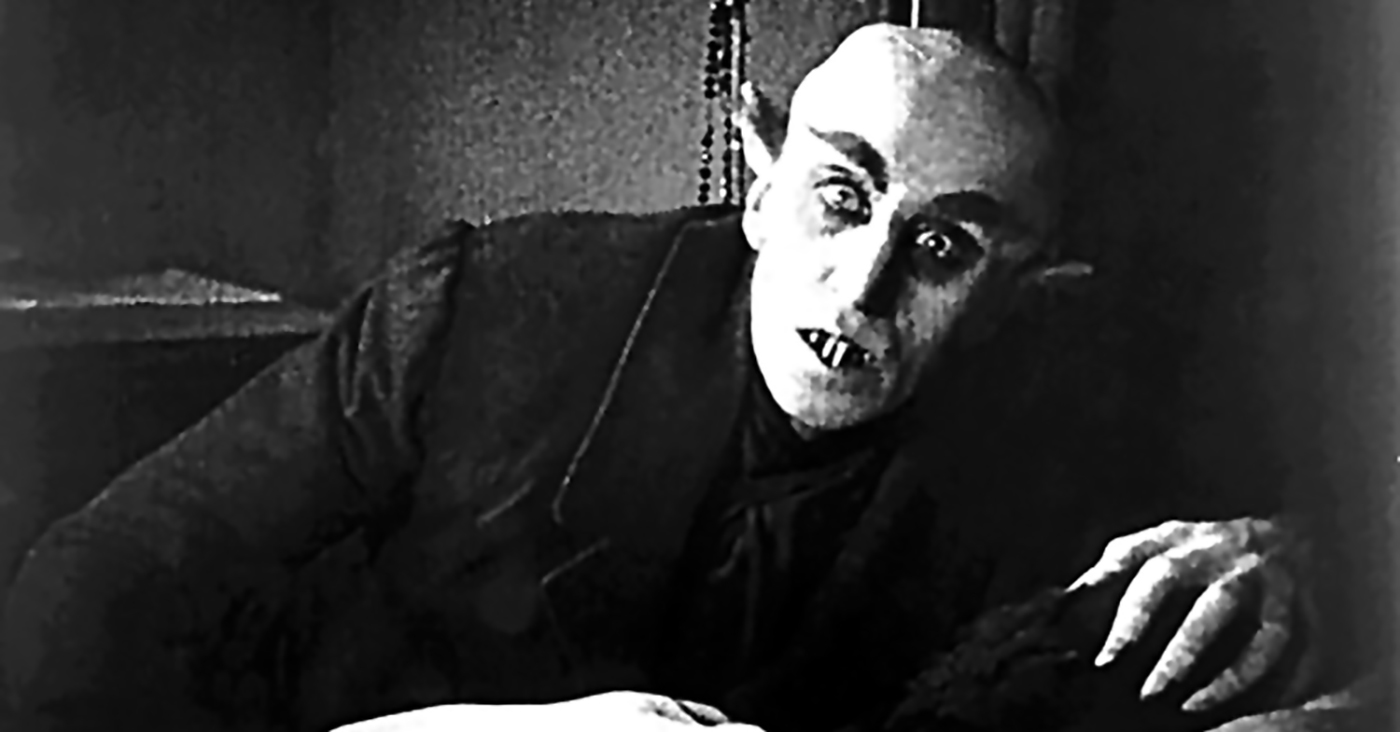
The film would earn three Oscar nominations — best writing, editing and cinematography — on its way to 41 other movie awards and nominations. Roger Ebert compared it to Metropolis and Nosferatu. metropolisnosferatuThe New York Times called its final battle sequence one of finest “ever seen on film.”

Yet it never really took off at the box office. With ticket sales of about $35 million, the grim tale collected less than half its production budget. When it opened on Christmas weekend 2006, it did a paltry $180,000 in limited release — about the catering cost of a Michael Bay opus.

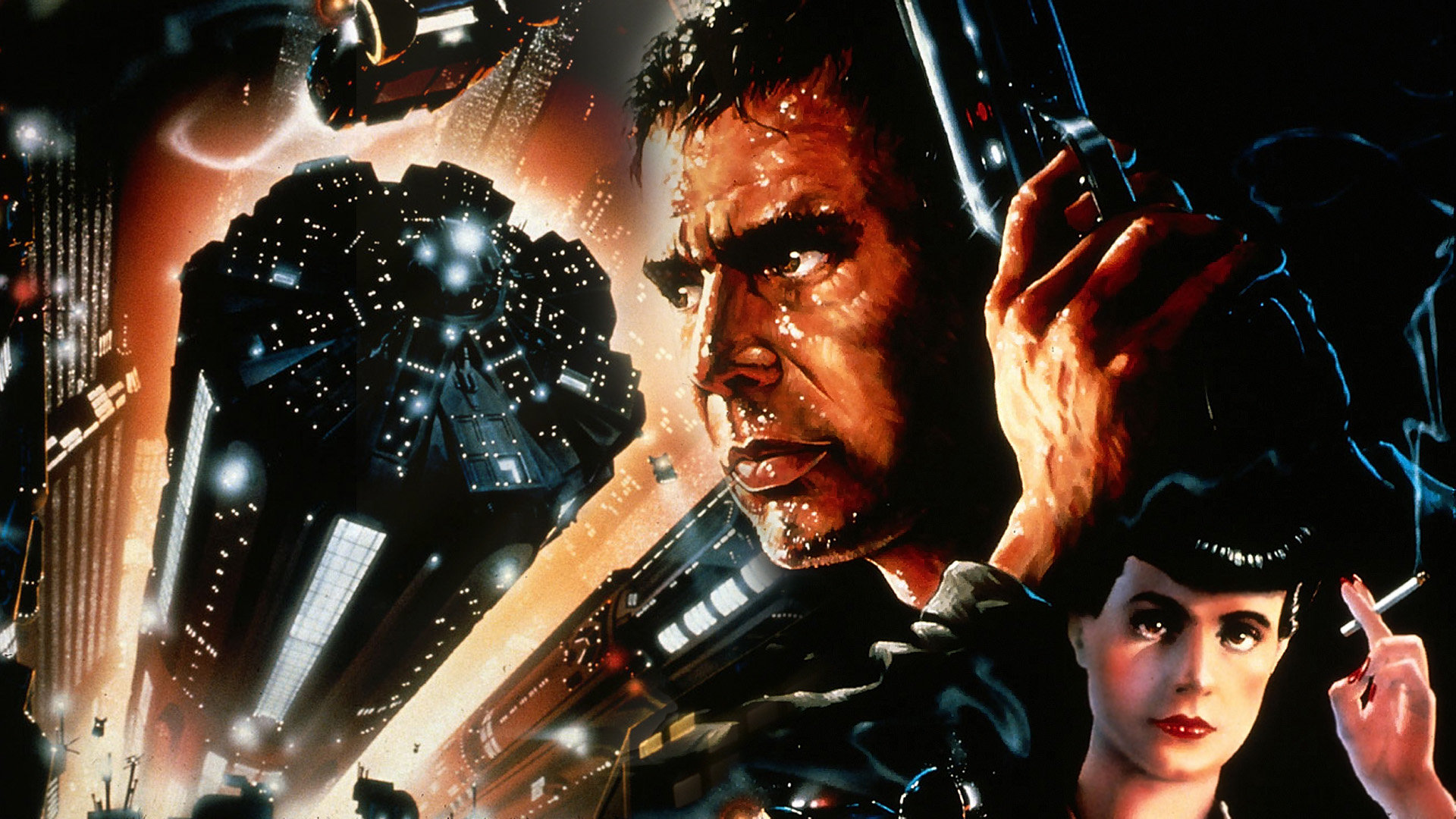
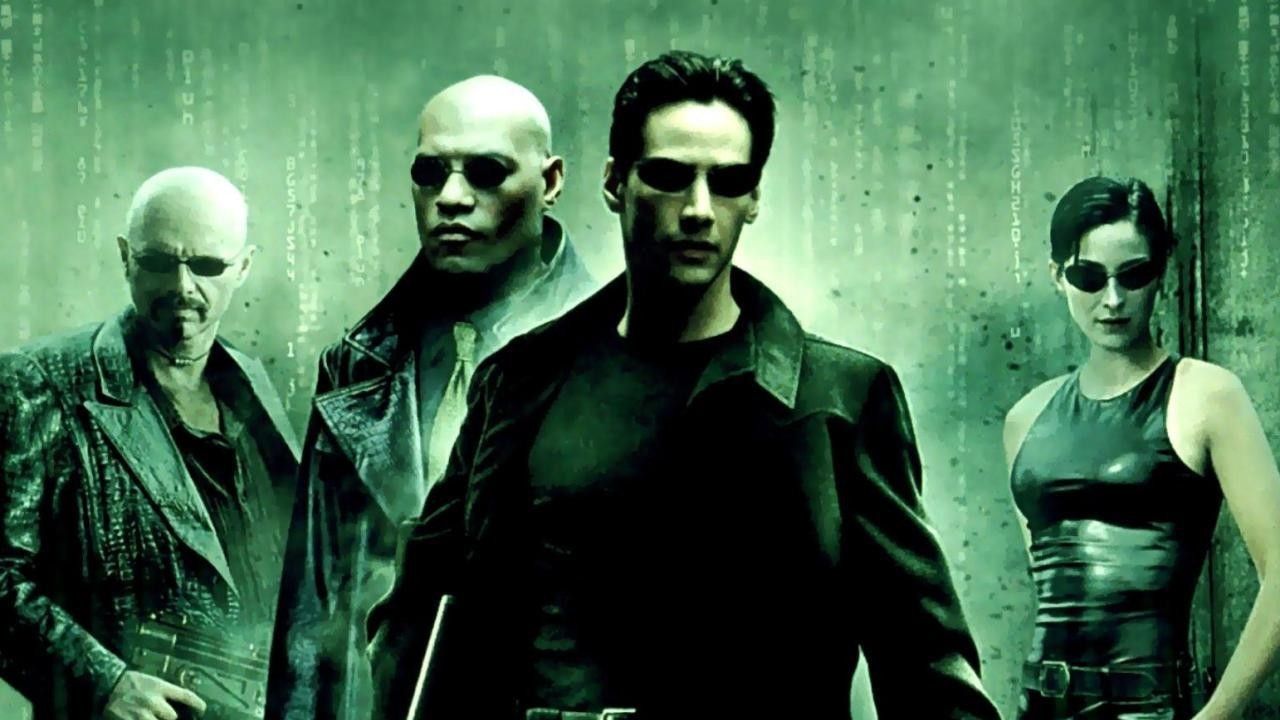
But like The Matrix and Blade Runner, the dystopian cautionary tale found an audience over the years. matrixblade-runnertAnd like those films, Children has become a benchmark for science fiction — largely for its timeless nature. Word of mouth and steady video rentals would ultimately make the $75 million film a tidy profit for distributor Universal Pictures.
And its audience continues to grow. Children has become a springboard for debate among academics such as Stanford senior fellow Francis Fukuyama, author The Origins of Political Order and The End of History. Fukuyama tours the nation with the film, using it as the fulcrum for geopolitical debate over a growing populace squabbling over a shrinking natural resource pool.

Indeed, there’s no escaping the topicality of Children. The movie’s Muslim-Christian tension resembles BBC footage. The story’s narrative kindling — the percolating firestorm over immigration — could have been come from the teleprompter of the Republican National Convention. The story’s immigration center is located in Bexhill, England. (Brexit, anyone?)

Technically, the film’s shaky, handheld camera — usually holding on long, extended takes — is the hottest flourish in Hollywood, thanks to editing technology that makes cuts a stylistic choice, not a filmmaking necessity.

Consider the brutal car ambush scene (spoiler alert), which takes place about a half hour into the movie. In addition to putting the film into overdrive (and killing a character in stunning fashion), the bloody chase/shootout lasts more than four minutes without a visible cut. (Orson Welles’ classic one in Touch of Evil lasted three, once considered an eternity.)

Since Children, directors have engaged in a contest of tracking shots, essentially seeing who can hold their breath the longest; Cuaron’s Gravity opens with a tracking shot that lasts an epic 17 minutes. Birdman, the 2014 film that captured Best Picture, plays as one entire tracking shot, without a single visible take.
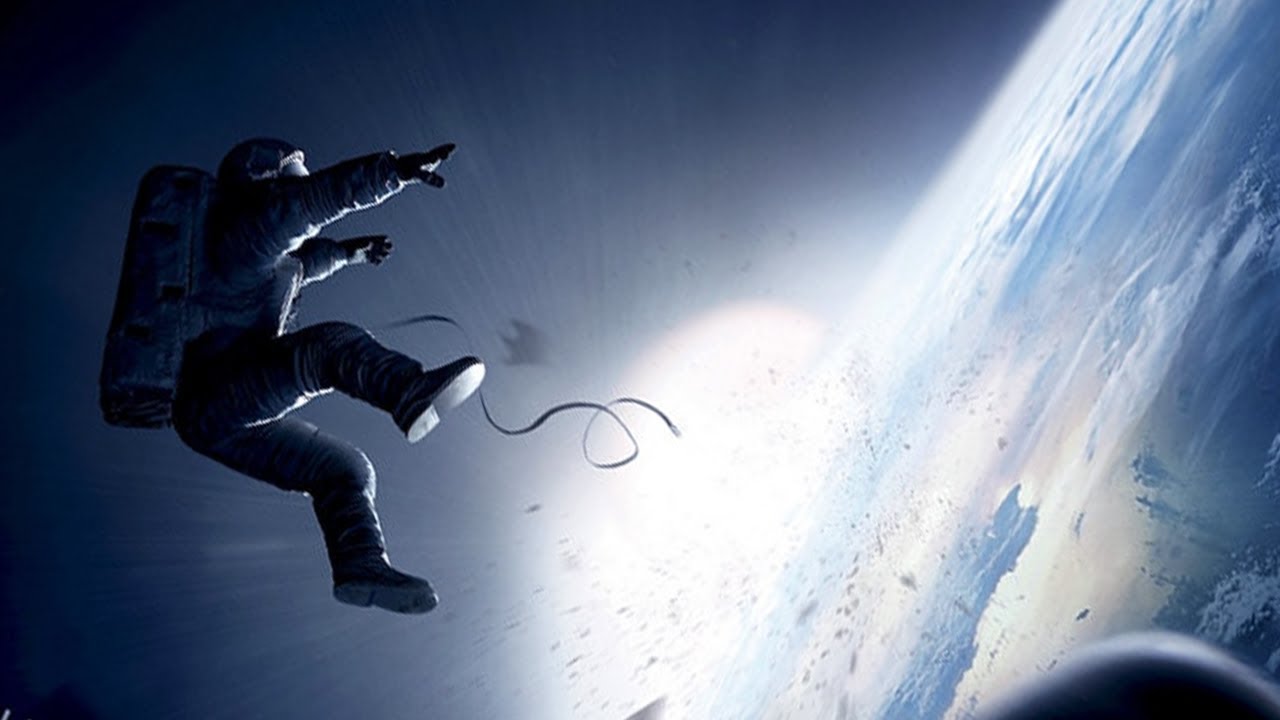
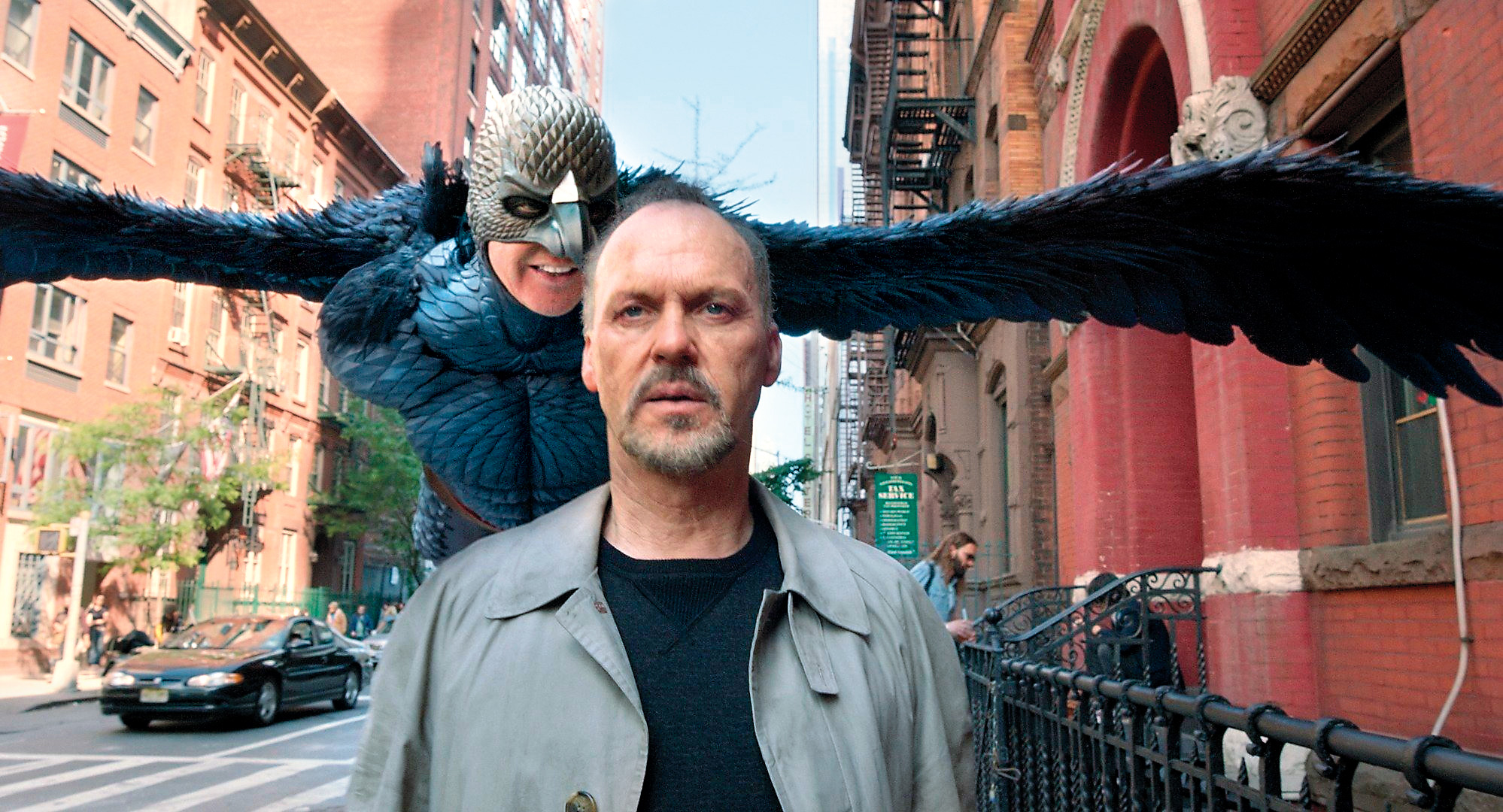
gravitybirdman

Speaking of which: Those movies came courtesy of Cuaron and Alejandro Gonzalez Inarritu. two-thirds of Hollywood’s “Three Amigos” trinity. Along with third member Guillermo del Toro (Pan’s Labyrinth, Pacific Rim), the men have have hurtled the industry into a technically-savvy style not unlike the movies of the French New Wave movement. Last year, Inarritu became the first filmmaker to win back-to-back directing Oscars (Birdman, The Revenant). Consider it the Latin New Wave movement in cinema.

Both movies took their aesthetic cues from Cuaron’s bleak vision of the world 20 years in the future.

“It is above all the look of Children of Men that stirs apprehension in the heart,” mused Ebert. “Is this what we are all headed for?”

It may be the end of the world as we know it, but on the big screen at least, it all looks fine.
God’s Secret, as Revealed by (and to) His Angels


As a Houdini wannabe — there’s gotta be a term there somewhere — I often find myself scouring YouTube for explanations of how magic tricks are performed.

the magician-1

Some are genius. Some are painful. But all are, to some degree, a mirror.

After a random question from a friend (“How do they levitate on the street?”) and wanting to give an answer more elaborate than “harnesses and prosthetics,” I hopped on the worldwide inter tubes to give a more palatable answer.

float

Instead, I found David Blaine and Criss Angel explaining how religion is created.

It all surrounded Blaine’s pride, Angel’s covetousness, and the lust, anger and gluttony of both.You really couldn’t accuse either of sloth.

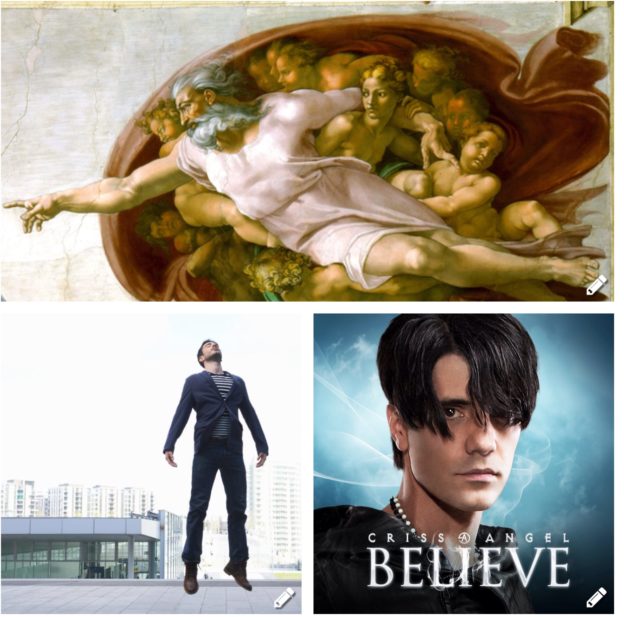
The dispute was over levitation, a trick as tried, true and familiar as a rabbit in a hat. More specifically, Blaine’s first of what seems countless specials on TV. Blaine — who never gets enough credit for being an impressive athlete — could not help but include video snippets of fan reaction to his miracles. In particular, his apparent ability to hover a full foot above the ground, with the backs of both feet clearly levitating.

It’s an impressive trick, and the audience reaction truly is entertaining.

Still, it’s a trick. One that generated much publicity, fan interest and, not accidentally, riches.

It was enough to send TV rival Angel over the top. He committed the Original Sin of Magic: revealing the secret. That’s followed by the other Commandment: “Never do a trick twice.”

Instead, Angel did it over infinitely. And in slow motion. And in freeze frame.

Angel cannot help but claim credibility as the true Jesus (or perhaps Mohammad as an alternative faith), offering “when I did this trick” with a clip of his own version. Even when you know the secret, it’s an impressive feat of balance and dexterity, as are all impressive public performances.

Watch the videos back-to-back, and you will see how belief is born.

Blaine even slightly resembles the Western version of how God’s tyke looks in the oil paintings.

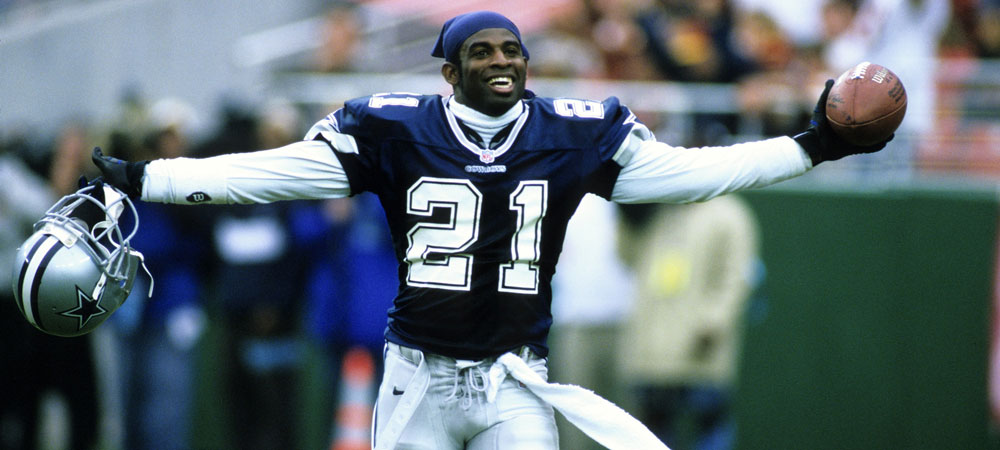
Humbly in the video, he asks common folk to look at his feet. Suddenly, he floats above the earth, sending witnesses into awestruck wonder. Some scream. One woman nearly faints. Former NFL star Deion Sanders literally runs away, ducking into an alley as he covers his mouth.

The most telling moments, however, come after the trick, as spectators describe what they saw. One interviewee says simply that Blaine briefly flew like Superman. There were no wires, no tricks, no deceptions; there’s just something different about that man. Another witness tries to validate the miracle, saying she’s “read about this,” as if to provide guarantee. She explains that those who are spiritually gifted can harness the energy of the world to defy its physics.

So we have the miracle: the levitation. Or you can replace “levitation” with “rise.” Or replace “rise” with “resurrect.” Whatever your linguistic preference.

We have the witnesses; those who know what they saw.

We have the conversion, as those witnesses explain that what they beheld was not trickery, but something truly supernatural. I wonder if they ever saw Angel’s video. I wonder if they care. Especially Sanders, a veteran of video illusion, who sought out teammates to spread Blaine’s gospel.

deion

Now imagine that none of this was captured on video. Instead, it was handed down for centuries by legend, song and dance by those who would have considered seeing a toaster as foreign and supernatural as a talking snake.

godtoaster

Over time, the dispute over the miracle would become, well, biblical.

The magician rivalry even gave birth to douchebags like this, who seek only to profit — in this case, in views and likes — by claiming clarity in the storm.

Those would be the evangelical proselytizers. The guy even resembles the Western version of those, too.

Now that’s revelation, homes.

The Hallowed Halls

R.I.P. Gwen

The house still feels empty.

How could it not? Teddy was such a huge presence, in size and personality. His tail was constantly in motion, always whipping, always thumping, always celebrating your life. Up until the minute he lost his.

And he left such a wake, so powerful an undertow, that when he voyaged Esme was almost swept in the sorrowful currents.

But, slowly, we are both realizing that she now is the dog of the house.

It’s a new role for both of us. She had always been the foil to Teddy’s stand-up, the straight man to his punchlines. In many ways, part of Esme’s —and Teddy’s — appeal were their contrasting styles. So keen, Esme is, that she would leave the house when Teddy ate the wallet, or swiped the brownie, or decided a dress shoe is an awesome rawhide. She knew the horrific screams of discovery to come.

Now, though, she rarely leaves the house unless I do. She’s small enough to fit in the smart, so quick road trips are suddenly on the table. So are spontaneous dog park runs (Teddy required a stroller-full of prep work, including a bigger car and plastic bags big enough to hoist five-pound dumps.)

She fits on the bed with me with room to spare. So the bed is open. So are drawers.

So, too, I realized, was my heart. I still marvel as she becomes the hound of the home. She growls at unexpected sounds and rummages the toy drawer like a petulant six-year old. Which, I guess, in many ways she is.

We made a quick run to the drive-thru tonight. She knows to bolt to the door when I grab my wallet. She knows to wait by the smart when the garage door opens. She knows to wait for the ridiculous new baby-chair harness created to keep her from leaping out the window.

As we pulled up, we came upon a Toyota 4-Runner with its back window lifted. From it peered a beautiful Shepherd mix, perhaps 60-pounds.

I didn’t need to alert Esme. Her gaze was fixed before mine, I’m sure. Finally, the pooch either saw or sniffed Esme, sitting upright in the passenger seat, properly belted (I wonder if I could take her in the carpool lane?). Pooch began to whine a little.

Then we saw it. His tail, once resting beneath the tailgate, was now above it. A furry dorsal fin, wagging back and forth, sharing the common Nirvana for all dogs.

And dog drivers. The motorist waved before pulling off, aware of what we both witnessed.

I waved back. Then placed a large hand on a small back.

Amazing, how a small thing can fill a place.

IMG_0936