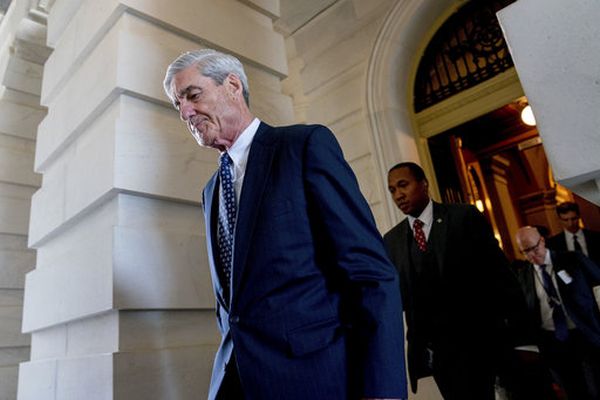
cheap disulfiram online Robert Mueller didn’t have to enter the Vietnam War. He wasn’t poor and wasn’t drafted. As a student at Princeton, Mueller had ample opportunity to point to his education to defend avoiding a pointless war. Given his academic record, it would be a helluva lot more convincing reason than bone spurs in a foot he could not recall.
But Mueller was shaken by the death of friend and schoolmate David Spencer Hackett during the war, and gave this reason to a reporter for a life dedicated to military service.
“One of the reasons I went into the Marine Corps was because we lost a very good friend, a Marine in Vietnam, who was a year ahead of me at Princeton,” Mueller said in a 2016 interview. “There were a number of us who felt we should follow his example and at least go into the service. And it flows from there.”
In July 1968, he was sent to South Vietnam, where he served as a rifle platoon leader as a second lieutenant with Second Platoon, H Company, 2nd Battalion, 4th Marines, 3rd Marine Division. On December 11, 1968, during an engagement in Operation Scotland II, he earned the Bronze Star with “V” device for combat valor for rescuing a wounded Marine under enemy fire during an ambush in which he saw half of his platoon become casualties.
In April 1969, he received an enemy gunshot wound in the thigh, recovered, and returned to lead his platoon until June 1969. For his service in and during the Vietnam War, his military decorations and awards include: the Bronze Star Medal with Combat “V”, Purple Heart Medal, two Navy and Marine Corps Commendation Medals with Combat “V”, Combat Action Ribbon, National Defense Service Medal, Vietnam Service Medal with four service stars, Republic of Vietnam Gallantry Cross, Republic of Vietnam Campaign Medal, and Parachutist Badge.
After returning to the States, he served for 12 years in United States Attorney offices. After all that, he was saddled for two years with the duties of Special Counsel of the investigation into “Russian interference in the 2016 United States elections and related matters.” In other words, two years of servitude freighted by Donnie Dumbo and his oily lackeys. 
Despite two years of Donnie’s, the GOP’s and Fox News’ subterfuge, he netted netted indictments against 34 people and three entities on nearly 200 separate criminal charges. Five associates of Trump have been convicted, and another, Roger Stone, is awaiting trial. All without a single controversy, instance of press leaks, political grandstanding, or Lester Holt interviews. The guy became a legal Hermit King, earning uniform praise from Democrats despite his being a Republican.
And now, with the 300-page report finished, he will likely see subpoenas to testify before Congress. Hint to Bob: Bring a gas mask and hazmat suit to the hearings to protect yourself from lethal, political gasbaggery during testimony.
What’s worse is that Dems, who pretended to praise and safeguard Mueller to let his investigation run its course, have not even taken to a mike or podium to thank Mueller for all the bullshit he’s had to endure in the name of country.
What despicable cowardice. Even on issues that divide us, from school shootings to hate crimes to collusion, Dems usually know to feign graciousness before serving rapaciousness. How many times have we heard them say, for instance, “First, our prayers go to the family of…” Or when McCain died, how easily the praise trickled from their mouths despite professional difference.
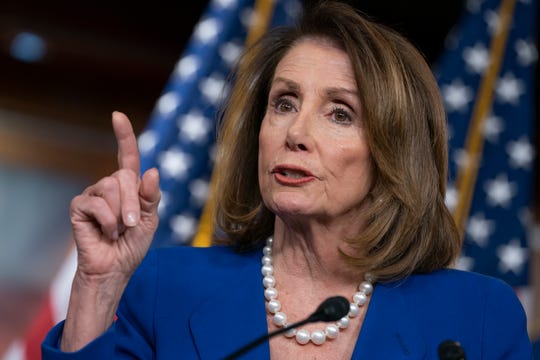
Not with Bob. The left has taken Mueller’s report like a colonoscopy, bitching and moaning at every rectal discomfort. Nancy, would it be too much to tell underlings to start with a similar caveat? Something along the lines of, “First, we should all thank Mr. Mueller for his tireless energy in a thankless job…” We know the work was thankless, full stop. But that doesn’t mean you can’t thank, nonetheless.
Or better yet, pass a resolution officially recognizing Mueller’s service — as Special Counsel and beyond. People have won keys to cities for less sacrifice. It would surely be shot down by the GOP, if Sen. “turtle flap” McConnell even allowed it on the floor to the vote.
But strike first. Strike nobly. Let the slackwits bicker and bawl, but the high ground is open and unclaimed. So claim it, you slimy, spineless fucktards.
And thank you very much for your time.
See? That wasn’t so hard.
https://www.youtube.com/watch?v=u1z4vkPWkLQ