Category Archives: The Everyman Chronicles

Abel

http://czechinthekitchen.com/2013/07/05/summer-potato-salad/?shared=email Abel

Abel,
who left the gate unlatched?


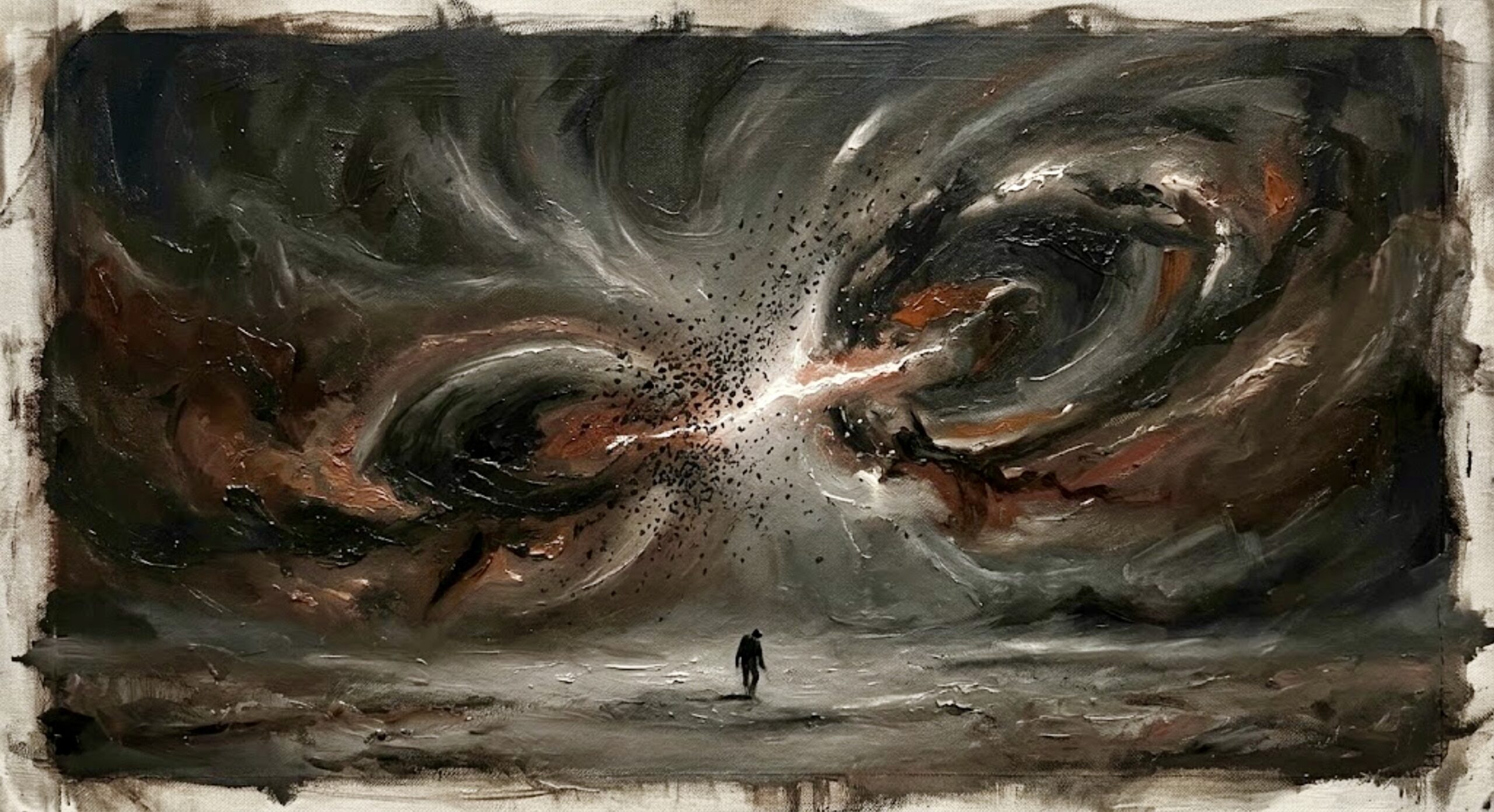
The field knows.
The dirt knows.
Neither says a word.


God,
come down from whatever
you call above.
There is a hunger
at the edge of the wheat.
There is always a hunger.


Brother, my brother,
what have we carried this far
that was never ours?


The blood?
The name?
The stone?


Look now.
The sun has made
everything innocent.


Even the knife.
Even the hand.


Beast,
come near.
What are you waiting
to become?

The Trump Jinx


can you buy Lyrica in mexico

The Los Angeles Dodgers visited the White House last month as Major League Baseball’s world champions.

They’ve been winless ever since.

Call it the Trump jinx.

The reigning champs celebrated their title in Washington’s summer swelter. Even gave the president his own championship ring.

Since then, they’ve dropped their longest losing streak of the season, six straight, swept twice, first by Boston, then by Chicago.

The Dodgers are not alone.

In June, Trump sat courtside at Madison Square Garden for Game 3 of the NBA Finals, his first Knicks game there in over a decade. New York had won 13 straight. The Knicks lost that night — even though box owner James Dolan insisted the president stayed awake the whole time. It did not matter. The crowd booed him during the anthem, and the Knicks folded, their only blemish on the championship run.

A month later, the executive jinx discovered FIFA and soccer.

American Forward Folarin Balogun took a red card against Bosnia, triggering an automatic one-game ban ahead of the Round of 16.

Trump called FIFA president Gianni Infantino directly and asked for a review. FIFA obliged, suspending the ban for a “probationary period.” No World Cup suspension had ever been reversed that way. UEFA called it a violation of a principle that “cannot be made subject to exceptions.” Balogun played.

The U.S. lost 4-1. Blown out and eliminated..

Two weeks later, Trump had no team left in the tournament, but he had a favorite. He told Fox Sports it was “hard to bet against” Lionel Messi ahead of the final against Spain. Messi’s Argentinian team promptly lost.

As Trump took part in the trophy ceremony, cameras caught Messi walking past Trump without a glance. No handshake, no eye contact.

And now the jinx has moved off the field entirely.

The Lincoln Memorial Reflecting Pool sits drained this week, months after Trump ordered it coated “American Flag Blue.”

A man faced felony charges for supposedly vandalizing it. Prosecutors dropped the case Friday. The damage, they now say, came from a botched contractor job. The pool built to reflect the man who watches over Washington now reflects flotsam, which is somehow fitting..

None of this proves anything, not in any way a statistician would accept. Small sample. No control group. No mechanism beyond attention and pressure.

But sports superstition does not run on proof. It runs on pattern, and the Dodgers just handed the pattern its freshest data point.

The reflecting pool is different. That one is not superstition. That one is a $34 million public asset, painted at a president’s request, drained within months, and now the subject of a dismissed criminal case built on a false premise.

Those are not jinxes. Those are choices. And choices have receipts.

Maybe the losses are noise. A team slumps. A goalkeeper has a hot night. A superstar walks off the field too exhausted for pleasantries.

But put the Dodgers, the Knicks and Messi snub side by side, and a pattern can’t help but emerge. Reverse Midas kills everything he touches.

The reflecting pool used to hold water.

Now it holds our fate like a busted Magic 8-Ball.

Finding The Third Person

We have become a nation well trained in the first person.

We think about ourselves. We talk about ourselves. We talk to ourselves. Even when we listen, we often wait for our moment to speak rather than actually exchange an idea.

We have become a nation of first-person citizens, led by the ultimate first-person president in Donald Trump. The MAGA movement may be the first-person point of view made manifest: my country, my grievance, my truth, my loss, my victory.

Social media probably helped get us here. Then again, Trump may be a product of social media, which may be a product of us. The whole thing may be circular.

Regardless, we have gotten very good at the first person.

There is a rarer class of people who can find the second person. They can find you. They can stop long enough to consider the person across from them. What that person wants. What that person means. What that person may be trying to say while we are busy preparing our response. That is harder than it sounds.

But there is an even rarer breed: the third-person citizen.

I do not mean people who refer to themselves in the third person. That may be the most obnoxious mutation of the species.

I mean the ability to step outside yourself and see the person you are presenting to everyone else. To watch yourself from across the room. To hear what you just said as though somebody else said it. To see your behavior as though you were watching yourself in a movie.

This is particularly difficult for white men. I know because I am one.

I try not to mansplain. I try to listen. I try to understand what another person is telling me. And I still catch myself doing exactly what I think I am avoiding.

I explain what I want. Someone responds. Then instead of absorbing the response, I explain my reasoning again.

Maybe with different words. Maybe more slowly. Maybe with more detail.

As though the problem could not possibly be my argument. It must be their failure to understand it.

That is when I lose the third person.

Because if I could step outside the conversation for a moment and watch the scene, I might see something entirely different.

I might see a guy who thinks he is explaining himself clearly. Everyone else might see a guy who refuses to listen.

Third-person thinking is not empathy.

Empathy is valuable, but it is a double-edged sword with a razor-blade handle.

You do not always need to feel what another person is feeling. Sometimes you cannot. Sometimes you should not.

Third-person thinking comes before that. It lets you see the scene well enough to decide whether empathy is necessary.

Think of your life as a movie.

Everything you say is dialogue. Everything you do is action. Other people are watching the character you play, whether you realize it or not.

We have spent decades being told to speak our truth. Find our true selves. Be authentic. Tell the world who we are.

Maybe we have spent so much time looking inward that we have forgotten to look at the screen.

Because you are the star of exactly one movie. Yours.

There are eight billion other biopics playing simultaneously. In those movies, you are not the star.

You may be the spouse. The parent. The friend. The boss. The asshole at the grocery store.

You may walk through one scene and disappear forever. Most of the time, you are not in the movie at all.

Finding the third person means understanding which role you are actually playing.

It means occasionally leaving the star’s chair, walking into the audience and watching yourself perform.

You may discover that the character you thought you were playing is not the character everyone else sees.

That perspective may help save a country obsessed with the first person.

It may also save something larger.

Your place in eight billion other movies.