Category Archives: The Everyman Chronicles

The Good Race

Amnat Charoen  

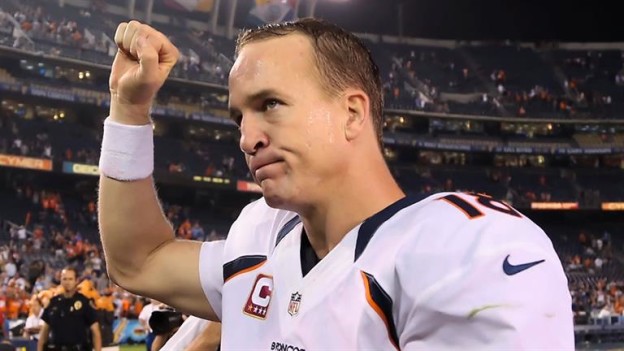
where can i purchase disulfiram Peyton Manning retired this week, bringing to a close a career that will include two dozen passing records, five league MVP trophies and two Super Bowl rings. His induction into the National Football League Hall of Fame in Canton, Ohio, is as certain as gravity.

But when Ken Burns and other historians wax poetic about the man, they should not overlook his other historic achievement: the greatest retirement speech in the history of sport.

Hell, it may be one of the greatest retirement speeches of all-time. Written himself and lasting nearly 12 minutes, his adieu to an 18-year-career was less a recollection of achievements than a realization of life.

I admit, I was bawling by the end, around the 11th minute, when he quoted Scripture, 2 Timothy 4:7

I have fought the good fight, I have finished the race, I have kept the faith.

After the speech, when the cameras at ESPN cut back to the commentators, the athletes — hulking, bruising NFL greats who played through compound fractures — were sniffly with snot and blurry with tears. Lou Gehrig will always be remembered for his farewell to Major League Baseball as he entered his long night. And, given the darkness awaiting him, it may always be the most moving.

But consider: Lou uttered barely three sentences, in about a minute, to heartfully confess that, despite the disease that would later kill him and take his name, he was the luckiest man on earth.

For sheer poetry, though, Peyton’s speech is unrivaled, particularly for an athlete. Like, viral-video-graduation-ceremony-self-improvement-class good. Everyone from journalism instructors to Academy Award winners should keep that speech permanently. Not for its turns of phrase; in truth, non-football fans won’t get a dozen references to players or plays.

But watch his emotionally-wracked monologue for even five minutes, and it’s clear Peyton isn’t even giving a speech. He’s reading a love letter. To his sport, to his fellow athletes and coaches, to his fans.

Say what you will about football (and there’s much to condemn). The sport’s brutality may eventually be its undoing.

But sport — like movies, TV, Broadway, even Justin Bieber songs — are all forms of art (albeit, some more cerebral  than others).

And in Peyton’s speech, there’s no mistaking the heart behind the arm: an icon openly confessing, and weeping over, his love of an art he’s been practicing since he was strong enough to hold the instrument.

That alone is worth a reservation in Canton.

The Daily Medicine Show


A grandfather I never met lost his tiny Georgia grocery story (in which dad was born) during the Great Depression. He couldn’t bear asking customers, all neighbors and friends, for money they did not have and would not see again. Eventually, he gave away so much that he had to shutter the business.

So he started a medicine show, a common sight of the era.  By horse and cart, medicine shows traveled from town to town to sing, dance, tell jokes and, hopefully, sell ‘remedies’ and trinkets to monied spectators. A traveling Tonight Show and souvenir shop.

Dad was too young to hit the road, so his eight brothers and sisters handled the entertainment. But my uncle Fonnie laughed so much at his own jokes that grampa had to cut him from the non-star roster.

I wonder what gramps would have thought of The Daily Show with Trevor Noahnoah

Noah is the high-profile replacement to Jon Stewart. The South African-born standup comedian is clever, young and leading-man handsome — a trifecta in the cable TV derby. But something is missing in the retooled show.

The writers are the same. So is the left-leaning humor. But the bite lacks.

Perhaps it’s a matter of age. Political humor requires a certain world weariness. Stewart, 52,  had it in spades. stewartSo does Larry Wilmore, 53, whose Nightly Show follows The Daily Show and who would have seemed a natural replacement to Stewart. Like Stewart, Wilmore is terrific at exasperation. wilmore

Noah, on the other hand, is terrific at tourist-like bewilderment. The 31-year-old often wonders aloud about an American political system that has become as cartoonish as Daffy Duck. His observations are on the money, and should be fodder for eternal material.

But politics in the U.S. is humor we know all too well, and the jokes feel somehow dated and retold. Just substitute Marco Rubio for Boss Tweed. rubiotweed

And then there’s the Fonnie Syndrome. Noah has a megawatt smile, and his laughter at punchlines feels genuine. Certainly, Stewart chuckled all the time at a good zinger. But Stewart laughed at the absurdity of a broken system, not the humor of his joke. There’s a razor-wire difference, and perhaps it comes from a half century of experience with red tape buffoonery.

It’s unfair to judge this early, and Noah may soon find his wheelhouse. It took Stewart the first six months of his 16-year stint to become a canny political satirist. And Comedy Central will not give a rat’s ass about wit if the millennials keep the Nielsen numbers high.

But The Daily Show had such a dry and knowing sense of humor it bordered on informational. Stewart eventually became a Post-It note reminder of the forgotten, the hair-pulling pundit for those who had to close their stores, join medicine shows and tap dance to the Muzak of The Department of Bureaus.

To lose that would be no laughing matter.


Nor Even Frog!


One of my father’s (and therefore my) favorite cartoons was Underdog.

Launched in 1964, Underdog was the secret identity of Shoeshine Boy. Though he didn’t possess  any of the powers of today’s glistening, branded superheroes, what Underdog lacked in strength and speed he made up for in grit. And love. Specifically, for girlfriend Sweet Polly Purebread, a name dad found subversively clever, like the show. Underdog could rise to any challenge when his girl was in peril.

No plane, nor bird, nor even frog! the theme song jingled, as our hero smashes into a brick wall, ‘It’s just little old me, Underdog.’ 

Roberta Vinci could have worn Underdog’s U cape to the semifinals of today’s U.S. Open.

The 32-year-old Italian had never made it to a semifinal at a Grand Slam event in her career. And she was to face Serena Williams, who was marching to history. Williams was seeking her 21st Grand Slam title, tying her for the most in the modern era.

Williams is the Tiger Woods of tennis. Athletic. Photogenic. A game-changer shoulders above peers. Like Tom Brady, Williams’ commercials seem to punctuate her games.

Analysts predicted Williams would make quick work of Vinci, whose odds of beating the champ, according to Vegas, were 300-to-1.

Even Vinci, a doubles player by career, began to doubt. She had never managed five games in a set against Williams, whose thighs each are about the width of Vinci’s entirety. Vinci bought a plane ticket back home to Italy for Saturday.

Analysts didn’t help. That gasbag John McEnroe mused aloud whether Steffi Graf, whose record Williams would surely be tying, would show up in New York to personally give Williams the trophy and pass the mantel.

And the show went according to script through much of the match. Williams took the first set easily. When she bored and dropped the second, she began what has become her trademark: working up the crowd. In the third and deciding set, she began to fist pump, clench, whip the audience, which was getting frenzied. On one brilliant shot, she can be seen clearly shouting, either to herself or Vinci, “yes, bitch, yes!” The crowd began to chant. Drake, the celebrity rapper who was in the Williams’ family reserved box seating, stood up and began to applaud.

As Dad would have noted, Sweet Polly Purebread was on the tracks.

But never underestimate a badass beagle.

When the crowd went rabid at Serena’s screams and Drake’s one-man wave, Vinci rested her racket on the asphalt, looked about, shook her head at the thunder.

And smiled. She would later admit she never expected to be there, and decided she was going to enjoy being at a Grand Slam. Center Court, no less. Why not go down swinging?

Williams continued to bomb serves, some of them 126 mph, unheard of in the women’s game (Vinci hits 90 mph on a good day). But with every thunderbolt, there came a steady echo: a shot back. Wham. Return. Blast. Return. Cannon fire. Return. After winning a rally that would become emblematic of her day, Vinci gave her own Bronx cheer. She raised her arms and looked defiantly at the crowd to say, ‘I am here, too.’ After the rally, Williams bent over the net, gasping for air. She would never recover.

Analysts would later rank Vinci’s win as one of the five greatest upsets in sports history. Arguable. But this is not: When she took the microphone after the win, a tearful Vinci apologized to the crowd for beating the toast of New York.

But Vinci became so much more: a life lesson. Never underestimate an underdog. Especially when Sweet Polly’s tied to the tracks.