Category Archives: Reviews

Leaving the Media Unforgiven

Beverly

Navojoa Clint Eastwood’s latest film, Richard Jewell, opened this weekend to $5 million, a thumbs-up from more than 70% of the nation’s critics and with Oscar whispers circling the Warner Bros. flick. I gave it four out of five stars for my outlet.

I would have given it five stars, but there was a ginormous caveat in the way: Clint took an unwarranted shot at an old colleague of mine. Atlanta Journal-Constitution reporter Kathy Scruggs and I worked the police beat at the AJC, though I had moved to another paper by the time of the Centennial bombing during the 1996 Olympic Games. Image

Scruggs, who died in 2001, was the primary reporter in the AJC‘s bomb coverage. She also broke the story that the FBI was looking at Jewell as the primary suspect. And when Eric Rudolph, an anti-abortion extremist and member of the Army of God sect, confessed to the bombing, Scruggs took it on the chin from competing outlets for her aggressive, over-eager zeal to get a scoop. Which was true. Kathy had the bite force of a rabid pit bull when she got hold of a story.

But, to hear Eastwood tell it (on film), Scruggs took it on the chin, literally. The film accuses Scruggs of sleeping with an FBI agent to get the story. The AJC has protested its portrayal, which is irony perhaps at its purest. And Warner Bros did what the AJC did 2 1/2 decades ago: It told the protesters to go pound salt.

But the paper was right. Eastwood screwed this up.

I say that with all the hesitancy I can muster. In truth, I have spoken to Eastwood more often than I talked to Scruggs, and consider myself a fully biased fan of his work. But Eastwood must have had an acutely unpleasant run-in with the press of late, because he took a hatchet to media the way Jack Torrance opened doors. Image result for jack torrance axe door

Eastwood got virtually everything wrong about reporters in Jewell, which is odd, since we really were the antagonists in this story. We did swarm. We did leap. We did jump the gun.

But for some reason, the 89-year-old director needed a villain incarnate, and created one with Scruggs. He directed Wilde to play the reporter as if she were Cruella de Vil with a notepad. In the film, Scruggs flips off fellow reporters, weeps at press conferences and basks in the standing ovation she receives for initially breaking the Jewell story.Image result for cruella de vil
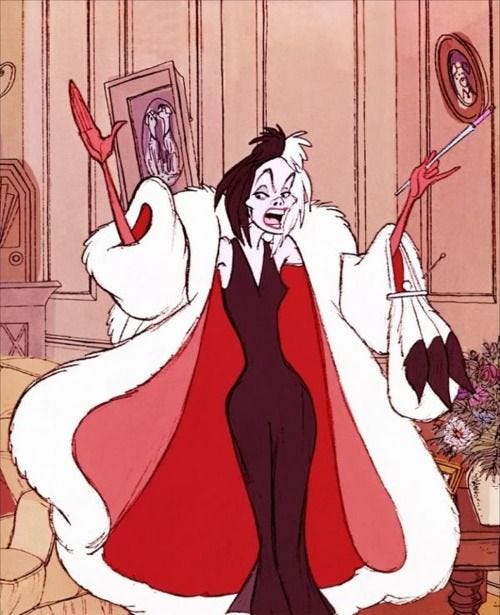
Bullshit bullshit bullshit. The woman portrayed in Jewell is not Kathy Scruggs.

I can’t speak to the specific allegation Eastwood made. But I can say with no degree of uncertainty that his notion of a newsroom is antiquated and, worse, waaaay off. Reporters don’t give standing ovations. We can barely tuck in our shirts. We don’t even applaud when colleagues win a Pulitzer Prize. And no reporter screams in delight when a story runs above the fold in banner font. We hold our breaths and pray we don’t need to run a correction.

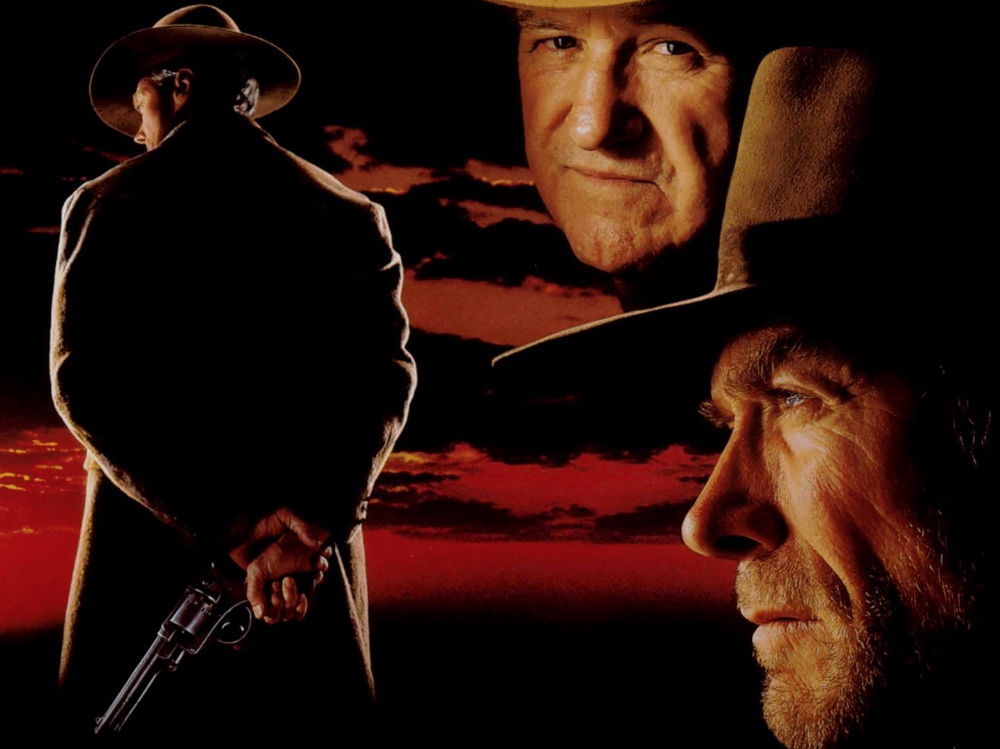
The inaccuracy is a jarring failure on Eastwood’s part. He won a best director Oscar on the back of  historical research by screenwriter David Peeples for the Western Unforgiven. Peeples was also nominated for an Academy Award, though he didn’t win.Image result for unforgiven
Maybe it was studio pressure. Maybe it was Eastwood’s well-publicized conservative political leanings that prompted him to take a shot at the media. Maybe he clashed with one of us on a red carpet (where we are at the zenith of our assholeness).

But to take a shot at a dead woman? Come on, Clint. That’s like shooting the guy in the black hat in the back.

More puzzling was that the filmmaker already had a believable villain in us. Throughout Jewell, reporters camp out in front of the suspect’s home, follow him wherever he drives and badger even Jewell’s mother in the feeding frenzy. When we amass, bad shit happens.

Alas, that wasn’t sufficient for Jewell.

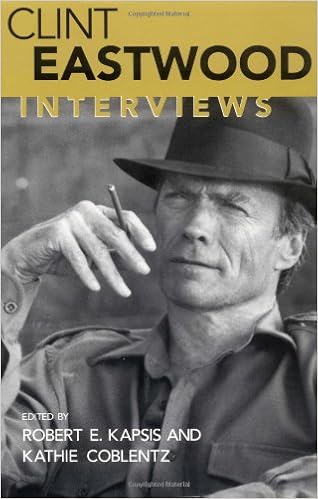
I still remain a fan of the work of both Scruggs and Eastwood. One of the highlights of my career was to have an interview included in a collection of stories about the director.Image result for interviews: clint eastwood
So I will bid an RIP to Kathy and a best-wishes to Clint come Oscar season. I hope the movie does well. I will do my best to forgive it.

The Soft-Spoken Jewel of Richard


Richard Jewell

As he’s morphed from movie star to star movie maker, Clint Eastwood’s late career has tended to two categories, as distinct as cowboys in black and white hats. There’s the deeper philosophical glimpses into human frailty (The 15:27 to Paris, Sully,  J. Edgar);  then there’s the hands-off-bystander director who shoots simpler stories (Gran Torino, The Mule, Unforgiven).  Thankfully, Richard Jewell belongs in the latter camp of complicated  heroes seeking simplicity.Image result for The 15:27 to Paris

The 89-year-old director brings his no-fuss persona to Jewell, and it proves an apt fit for Jewell’s story, allowing the brimming tension of Billy Ray’s script and a handful of strong performances to stand out. While the muted drama is familiar and likely won’t win Eastwood any new fans as a filmmaker, it won’t mar his reputation, either. The low-key approach feels at once timely and old-fashioned — a character study from another era designed to comment on our own, particularly along the media landscape.

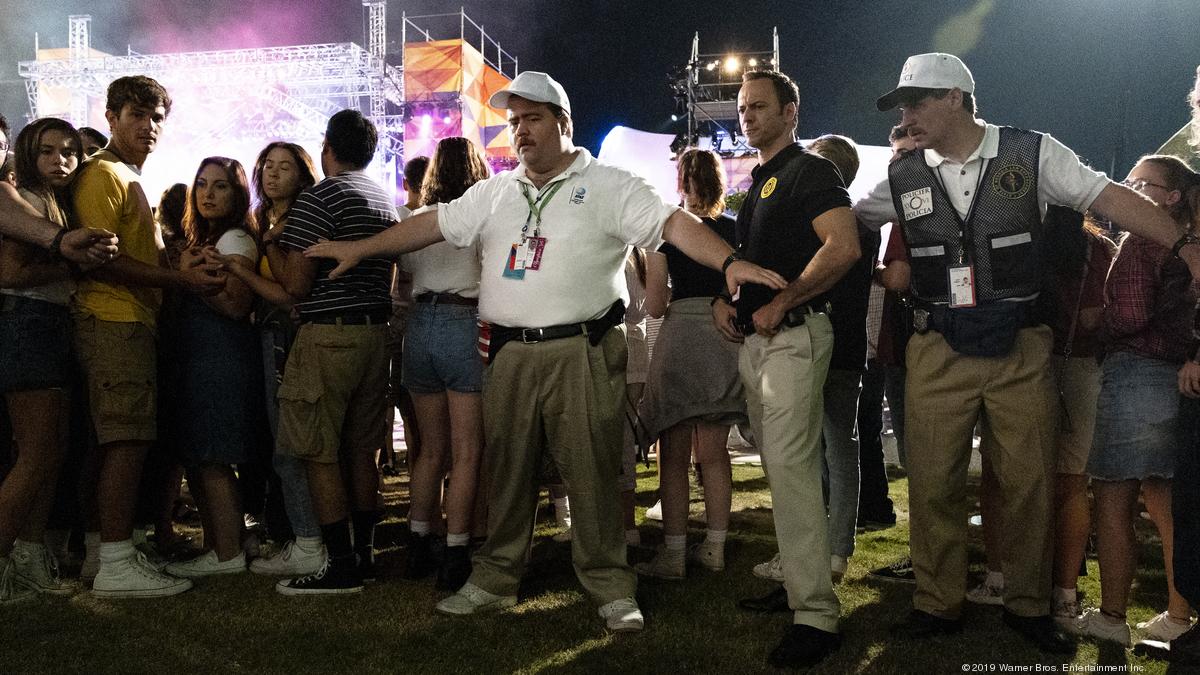
Jewell explores the eponymous odyssey of its real-life character, in a cautionary tale of heroism gone awry on a very public stage: In 1996, the security guard happened upon a bomb at Centennial Park during the 1996 Summer Olympics in Atlanta, Georgia. The blast ultimately killed one person and injured more than 100, but could’ve been worse if it weren’t for Jewell successfully identifying the makeshift explosive tucked in a backpack under a bench just before detonation. But without a promising suspect, the FBI made Jewell its primary suspect, and mass hysteria ensued as the FBI combed through Jewell’s life to build a believable case.Image result for centennial park richard jewell

While Captain Phillips writer Ray adapts Marie Brenner’s Vanity Fair article into a sturdy scaffolding to retell those events, Eastwood’s veteran hand provides the tension: The harrowing explosion at Centennial Park — with bodies, limbs, and blood sprayed across the park — can’t help but think of the Boston Marathon and Vegas mass shootings. It may be set in the 1990’s, but Jewell‘s release timing was no accident. While the film is set in the mid-1990s, Eastwood chose to tell this story now for a reason.

At the cross hairs of a mayhem is Paul Walter Hauser’s Richard Jewell. A newcomer to leading roles, Hauser previously starred as one of the white-trash thugs in I, Tonya. Yet he delivers was one of most potent, retrained turns of 2019. Forget his dead-ringer likeness of the real man; despite Jewell‘s  macabre material, Hauser gives his character a cringe-worthy sincerity — you want to scream at the screen for him to tell the FBI off. But neither he nor the film are interested in Hollywood little-guy convention. Image result for paul walter hauser richard jewell

Even as Hauser’s performance lends the film a darkly comic edge, Eastwood’s solemn filmmaking never mocks his protagonist (Jewell died at 44 in 2007). The director even acknowledges those who still believe in Jewell’s involvement, and the movie manages to sidestep becoming a political screed about the inevitable injustices of power.

The stark exception would the role of Olivia Wilde, who plays real-life Atlanta Journal-Constitution reporter Kathy Scruggs. Eastwood holds back little fury at the press, which he accuses of sleeping with investigators to sell papers (the AJC has demanded a credit-roll-correction in the film, which Warner Bros. has not recognized). The media frenzy took on such a loathsome life of its own in the scandal, it seems odd to attack an individual journalist, and the side rant slows Jewell.

But not enough to undo it. Kathy Bates turns in her best performance in years as Jewell’s mother, Bobbi. And Sam Rockwell’s performance as Jewell’s attorney Watson Bryant gives Jewell its terrific moments of comeuppance.

Like predecessors Spotlight and Nightcrawler, Jewell is a story of what happens when what is reported as fact obscures the truth. It may have taken 13 years to tell the step-back story of Richard Jewell. But Eastwood makes a strong case that hearing all sides is worth the wait.

The Report on ‘Enhanced Interrogation’


(AP)

Let’s get confirmation biases out of the way straight off: The Report is a political southpaw of a film. But it clearly worked meticulously on the pitch.

Of all the statistics involving the Senate Select Committee on Intelligence report on the CIA’s post9/11 detention and interrogation program — better known as the “Torture Report” — let’s focus on this for a second: It had 38,000 footnotes.

This mammoth piece of work, which ran 6,700 pages and took years of toil by Senate staffer Daniel L. Jones, examining millions of classified documents in a windowless basement, was never fully released; only a 525page summary was published, in 2014. Well, now it’s getting its own Hollywood film, at least. It seems only fair, in a cosmic sense.

It should go without saying that it’s a challenge to produce exciting cinema from a dense document like a Senate report. Unlike, say, classic films about investigative journalism, there’s no grizzled editor yelling out: “Stop the presses!” (Whether anyone has ever actually yelled that in real life remains unclear, but it’s great in the movies.)

Still, The Report, written and directed with brisk efficiency and a clear sense of outrage by Scott Z. Burns, does its level best to make us understand the importance of this document, which at once revealed the extent of CIA “enhanced interrogation” in the wake of 9/11 and showed that it didn’t work — discrediting, along the way, the idea that torture led to the capture of Osama bin Laden. And yes, the film takes more intellectual energy and patience from the viewer than most. And that’s fine. It deserves the effort.

In that regard, The Report (the missing word “Torture” is cleverly “redacted” in the film’s graphics) should be greatly helped by the fact that it happens to star one of the most popular actors in Hollywood.

Does it suddenly seem like Adam Driver is in everything? Already, Oscar predictions are circulating for his performance in Noah Baumbach’s Marriage Story, an intimate meditation on divorce. Soon, he reprises his role as Kylo Ren in the Star Wars franchise. He also scorched the Broadway stage earlier this year in Burn This, earning a Tony nod.

All those roles presented radically different challenges than Driver’s task here. This is the story of a report, not a man. No attempt is made to explore Jones’ psyche. We never see him at home, with family or with friends. We barely even see him outside.

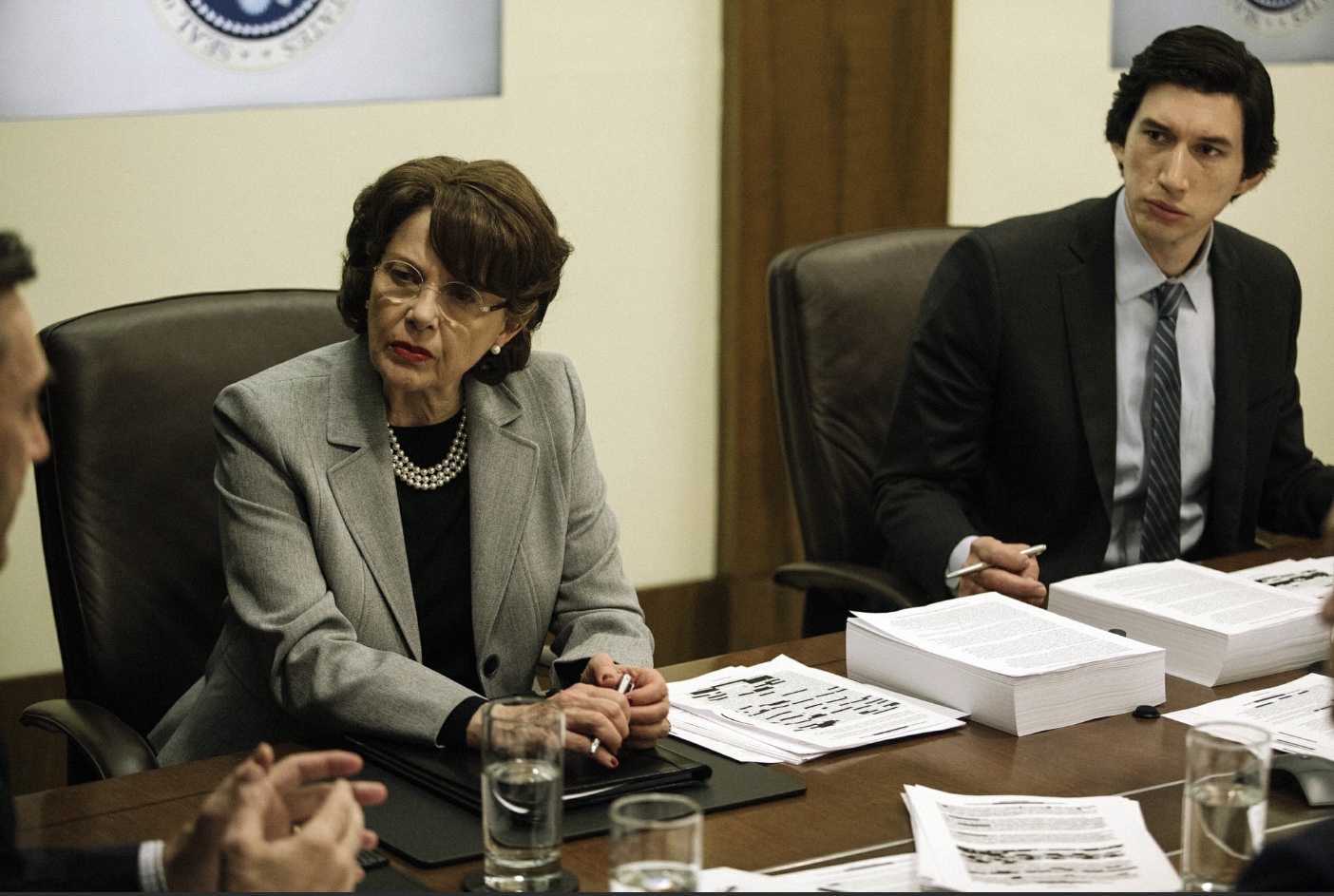
Still, with a controlled intensity that gradually increases, Driver makes it work. His partner here is a terrific Annette Bening as Sen. Dianne Feinstein, his boss. Only an actress as precise and restrained as Bening could capture the nononsense persona of Feinstein, the California Democrat who assigned Jones the report, without ever seeming to imitate her — although the coiffed hair and the glasses are pretty onpoint.

The real “action” in this film occurs in flashback, with nauseainducing scenes of terror techniques used on detainees at black sites, or secret CIA prisons. These techniques — developed by two psychologists, contractors who were given millions of dollars and huge latitude — include sleep deprivation, forced nudity, socalled “rectal rehydration,” and mock burials in coffins, sometimes filled with insects.

They also include waterboarding, the technique of simulated drowning that one secret informant who approaches Jones — a physician’s aide — tells him came pretty close to the actual thing. We also see detainees stripped and chained to floors. One of them dies, after having freezing water poured onto him. Driver, as Jones, rails: “They (expletive) killed a guy, and nobody was held accountable?”

It’s important to note here that many will see The Report as a cinematic rebuttal, seven years later, to Zero Dark Thirty, Kathryn Bigelow’s Oscarnominated film that implied a connection between CIA torture and intelligence that led to the bin Laden raid. They will certainly not miss the brief but pointed reference to that movie, a quick mention from a TV screen that provides the film with its slight levity. Image result for zero dark thirty

The Report is not nearly as actionpacked as Zero Dark Thirty, and it doesn’t even have the darkgarage scenes like those with Deep Throat in All the President’s Men — except one quick exchange with an informant. Image result for all the presidents men deep throat

But the issues it addresses are, to say the least, crucial ones, and even though it trusts its audience to soldier through some dense material, the audience should repay that trust. Here’s hoping it will.