Google has become the closest thing civilization has ever built to a direct line into human curiosity. People tell pollsters what they are willing to admit. They tell Google what they actually want to know.
What is this rash? Why am I tired? How much sleep do I need? Does she like me? Why am I gaining weight? How do I make more money? Are my genitals socially acceptable?
We have built machines capable of retrieving much of recorded human knowledge, and one of the first things we did was ask them to look at the mole on our ass.
I find that wonderful.
I also find it troubling because the amount of information available to us has exploded at precisely the moment our appetite for information seems to be shrinking.
Pew Research Center once asked Americans which areas of science interested them most. Health and medicine won easily, at 28 percent. Food and nutrition and technology each drew 17 percent. Space and astronomy got 9 percent. Evolution got 2 percent.
Americans say they care about science. Pew found 71 percent expressed interest in science news. Yet only 17 percent both sought science news and consumed it regularly.
There is an enormous difference between finding something interesting and going looking for an answer.
Curiosity requires the second.
And we have never had more places to look.
Every generation before ours lived with a shortage of answers. You needed a library. An encyclopedia. A newspaper. A teacher. An expert. Sometimes you simply lived without knowing.
We have the opposite problem. The answer sits in our pocket. The great informational achievement of our age has been eliminating almost every practical barrier between a question and an answer.
Yet watch Americans argue publicly and something strange happens.
Nobody asks a question.
Everybody has an answer.
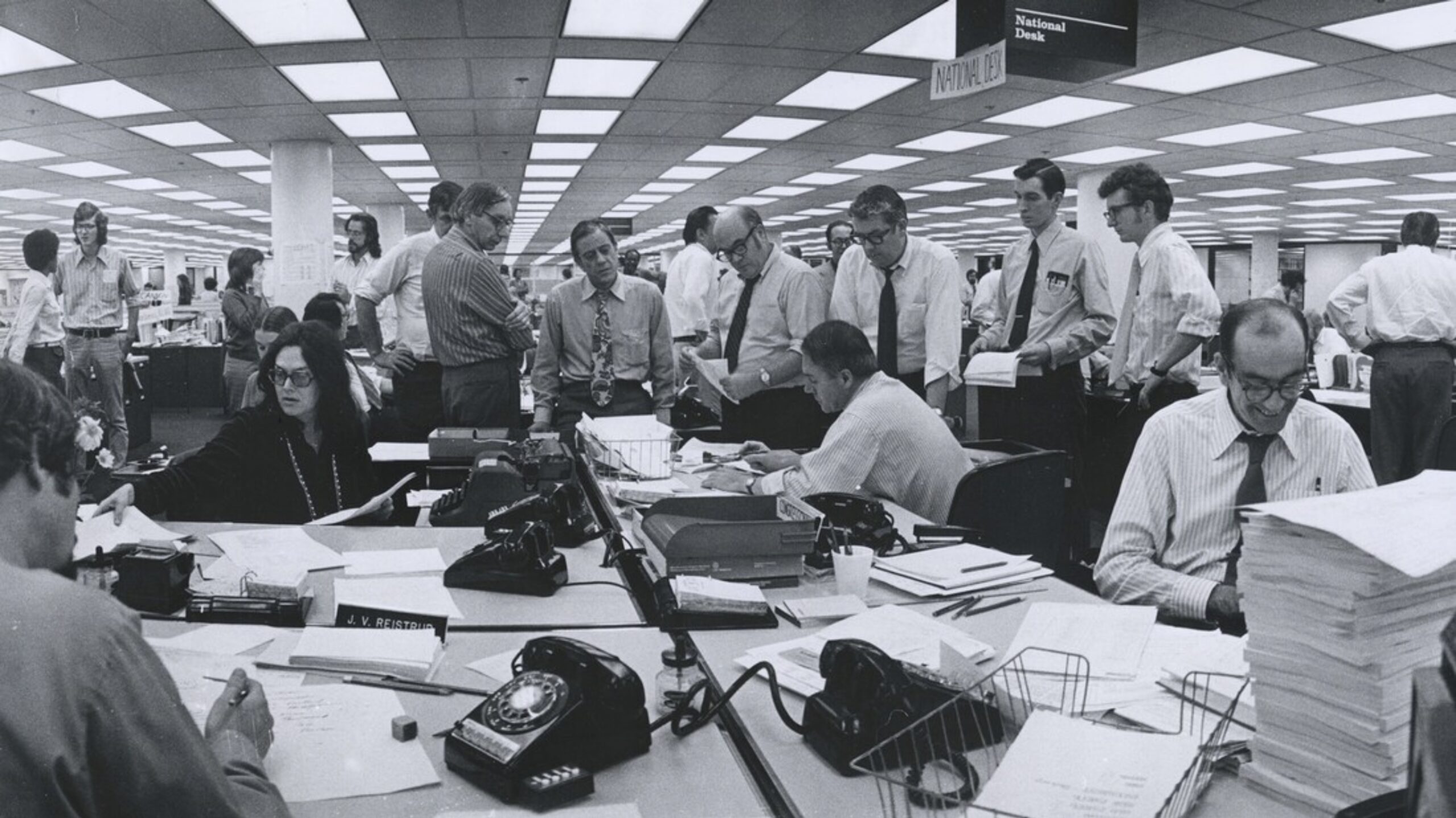
Social media may have accelerated that transformation because social media gave hundreds of millions of Americans something journalists had possessed for generations:
A byline.
That little charge is real. I know it. Every journalist knows it. Your name appears above something you wrote, and suddenly the words carry a strange additional weight because they belong to you.
For most of American history, relatively few people experienced that sensation publicly. Newspapers had reporters. Magazines had writers. Television had correspondents. Everybody else had conversations.
Then social media handed everybody a printing press and put their name at the top.
We suddenly had a nation of bylines.
That democratization produced plenty of good things. Expertise emerged from places traditional media overlooked. Witnesses could report what they saw. Ordinary people could challenge institutions that once controlled the means of publication.
But we also gave amateurs pro ranks as reporters without teaching them the most important habit of reporting.
Ask another question.
A journalist learns quickly that an opinion has limited value. The reporting begins when you become suspicious of your own certainty. What happened? How do you know? Who says? What evidence supports that? What evidence contradicts it? What am I missing?
Social media rewards the opposite instinct.
It rewards declaration.
The hotter the declaration, the greater the reaction. Certainty travels. Doubt limps behind it.
Soon the purpose of information changes. We stop searching to discover what is true and start searching for evidence that proves what we already posted.
The byline becomes the conclusion.
This has little to do with intelligence. Smart people can be spectacularly incurious. In fact, intelligence can make incuriosity more formidable because a smart person becomes skilled at defending an answer he reached before asking the question.
Nor does one question possess greater moral value than another. “What is this rash?” matters enormously to the person with the rash. “Is my dick too small?” may contain fear, loneliness and a dozen other questions underneath it.
The problem comes when curiosity stops at ourselves.
We have become self-curious. Our bodies. Our money. Our relationships. Our politics. Our identities. Our enemies. Our grievances.
The world becomes interesting primarily in relation to us. That is the retrofitted definition of incurious.
Children begin life differently. They are relentless reporters. Why is the sky blue? Why do dogs have tails? Where was I before I was born? Why do people die? Why are there stars? Why is there something instead of nothing?
They have no byline to defend.
Then something happens.
We learn that questions expose ignorance while answers project authority. School rewards the correct answer. Work rewards expertise. Social media rewards certainty. Eventually “I don’t know” begins to sound like surrender when it may be the most intellectually productive sentence humans ever invented.
That creates the great paradox of the information age.
Human beings spent thousands of years trying to make knowledge easier to obtain. We invented writing, libraries, universities, printing presses, newspapers, radio, television, computers, search engines and networks containing billions of pages of information.
We finally got the answer machine.
Then we stopped asking so many questions.
America hardly suffers from a shortage of information. We suffer from something harder to fix.
We have 380 million bylines and everybody wants to file a column.